Tag: Theology

  • Top 10 Theology Books That Have Impacted My Life

    Top 10 Theology Books That Have Impacted My Life

    It’s now been over two weeks since we’ve been sheltering at home. I’ve posted every day for 14 days. After all the research I did for yesterday’s post, I’m feeling a little brain-dead today. So here’s something on the lighter side. It’s Friday, after all.

    Without too much commentary, here are the top ten books that I would say have had the biggest impact on me when it comes to my theological perspective. Some of these brought about massive paradigm shifts as a result of reading them. Some have affected the course of my life in pivotal seasons. Their place here does not imply that I agree with every idea proposed in all of them, but that does not diminish the importance they’ve had in my journey.

    1. Mere Christianity by C. S. Lewis — The one that jump-started my journey as a theologian, and a constant reminder of the beauty of the core doctrines all Christians can agree on, even amidst the great diversity in the church.
    2. The Reason for God by Tim Keller — The cogent arguments in this book helped save my faith in a season of intense doubt (read more about that here).
    3. The Grace Awakening by Charles Swindoll — God used this book to remind me how radical his grace toward me really is, and it opened my eyes to how badly I needed to learn to have grace with myself, too.
    4. Living by the Book by Howard G. Hendricks & William Hendricks — My introduction to the basics of biblical exegesis back when I was a total noob in college. Everybody’s gotta start somewhere.
    5. Against Calvinism by Roger Olson — Helped me put my finger on the philosophical problems my previously-held Calvinistic framework never could quite explain and that I always felt terribly uneasy about.
    6. Following the Master: A Biblical Theology of Discipleship by Michael J. Wilkins — Honed my abiding passion for discipleship into what eventually became a course I now teach annually for college interns.
    7. Justification by N. T. Wright, and Salvation by Allegiance Alone by Matthew Bates — Putting these together as a tie for #7 since I read them back-to-back and since both helped me get more comfortable swimming in the massive pool that is the New Perspectives on Paul movement. Also, both these books helped me articulate a fuller definition of “faith” that’s more accurate to what the NT envisions.
    8. Five Views on Biblical Inerrancy edited by J. Merrick & Stephen M. Garrett — Phew, boy! This one forced me to reexamine all of my presuppositions about how the Bible works and how it’s meant to be read. I’d say my faith in Scripture’s truthfulness and authority is stronger (but also more nuanced) than ever thanks to reading it.
    9. Inspiration and Incarnation by Peter Enns — Similar to the one above. After deconstructing my initial doctrine of Scripture, this particular book by Enns was helpful for reconstruction, and I’ve since adopted the “progressive or genre-based inerrancy” approach he articulates.
    10. Reading Revelation Responsibly by Michael J. Gorman, and Revelation: Anchor Yale Bible Commentary by Craig R. Koester — I list these two together as a tie because I read them back-to-back in a season when I was reexamining my entire approach to eschatology (last things) and the book of Revelation. Gorman’s provocative book put the nail in the coffin of my previous “Left Behind” dispensationalist approach, while Koester’s excellent commentary opened my eyes to the literary, historical, and theological beauty of Revelation when the fearmongering of American end-times culture is, pardon the pun, left behind.

    And those are the top ten theology books that have influenced me. At least, the ones whose influence I can most clearly bring to mind; others have no doubt left more indelible marks.

    What books have most changed your life or your thinking? Let me know in the comments.

    See you down the path.

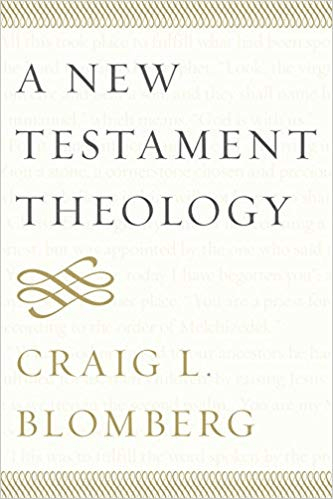
  • Book Review: A New Testament Theology by Craig L. Blomberg

    Book Review: A New Testament Theology by Craig L. Blomberg

    Craig Blomberg is a scholar whose work I’ve really appreciated, particularly his works on the Gospels and his biblical theology of money and possessions. Now he’s added a complete New Testament theology to his already substantial body of work.

    While there is no shortage of New Testament theologies out there, Blomberg’s work seeks to contribute to the conversation by focusing on the theme of fulfillment as the central focus of the New Testament. What was promised by God in the Old Testament has found fulfillment in the life, death, resurrection, and reign of Jesus Christ, and the entire New Testament bears witness to this truth in a variety of ways. I think this is a really helpful lens through which to unpack the theologies of the NT authors.

    Blomberg gives a very broadly evangelical, mildly conservative perspective. I found him to be quite fair and balanced on the range of topics that inevitably come up in a NT theology. Obviously not everyone will agree with all of his positions, but there are a lot of valuable insights to be gleaned. I especially found his chapters on James and Paul’s writings to be standouts.

    I also liked that while most NT theologies treat 2 Peter and Jude together (due to their obvious similarities), Blomberg examined 1 and 2 Peter side-by-side. (He grouped Jude in with the chapter on James, which came across as a bit of a stretch at first but was an interesting experiment).

    A nice bonus to the book is that he spends a lot of time documenting the historical reliability of the NT writings before he goes into analyzing their theology, making this just as valuable a resource for apologetics as it is for biblical theology. I also love the massive bibliography represented in the footnotes — Blomberg did a very impressive amount of research for this, and there were a lot of sources cited that were new and useful to me.

    As far as the book’s weaknesses, obviously there are always going to be some topics that get shorter treatment (otherwise the book would span volumes). Blomberg doesn’t devote much space to subjects like angels, demons, and Satan, arguing that those are not main themes the NT authors dwell on but instead are incidental to the discussion. Still, there are a lot of important background assumptions about spiritual beings that shape the NT authors’ theologies, so I thought they deserved a bit more attention.

    All in all, this was a solid NT theology. Nothing game-changing, but it was balanced, readable, and would make an excellent resource even if only for the bibliography/footnotes alone! I would put it toward the top of the more recent NT theologies, above the popular ones by Beale, Schreiner, etc.

    Recommended.

    (Available from: Amazon / Publisher)


  • Recommended Resources on Calvinism & Arminianism

    Recommended Resources on Calvinism & Arminianism

    Following up on my last post, I figured it would be good to give some recommend material for those who want to dig deeper into the topic of election/predestination, or into the debate between Calvinism and Arminianism in general.

    If you’ve been a Christian for any length of time, you’ve probably already given this subject some thought. And maybe you’ve even taken an stance on it – whether Calvinist, Arminian, or something else altogether!

    But whether you’ve settled on a position or you’re just now setting out into these deep waters, it’s good to consider each side of the debate. To help with that, here are a few books that I’ve found to be the most helpful. Each of these has had an impact on my own thinking — even the ones where I disagreed with the author’s conclusions. They’ve helped me to clarify my own position and challenged me to keep exploring Scripture.

    Along that same line, I want to issue a personal challenge to you, dear reader: If you already identify with a particular position, read a work arguing for the other side! 

    Two reasons I encourage this. Firstly, it’s important that you hear the best arguments your opponents have to offer, out of respect for them. Make sure you really know what it is you disagree with. And secondly, seeing that other Christians have logical reasons for their views helps keep you humble. It fosters greater unity when you can at least understand where folks of different theological persuasions are coming from.

    Without further ado, here are my top recommended resources on election/predestination!


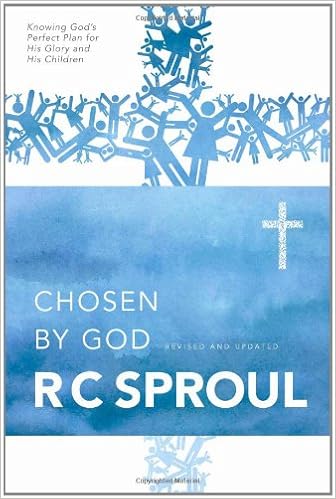
    Chosen By God by R. C. Sproul

    Sproul’s short book is a classic primer on the Calvinist understanding of election (that God unconditionally elects individuals to salvation or damnation). It’s concise, thorough, and readable. Even though it’s the one on this list that I find the most disagreement with (for example, at one point he implies that Calvinism is the only truly Protestant view, which is very much incorrect), it’s still worth reading to get a quick introduction to and defense of Calvinism.


    hand in Hand: The Beauty of God’s Sovereignty and Meaningful Human Choice by Randy Alcorn.

    Alcorn’s book is a great example of moderate Calvinism, and he goes more in-depth than Sproul in his discussion of how God’s providence intersects with human choice from a compatibilist perspective. Alcorn examines a great number of Scripture passages, while also covering the philosophical elements, all without getting overly technical. What I appreciate most is Alcorn’s tone – he’s a great example of how to defend your view with fairness and charity. Also, his first chapter gives some fantastic perspective on the Calvinist/Arminian debate as a whole.


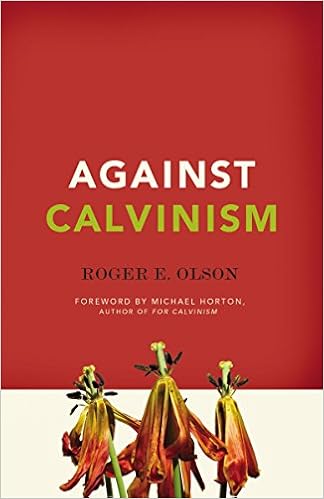
    Against Calvinism: Rescuing God’s Reputation from Radical Reformed Theology by Roger Olson.

    I think Olson’s book is one that every Christian should read at least once, whether you end up agreeing with him or not. The reason it’s so good is that he begins by defining and explaining Calvinism thoroughly before he explains why he disagrees with it, so you’ll get clear definitions of both sides. It’s a great model for how debate should happen. Olson never sets up straw-man arguments – he extensively quotes the best exponents of Calvinism, articulates clearly the challenges to their views, and provides a well-written and passionate case for Arminianism. 


    Grace, Faith, Free Will by Robert Picirilli.

    Just as Sproul’s Chosen by God is a good primer on Calvinism, Picirilli’s book is an excellent introduction to classical Arminian thought. He defends the view that election is tied to God’s foreknowledge of people’s faith-decision. Picirilli also covers a great deal of Scripture, although with certain Bible passages his book could have benefitted from more extensive exegesis and discussion.


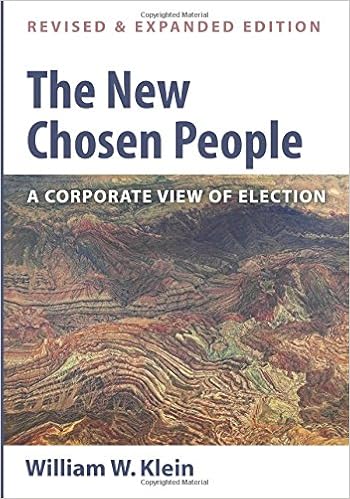
    The New Chosen People (Revised & Expanded Edition): A Corporate View of Election by William Klein.

    Klein’s work is probably the best modern treatment of the corporate view of election. He examines Scripture in-depth to argue that election is far more about group identity than about an individual’s personal destiny. If that idea alone sounds new to you, you need to pick up Klein’s book! He explores the Old Testament, intertestamental Jewish literature, and the New Testament, and his coverage of “election” terminology in Scripture is itself worth the price of the book.


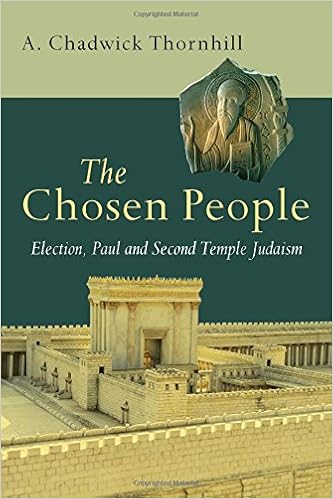
    The Chosen People: Election, Paul, and Second Temple Judaism by A. Chadwick Thornhill.

    I add this as a bonus, as it also supports the corporate view of election and complements Klein’s book nicely. Where Thornhill’s book differs from Klein’s is that it focuses more attention on what Jewish thinkers were saying about election and predestination in the days shortly before the New Testament was written. In other words, you’ll learn more about how the apostle Paul and other New Testament writers were joining a conversation that was already underway. You’ll get deeper background on how the imagery of election and predestination was being understood in the first century, and learn how Scripture develops that conversation. 


    I hope you’ll read at least one (if not more) of these, and that they’ll help sharpen your thinking on this controversial and challenging topic!

    Let me know what you think! Have I left out any of your favorites? Drop me a comment!

    See you down the path.


  • God’s Sovereignty & Human Choice in Proverbs

    God’s Sovereignty & Human Choice in Proverbs

    One of the core teachings of Scripture (and something that really should go without saying) is that God is sovereign. He is in control of the world He has made. Nothing is outside of His power or authority. He calls the shots. After all, if he’s powerful enough to create this universe, it would make sense that he could do anything he wanted with it.

    This concept of God’s sovereignty is something that Proverbs emphasizes a lot, because Solomon knew that only a foolish person would deny God’s power over his creation. A wise person, on the other hand, would submit to God’s rule. (And remember, Proverbs is intended to help us become wise.)

    But it’s also a concept that can easily be pressed too far beyond what the Bible states. It’s all too easy to pick out a handful of verses, read them in a wooden manner outside their context, and string together the notion that God predetermines everything that happens — including people’s decisions! (The technical name for this philosophy is determinism; you also may have heard it called fatalism.)

    But lest we begin blaming God for our own evil actions and throw human responsibility out of the window, we need to look at some of the strongest statements on divine sovereignty in Proverbs and examine what they’re really saying.

    What’s really the point when we say God is “in control”? And how should that impact our decision-making?


    Solomon the Fatalist?

    Let’s look first at what are arguably the strongest statements on God’s sovereignty in Proverbs.

    Proverbs 16:4 (CSB) — “The Lord has prepared everything for his purpose— even the wicked for the day of disaster.”

    One might get the impression this verse is saying that God actually creates people wicked; that he purposefully authors evil. He makes some people be bad, but it’s okay because it’s all part of the plan.

    But that’s not what this verse is saying, for two reasons. One is that this would make nonsense out of all the verses in Proverbs (and the rest of Scripture) that speak of God’s judgment of evil (Prov 11:19, 21; 16:5; 21:12), his hatred of sin (Prov 6:16-19; 12:22; James 1:13-14), and his desire that people choose wisdom and righteousness (Prov 1:29-31; 3:31-33; 8:1-21; Ezekiel 18:21-32).

    And two, this interpretation doesn’t fit the original Hebrew of the verse. If we translate it literally, it says everything is made to correspond “to its answer” (לַֽמַּעֲנֵ֑הוּ). In other words, God sovereignly makes sure that everyone and everything reaches an appropriate outcome. The second line gives a specific illustration: namely, the wicked will certainly receive the “day of disaster” their actions merit.

    Let me say it this way: This is not a statement about predetermination, but about retribution! It’s saying God will ensure that each life’s outcome corresponds to its deeds. Compare the NET translation: “The Lord works everything for its own ends— even the wicked for the day of disaster,” or the GNT: “Everything the Lord has made has its destiny; and the destiny of the wicked is destruction.”

    Indeed, elsewhere Solomon points out how foolish it is to blame God for people’s wicked choices: “A person’s own foolishness leads him astray, yet his heart rages against the Lord” (Proverbs 19:3, CSB).

    God’s purpose is not to create evil, but to allow it, work it into a greater good, and ultimately judge it.

    Proverbs 21:1 (CSB)“A king’s heart is like channeled water in the Lord’s hand: He directs it wherever he chooses.”

    Here we are reminded that even though we may think that human rulers are in control, God is actually the King of kings. He sets boundaries on what human leaders can do.

    Again, we need to be careful not to take this verse in an overly deterministic manner, as if God dictates every choice human leaders make. That would mean that God specifically directed Hitler to order the murder of millions of Jews, for example (yikes!). But this is not at all what is implied by the imagery of this proverb.

    The illustration used here is of a farmer setting irrigation channels to steer water in his fields. It’s an image suggesting oversight, direction, and setting boundaries. This verse isn’t saying that God overrides or predetermines the will of human leaders; rather, it means that he guides and sets limits. And it’s a reminder that God’s power is to be respected more than that of human kings.[1]


    The Proper Response to God’s Sovereignty is Humility

    Proverbs 20:24 (ESV) – “A man’s steps are from the Lord; how then can man understand his way?”

    Here is a verse that gives a strong statement of God’s sovereign influence over human lives. It’s also tricky to translate, and the meaning depends on the two different Hebrew words for “man” that are used.

    Here’s a closer approximation of the Hebrew: “The Lord guides the course of life of even a mighty man (gever), so how can a mere mortal (adam) hope to fully comprehend his life?”

    The rhetorical intent seems to be to remind us not to get too overwhelmed by trying to figure out all there is to know of life, or to be jealous of seemingly powerful or influential people. Even the “mighty” don’t have it all figured out, and indeed they should be humbled by the fact that it is not they but God who is ultimately the master of their fate.

    On the other hand, the faithful can rest easy knowing that God is the one who manages the circumstances of their lives. We don’t have to have it all figured out before we can trust him.

    Proverbs 16:9 (NET) – “A person plans his course, but the Lord directs his steps.”

    Here the sovereignty of God is contrasted with the will of man. Make sure you notice that God’s involvement and human decisions are placed side-by-side and compared as regards their extent; the former does not remove the latter. God’s rule does not cancel out human decision-making.

    Far from saying that your every decision is predetermined by God, this proverb is telling us that we can and should make decisions and have plans, but we should also humbly recognize that the particular outcomes are subject to God’s sovereignty and the circumstances he allows.

    But before we make those plans and decisions, we should consider one more important feature of God’s sovereignty Proverbs reminds us of — and that’s that God will hold us accountable for our decisions. He is even able to examine our motives:

    Proverbs 21:2 (CSB) — “All a person’s ways seem right to him, but the Lord weighs hearts.”

    Proverbs 24:12 (CSB) — “If you say, “But we didn’t know about this,” won’t he who weighs hearts consider it? Won’t he who protects your life know? Won’t he repay a person according to his work?”

    There’s no pulling a fast one on the Ruler of all, so be sure to act and think accordingly!


    Some Practical Implications

    This emphasis on God’s sovereignty throughout Proverbs is meant to enforce several ideas in our minds:

    1. We ought to be humble and fear the Lord when it comes to making choices in our lives. Since he’s in charge, we should seek to honor him.

    2. We can find encouragement in the fact that God, not humanity, is ultimately in control of our destinies. God’s sovereignty is a good thing. Notice Proverbs 18:10 (NLT)“The name of the Lord is a strong fortress; the godly run to him and are safe.”

    Because Jesus is on the throne of the universe, we don’t have to be fearful when we make decisions, and we don’t have to be fearful of current events. He’s still in control, and he doesn’t feel threatened by the dilemmas we so often fixate on.

    But it’s also because he’s on the throne that we should seek him for guidance in our lives. Ultimately he alone knows what’s best.

    How do we seek the sovereign Lord’s guidance for our lives?

    As we look at that topic, I want to stress that Proverbs (and the rest of Scripture, with it) teaches us a balance between several ideas. Think of these like three tennis balls we constantly have to juggle when we make choices in our lives:

    1) We have a will of our own to make decisions. God created us to be personal beings who can make choices so that we can genuinely relate to him and to others.

    2) We ought to submit our will first and foremost to what God has already revealed in his word. That’s the ultimate source of direction.

    3) We can and should also ask God for personal guidance and wisdom for our unique life situations, but keeping (1) and (2) in mind.

    So for example, God isn’t necessarily going to tell you what to eat for lunch every day. No doubt he could, but it isn’t exactly high on heaven’s priority list whether you choose the burger or the taco!

    But even still, you can follow biblical principles like avoiding gluttony and being a wise steward of your money and relationships. Those still count as God’s directions for your life.

    We’ll talk more about direction in the book of Proverbs in the next post — should the sovereign Lord allow! 😉

    See you down the path.


    [1] Of course, the question of why God allows some human leaders to carry out such horrible atrocities like the genocides of the twentieth century is a difficult one no matter how one understands God’s sovereignty. We might ask why he didn’t set some much stricter limits on, for example, the Nazi regime’s choices. It’s a question worthy of bigger discussion, but for now suffice it to say that I trust God has his reasons, his perspective is far bigger than ours, and all evil and suffering ultimately come to a resolution on the cross where God himself suffered.


  • What Are Scholars Saying About the Holy Spirit? (Reading Reflections on Thiselton)

    What Are Scholars Saying About the Holy Spirit? (Reading Reflections on Thiselton)

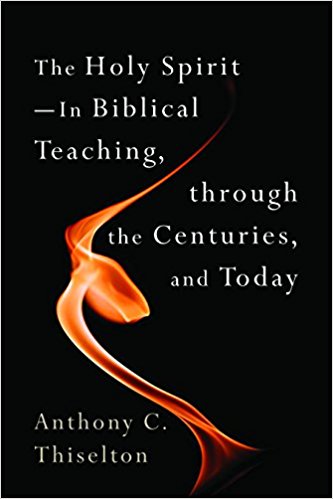
    Thiselton Holy Spirit Cover

    I recently finished reading Anthony Thiselton’s book, The Holy Spirit – In Biblical Teaching, through the Centuries, and Today. It was a fun coincidence that I stumbled across this book when I did. My church had just concluded a sermon series on the Holy Spirit and spiritual gifts, and my wife and I were desiring to dig a little deeper into what scholars are saying about the subject. So of course when I saw this tome sitting on the sale table at my seminary’s bookstore I snatched it up. And I was not disappointed!

    Thiselton is a prominent British theologian famous for his commentary on 1 Corinthians and his books on biblical interpretation, so I already knew this book on the Holy Spirit would reflect a lifetime of serious scholarship. Throughout church history, theologians and ministers have often wrestled with how to understand the person and work of the Holy Spirit, as well as the nature and role of spiritual gifts. Thiselton helps lay a foundation by examining what the Bible says about the Spirit of God before surveying in detail the scholarly conversations about the Spirit from the early church to today. Anyone who wants to become familiar with academic discussions on the Holy Spirit would do well to start here.

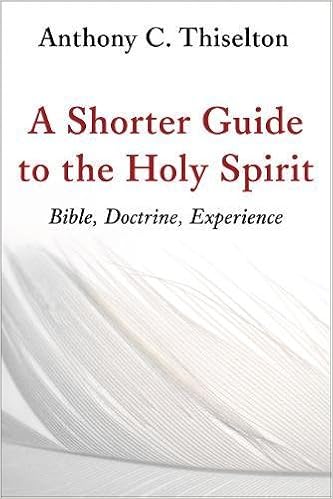
    Now, I have to give one important disclaimer! Clocking in at 500 pages and jam-packed with advanced scholarly interaction, Thiselton’s book is not for the faint of heart! Thankfully, though, he has also produced a condensed, reader-friendly version (link below)!

    Definitely check out the abridged version if you’re interested in learning more about the Holy Spirit, spiritual gifts, or views on the Spirit in church history, and especially if you’re going to be teaching on these topics. It’s a great resource. (I’d only recommend the original version if you’ve already had some exposure to seminary-level research.)


    A Call for Dialogue

    The thing I appreciated most about Thiselton’s book was his commitment to fostering open and respectful dialogue on this controversial topic. Considering how heated the conversations can get when people discuss the nature and role of the Spirit, I loved seeing such a gifted scholar as Thiselton calling for balance and dialogue.

    Among the other things I appreciated in Thiselton’s book:

    • He constantly called for a focus on what Scripture teaches as being of central importance.
    • He was willing to critique the weak points of both cessationists (those who think that the more “showy” gifts like miracles and tongues ceased, either after the first generation of apostles died or after the canon of Scripture was closed), as well as of continuationists/charismatics (like myself) with a gracious attitude. Thiselton shows us all where we need to clarify our thinking, but without vilifying either side.
    • He referenced and quoted from a broad range of voices from all across the theological spectrum and from every era of church history. You get the usual greats – Athanasius, Augustine, Basil, Luther, Calvin, etc., but you also get to hear from lesser-known figures like Hilary of Poitiers, Philoxenus of Syria, and Bonaventure, to name a few. Thiselton also interacts heavily with modern writers like Karl Barth, James D. G. Dunn, Gordon Fee, and many others. This allowed for multiple perspectives to be heard.

    Key Insights I Gleaned

    Here are some of Thiselton’s main points that I think are worth pondering deeply:

    1) The Spirit’s goal is to glorify Christ.

    So, if you want to be more Spirit-led, focus more on Christ (see pp. 70-71).

    2) Your spiritual gifts are not about you.

    Spiritual gifts are not primarily for us as individuals or for our self-fulfillment. They are for the purpose of building up the community of God. “It is not so much a matter of having a gift as of being a gift” (Jean-Jacques Suurmond, quoted on p. 85).

    3) The biblical concept of prophecy can include both “on-the-spot” words from God AND prepared proclamations of the gospel message.

    In Thiselton’s words, “The ‘where and when’ of prophecy, I believe, should not exclude either charismatic spontaneity or prepared, reflective preaching” (p. 176). This means we shouldn’t limit our concept of “prophecy” only to spontaneous utterances, and we should never undervalue the importance of preparation and study in ministry. Dependence upon the Holy Spirit should never be an excuse for such unspiritual qualities as laziness or neglect of learning. At the same time, though, Thiselton rightly affirms that the Lord indeed still speaks fresh words to his people through his Spirit – it’s not an “either/or” situation.

    4) The “gift of healing” is not just miraculous, but also includes giftedness at treating others medically.

    When Paul talks about the gift of healing in 1 Corinthians 12, he specifically mentions (in the Greek) “gifts of healings” (plural!). Thiselton points out that for the majority of church history this has been understood to mean both spontaneous, miraculous recoveries and/or God gifting people with medical skill to treat others (pp. 102-03, 114-20). We shouldn’t make a big divide between God working through more mundane natural processes and God working dramatically or “supernaturally.” Again, it’s not “either/or.”

    5) Being Spirit-led should not be confused with doing what’s new.

    It’s true enough that many churches are unhealthy because they’re tied to dry, religious formalism and rejecting fresh moves of the Spirit. But there’s an equal and opposite danger of being too obsessed with “new” and “fresh,” to the neglect of our past heritage (pp. 484-85). A healthy church learns from the past while being attuned to God’s will for the present. Perhaps you could say we need solid roots in the past along with fresh winds from the Spirit.

    6) A biblical understanding of the Kingdom of God helps us understand why prayers for healing are not always answered the way we might hope.

    This is a complex but important point. Let me try to explain briefly: Through the Spirit’s presence in believers, the Kingdom of God is already present to a degree, and this is why miraculous healings can and should be sought. To deny that God ever miraculously heals in response to prayer is to deny the current inbreaking of God’s Kingdom. But on the other hand, the Kingdom is not yet here in its fullest form – that will only be when Christ returns. It is only then that we will be delivered from all sickness and all death forever. It is not on this side of Christ’s return that we will experience complete and total healing in all cases.

    As Thiselton writes, this concept of the “already/not-yet” of the Kingdom “explains the ambiguity of expectancy and prayer in relation to healings.”

    “Sometimes God allows, as it were, the opening of Christmas presents before Christmas, and heals as if the End were already here. But clearly the end is not yet. . . . It seems a distraction from this important eschatological question to browbeat us with the question: Is it the will of God to heal? Of course it is; but when and where?” (p. 487).

    This last point is a powerful one, and cuts through a lot of the false expectancy taught in so many Pentecostal circles. Again Thiselton hits the nail on the head:

    “If expectancy is raised to a high pitch, there must be a degree of depression and misplaced self-recrimination from those for whom it is claimed that their Christian faith and trust was somehow deficient. If healing were a uniform and universal phenomenon, in cases of disappointment this would make the problem of suffering and evil much more acute” (p. 487).

    In other words, for those who sincerely expected a healing that did not occur, the feeling that their faith was insufficient can cause horrible disillusionment and self-doubt. Yes, God desires to heal – but in some cases that healing only comes on the other side of eternity.

    Those are a few of the many thought-provoking nuggets of wisdom Thiselton offers. What do you think of his observations? Do you disagree with any of them?

    What are your favorite books on the Holy Spirit?

    Let me know in the comments!