In a first for this site, I’ve had the privilege of being invited to host this month’s Biblical Studies Carnival! These carnivals are a long-running tradition in the world of academic biblical studies blogging, and I greatly enjoyed putting this together. A “carnival” is basically a roundup of new posts and publications from the previous month. It helps give exposure to some good scholarship or thought-provoking writing that people might otherwise have missed.
Without further ado, here’s what I found to be well worth reading in November:
Hebrew Bible / Old Testament Studies
The folks behind Logos Bible Software put out this great reflection on the theme of exile in the Pentateuch on their blog.
Brandon D. Smith weighs in on the historical Adam debate. I’m sure he and I would quibble on some of the details, but I largely agree with his conclusion about how we should preach and teach Genesis 1-3.
At the Conciliar Post, Wesley Walker offers a beautiful reflection on two Old Testament passages where we see the self-emptying tendency of God that eventually finds full display on the cross: “Revelatory Crucicentricity: 1 Samuel 16 and 1 Kings 19 as Kenotic Patterns.”
James Bradford Pate offers some reflections from reading John Walton’s The Lost World of the Torah.
J. R. Miller also engaged with Walton’s work, with this paper presented at ETS: “Jesus in the Torah: A Response to John Walton’s Lost World Ethics.”
The Bible Project’s blog begins a series on divine violence in Scripture with a post on the Noahic Flood: “Why Did God Flood the World?”
Claude Mariottini ponders how Miriam’s role in leading Israel is portrayed and even downplayed in some passages: “The Leadership of Miriam.”
Doug Chaplin at Liturgica has been busy this month posting summaries of the books of the Old Testament, focusing particularly on their use in the lectionary’s readings. Some of my favorites were this post musing on Abraham’s sacrifice of Isaac, this one on the book of Leviticus, and his summary of Job.
And Alex at Scribes of the Kingdom reflects on the fall of Satan/Babylon in Isaiah 14.
New Testament Studies
November was a bittersweet month in the world of New Testament scholarship. On the one hand, we saw some incredible new publications. On the other, we lost a fine scholar: Dr. Larry Hurtado concluded his long battle with cancer on November 25, 2019. One of his protégés, Michael J. Kruger, posted a heartfelt tribute to Dr. Hurtado here, and Christianity Today posted an obituary here.
If you haven’t had the chance to read him, you should definitely start by checking out his books Lord Jesus Christ: Devotion to Jesus in Earliest Christianity and Destroyer of the gods: Early Christian Distinctiveness in the Roman World.
With the final few posts on his blog this month, Dr. Hurtado highlighted some important but neglected studies on the apostle Paul that deserve more attention (“Paul and His Predecessors” and “Chronology Matters.”), and promoted a forthcoming article on Latin and Aramaic loanwords in the Gospel of Mark (“Linguistics and Loanwords in the Gospel of Mark”).
Elsewhere in the blogosphere, Michael Bird has been busy reflecting on New Testament theology, with a series of posts including “Does the New Testament Really Have a Unifying Centre? Maybe, Maybe Not!” and “New Testament Theology OR History of Early Christianity?”
Teaching on Jesus’ apocalyptic sermons, Ian Paul explains why being “left behind” is the better option — at least if we’re talking about what Jesus says in Matt 24:36-44!
Scot McKnight draws attention to a new study on the meaning of pistis Christou in Paul’s writings, arguing that the “faithfulness of Christ” is demonstrated not just in his suffering and crucifixion but in the ongoing faithfulness of the risen and ascended Jesus toward believers: “The Faithfulness of Jesus Christ.”
McKnight also wrote about why we should read Romans backwards, recommends Craig Keener’s new book on the genre and reliability of the Gospels, and lists some takeaways from Michael Gorman’s recent work on Pauline theology.
Jay Smith offers a very helpful summary of the practice of “mirror-reading” and why it is necessary in studying New Testament epistles: “Mirror, Mirror on the Wall: Mirror-Reading Occasional Letters.”
A former Dallas Seminary classmate of mine, Mikel Del Rosario (aka the Apologetics Guy), has a post on “Was Jesus Married?”
You can see a survey of new research on the Pastoral Epistles from the SBL 2019 conference here, and from ETS 2019 here.
Speaking of the Pastorals, Susan Hylen’s recent article on female deacons in 1 Tim 3:11 is worth checking out: “Hylen, ‘Women διάκονοι and Gendered Norms of Leadership’.”
Phil Long over at Reading Acts has also been doing a series on the Pastorals this month — here’s one of my favorite posts, on the creedal formula in 1 Tim 3:14-16.
Richard Beck ponders what 1 Peter 4:10 has to teach us about grace as a gift exchange.
Over at Zondervan Academic, Loren Stuckenbruck tells us why we ought to read Revelation within the context of Second-Temple Jewish literature: “Reading Revelation in Context.”
James Bradford Pate gave a fair-minded review of Bart Ehrman’s Jesus Before the Gospels.
Theology & Ethics
In light of the Thanksgiving holiday, it’s only appropriate to share Stephen Jordan’s reflection on how the experience of gratitude itself points us to God: “Gratitude, Thankfulness, and the Existence of God.”
Ian Paul at Psephizo wrote an amazing piece about the nature of resurrection bodies and how that pertains to our understanding of sexuality, marriage, and procreation: “What does it mean to ‘be like the angels’ in Luke 20?”
Marg Mowczko shares her insights from the past ten years of blogging on biblical equality between men and women — definitely worth a read! “What I’ve Learned from 10 Years of Blogging on Mutuality.”
Some worthwhile pieces on political theology: David Justice at the Conciliar Post reflects on “Why We Still Need the Theology of Martin Luther King, Jr. Today,” and Michael Bird gives an outsider’s perspective on America’s political climate: “Jesus Isn’t Interested in America’s Two-Party Division.”
Jackson Wu has more good thoughts on how we talk about atonement theories in “Is Penal Substitution a Western Doctrine?”
Over at the Jesus Creed blog, this post suggests that most who struggle with the doctrine of hell are really struggling with the question of who will be saved.
Ben Witherington spends a ten-post series going through N. T. Wright’s History and Eschatology: Jesus and the Promise of Natural Theology (Part One here).
Phil Long has a good review of David Instone-Brewer’s recent book on Moral Questions of the Bible.
Apologist Haden Clark conducts a sober thought experiment in “What if I’m wrong?”
Martin Davie sums up a recent collection of essays put forth by the Doctrine Commission of the Anglican Church of Australia on the subject of same-sex marriage.
Dwight Gingrich also concludes a series on the topic of “Was Jesus Okay with Homosexuality?”
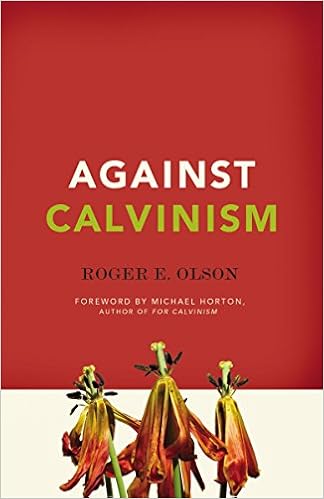
Roger Olson reflects on the relationship between God and time (“Can God Change the Past? And What does that Have to Do with Open Theism?”), and articulates his understanding of God’s sovereignty and interaction with creation (“A Relational View of God’s Sovereignty”).
And Kevin RK Davis does a great job clearing away some unfortunate misconceptions about Arminianism here.
Newly Released Books
Pride of place has to go to the recent juggernaut of a textbook from N. T. Wright and Michael Bird, The New Testament in Its World: An Introduction to the History, Literature, and Theology of the First Christians. Time will tell if this truly ends up being the “New Testament introduction of all New Testament introductions,” as Craig Keener lauds it, but it certainly does look impressive. And considering it’s a distillation of N. T. Wright’s voluminous and influential scholarship into a single user-friendly volume, it’ll no doubt be a useful resource.
Scot McKnight and Nijay Gupta have compiled a handy-dandy survey of current New Testament scholarship in their The State of New Testament Studies: A Survey of Recent Research.
Also pertinent for New Testament studies is Myths and Mistakes in New Testament Textual Criticism, edited by Elijah Hixson and Peter J. Gurry. You can find a very helpful summary of key takeaways from the book here. Those interested in apologetics need to take note of the conclusions of this book when it comes to how we defend the reliability of the NT.
Eugene Boring gives a practical work on Johannine theology in Hearing John’s Voice: Insights for Teaching and Preaching.
Andrei Orlov’s new work examines the potential ramifications of some important Second-Temple Jewish beliefs on early Christology: The Glory of the Invisible God.
J. Scott Duvall and J. Daniel Hays offer what looks like a worthwhile contribution to biblical theology in God’s Relational Presence: The Cohesive Center of Biblical Theology.
Those interested in a comprehensive study on spiritual warfare should check out Spiritual Warfare in the Storyline of Scripture: A Biblical, Theological, and Practical Approach by William Cook and Chuck Lawless.
Anyone active in Christian education will benefit from the reflections in Theology as a Way of Life: On Teaching and Learning the Christian Faith by Adam Neder.
And history/sociology buffs will appreciate Evangelicals: Who They Have Been, Are Now, and Could Be by Mark A. Noll, David W. Bebbington, & George M. Marsden.
Quite a few new commentaries released in November:
Podcasts
The fine folks at OnScript have some great interviews on tap this month, including:
— Chris Tilling discusses the importance of Karl Barth’s reading of Romans (Part 1 | Part 2)
— Josh McNall offers a mosaic approach to atonement theories (here).
On Seminary Dropout, Shane Blackshear interviews N. T. Wright about his aforementioned new release, The New Testament in its World (here).
On Help Me Teach the Bible, Nancy Guthrie and David Helm discuss how to teach the tragically much-neglected epistle of Jude (here).
Text Criticism & Archaeology
Brent Nongbri reports on the SBL panel conducting a “postmortem” on the fraudulent “First-Century Mark” manuscript here.
Elijah Hixson suspects that there is another page to 093 that has gone unrecognized: “A Previously Unidentified Folio of 093?”
Peter Head reports on a research project covering Codex Zacynthius: “Codex Zacynthius Study Day.”
The Jerusalem Post covers the unveiling of a 1,000-year-old copy of the Pentateuch: “1,000-year-old Hebrew Bible revealed in Washington, D.C.”
Leen Ritmeyer has a fascinating write-up on the site of ancient Shiloh — The Place Where the Tabernacle Stood.
In this ASOR article, Collin Cornell examines evidence of goddess worship among Judeans living in Egypt. This cultural background might illumine texts like Jeremiah 44, which mention Jewish people worshiping a figure called the “Queen of Heaven.”
The Biblical Archaeology Report sums up the results of archaeological research on Sergius Paulus, the proconsul mentioned in Acts 13 (here), and on Tiglath-Pileser III, the king of Assyria mentioned in 2 Kings 15 (here).
Curiosities
Take a walk on the weirder side of cultural background studies: Jim Davila reviews Michael Stone’s book, Secret Groups in Ancient Judaism (here). Stone argues that the Qumran community (which produced the Dead Sea Scrolls) is best understood within the sociological category of a “secret society.” His work also covers various other sectarian groups, keepers of esoteric knowledge, and magical practitioners active during the time the New Testament was written. Be sure to wear your hooded robes before entering.
David Douherty reviews what looks like a fascinating book chronicling the history of the tumultuous relationship between Christians and rock music in America: “Review of The Devil’s Music by Randall J. Stephens.”
And lastly, if you haven’t yet, I agree with Ben Witherington: You should go see the new film Knives Out!
And that concludes this month’s carnival! I hope you enjoyed your stroll through the biblical & theological studies midway. Don’t forget to swing by the gift shop, and please leave a like or a comment on your way out!
Next month’s carnival will be at Alex’s Scribes of the Kingdom blog in January 2020. If you have a biblical studies blog and are interested in potentially hosting a future carnival, reach out to Phil Long (email: plong42@gmail.com or @plong42 on Twitter).
And If I missed anything from last month that you think deserves mention, please put a link in the comments below!
See you down the path.






 Theology Pathfinder