Tag: determinism

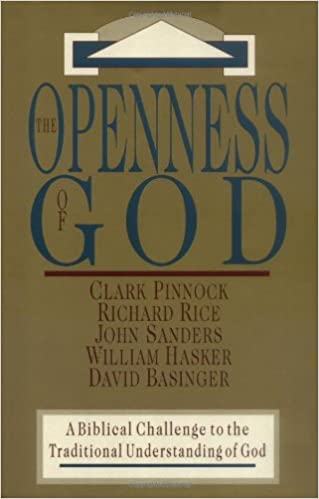
  • Book Review: The Openness of God

    Book Review: The Openness of God

    Open theism is a topic that tends to rustle a lot of feathers, especially in some conservative/fundamentalist camps where the view often gets immediately labeled as unorthodox or even blasphemous. When I was in seminary, it was always quickly dismissed as just the problematic view of a small minority of contemporary theologians, and the professors quickly rushed us back to the books and statements of their preferred Reformed/Calvinist guys.
    Yet, the open view has come to be supported by a great many Christian philosophers and a growing number of biblical scholars, theologians, and influential pastors. I finally decided to make the time to start reading primary sources arguing for this view, and I’m glad I started with The Openness of God: A Biblical Challenge to the Traditional Understanding of God (IVP Academic, 1994). It was an excellent primer on the subject.

    In The Openness of God, five different authors set out to introduce open theism, offer a brief defense of it on biblical, theological, philosophical, and practical grounds, and explain why it should at least be considered as an orthodox Christian viewpoint.

    Open theism (also referred to as the “open view” of God or “free will theism”) challenges traditional understandings of God as absolutely immutable, impassible, and eternally decreeing everything that comes to pass. Instead, it posits that God is inherently relational, choosing to extend significant freedom of choice to his creations, and open to accepting new developments and even taking risks as part of that loving freedom.

    On an even more fundamental level, open theism makes an important claim about the nature of the future. While God’s omniscience means he knows everything that can possibly be known, the future cannot be known because it does not yet exist. God is therefore “open” to the future as something that has not yet come into being.

    This means that human choices (along with God’s actions and reactions) help determine what kind of future comes into being, and God can therefore be genuinely affected by our choices — experiencing joy and sorrow (Gen 6:5-6; Matt 8:10; Luke 15), learning (Gen 22:12; Jer 32:35), and even changing his mind (Exo 32:9-14; 1 Sam 15:11, 35; Jonah 3:10). The future is thus neither exhaustively foreknown nor eternally foreordained; instead, God interacts with the decisions of people to bring about his desired ends.

    Such an interpretation of God’s nature and his interaction with the world sounds very counterintuitive to modern readers who are so inherently used to the idea that a perfect God ought to know everything that will happen in the future. And yet, openness theologians claim, this popular preconception is not drawn straight from Scripture, but rather has been filtered down to us by centuries of tradition rooted in Greek conceptions of God as a timeless, changeless entity. The open view of God stands as a challenge to go back to Scripture and consider whether the tradition got it right. In this sense, openness theologians continue the project instigated by the Protestant Reformers of always going back to the sources and measuring even the most cherished interpretations against Scripture.

    Each of the five chapter-length essays in The Openness of God does a good job covering its topic clearly and concisely. The authors state their case well, summarizing the weaknesses of alternate views and anticipating potential objections to their arguments. However, since this book is intended as an introduction to the subject for a popular audience, it doesn’t go into exhaustive detail or extensive argumentation.

    Readers who are already staunchly opposed to open theism probably won’t have their minds changed, and others like me who are at least open (pardon the pun) to the idea but not fully persuaded will likely need more convincing. I still had lingering questions after reading, but thankfully there are many resources furnished in the extensive endnotes.

    That aside, in my opinion the authors do succeed at making the case for at least seeing open theism as a valid doctrinal option. They demonstrate a clear concern for remaining faithful to the essentials of Christian orthodoxy and have a high regard for the authority of Scripture when forming their theological viewpoints. They also do a good job of pointing out the key problems inherent in the other main Christian approaches to the nature of God’s relationship to creation and time (Calvinism, Molinism, Classical Arminianism, and Process Theology).

    And they raise a very good point that’s well worth considering when they argue that, no matter what theological conclusion we come to regarding God’s relationship to time and the future, on a practical level nearly every believer lives, prays, and worships as if they really do have a genuine, give-and-take relationship with God and as if their choices genuinely do matter and affect him personally. While by no means settling the issue, it should at least give us pause and invite us to consider whether such concrete realities tell us something important about how God has, in his unmatched wisdom and love, decided to structure his creation.

    The Bottom Line: All in all, The Openness of God is a great introduction to an important topic and also a great exercise in practical theology. I found it very informative and enjoyable to read, even if not ultimately persuasive enough to shift my position at the moment. Recommended to anyone wanting to better understand different perspectives on the nature of God.

    If I get some time, I may interact more with the contents of this book (and/or arguments for and against open theism in general) in future posts.


    A Postscript: I know that some readers in my circles may be among those who have been led to feel that open theism is “beyond the bounds” of Christian orthodoxy (as some of its detractors claim). However, I did not find that any of the claims in The Opennness of God fell outside of the core essentials of the Christian faith as expressed in, for example, the Nicene Creed (to take an early Christian confession that pretty much all Christians agree on). Nothing I read here went against the spirit of what C. S. Lewis would call “mere Christianity.”

    It seems to me that many of open theism’s most vocal opponents really are concerned less with the actual claims of open theists and instead are reacting to what they perceive are possible implications of the view. Or, in the case of Calvinists, they simply have issues with open theism for the same reasons they have issues with all other schools of thought that don’t support meticulous divine determinism (the idea that God has already preordained everything that comes to pass). Most of the arguments I’ve seen Calvinists level against open theism are essentially the same ones they would level against forms of Molinism or Arminianism or any other system that affirms libertarian free will.

    Anyone struggling with whether or not to even consider open theism as an option should read this super-brief primer by Greg Boyd, and then this essay responding to unfair criticisms of the view. 

  • God’s Sovereignty & Human Choice in Proverbs

    God’s Sovereignty & Human Choice in Proverbs

    One of the core teachings of Scripture (and something that really should go without saying) is that God is sovereign. He is in control of the world He has made. Nothing is outside of His power or authority. He calls the shots. After all, if he’s powerful enough to create this universe, it would make sense that he could do anything he wanted with it.

    This concept of God’s sovereignty is something that Proverbs emphasizes a lot, because Solomon knew that only a foolish person would deny God’s power over his creation. A wise person, on the other hand, would submit to God’s rule. (And remember, Proverbs is intended to help us become wise.)

    But it’s also a concept that can easily be pressed too far beyond what the Bible states. It’s all too easy to pick out a handful of verses, read them in a wooden manner outside their context, and string together the notion that God predetermines everything that happens — including people’s decisions! (The technical name for this philosophy is determinism; you also may have heard it called fatalism.)

    But lest we begin blaming God for our own evil actions and throw human responsibility out of the window, we need to look at some of the strongest statements on divine sovereignty in Proverbs and examine what they’re really saying.

    What’s really the point when we say God is “in control”? And how should that impact our decision-making?


    Solomon the Fatalist?

    Let’s look first at what are arguably the strongest statements on God’s sovereignty in Proverbs.

    Proverbs 16:4 (CSB) — “The Lord has prepared everything for his purpose— even the wicked for the day of disaster.”

    One might get the impression this verse is saying that God actually creates people wicked; that he purposefully authors evil. He makes some people be bad, but it’s okay because it’s all part of the plan.

    But that’s not what this verse is saying, for two reasons. One is that this would make nonsense out of all the verses in Proverbs (and the rest of Scripture) that speak of God’s judgment of evil (Prov 11:19, 21; 16:5; 21:12), his hatred of sin (Prov 6:16-19; 12:22; James 1:13-14), and his desire that people choose wisdom and righteousness (Prov 1:29-31; 3:31-33; 8:1-21; Ezekiel 18:21-32).

    And two, this interpretation doesn’t fit the original Hebrew of the verse. If we translate it literally, it says everything is made to correspond “to its answer” (לַֽמַּעֲנֵ֑הוּ). In other words, God sovereignly makes sure that everyone and everything reaches an appropriate outcome. The second line gives a specific illustration: namely, the wicked will certainly receive the “day of disaster” their actions merit.

    Let me say it this way: This is not a statement about predetermination, but about retribution! It’s saying God will ensure that each life’s outcome corresponds to its deeds. Compare the NET translation: “The Lord works everything for its own ends— even the wicked for the day of disaster,” or the GNT: “Everything the Lord has made has its destiny; and the destiny of the wicked is destruction.”

    Indeed, elsewhere Solomon points out how foolish it is to blame God for people’s wicked choices: “A person’s own foolishness leads him astray, yet his heart rages against the Lord” (Proverbs 19:3, CSB).

    God’s purpose is not to create evil, but to allow it, work it into a greater good, and ultimately judge it.

    Proverbs 21:1 (CSB)“A king’s heart is like channeled water in the Lord’s hand: He directs it wherever he chooses.”

    Here we are reminded that even though we may think that human rulers are in control, God is actually the King of kings. He sets boundaries on what human leaders can do.

    Again, we need to be careful not to take this verse in an overly deterministic manner, as if God dictates every choice human leaders make. That would mean that God specifically directed Hitler to order the murder of millions of Jews, for example (yikes!). But this is not at all what is implied by the imagery of this proverb.

    The illustration used here is of a farmer setting irrigation channels to steer water in his fields. It’s an image suggesting oversight, direction, and setting boundaries. This verse isn’t saying that God overrides or predetermines the will of human leaders; rather, it means that he guides and sets limits. And it’s a reminder that God’s power is to be respected more than that of human kings.[1]


    The Proper Response to God’s Sovereignty is Humility

    Proverbs 20:24 (ESV) – “A man’s steps are from the Lord; how then can man understand his way?”

    Here is a verse that gives a strong statement of God’s sovereign influence over human lives. It’s also tricky to translate, and the meaning depends on the two different Hebrew words for “man” that are used.

    Here’s a closer approximation of the Hebrew: “The Lord guides the course of life of even a mighty man (gever), so how can a mere mortal (adam) hope to fully comprehend his life?”

    The rhetorical intent seems to be to remind us not to get too overwhelmed by trying to figure out all there is to know of life, or to be jealous of seemingly powerful or influential people. Even the “mighty” don’t have it all figured out, and indeed they should be humbled by the fact that it is not they but God who is ultimately the master of their fate.

    On the other hand, the faithful can rest easy knowing that God is the one who manages the circumstances of their lives. We don’t have to have it all figured out before we can trust him.

    Proverbs 16:9 (NET) – “A person plans his course, but the Lord directs his steps.”

    Here the sovereignty of God is contrasted with the will of man. Make sure you notice that God’s involvement and human decisions are placed side-by-side and compared as regards their extent; the former does not remove the latter. God’s rule does not cancel out human decision-making.

    Far from saying that your every decision is predetermined by God, this proverb is telling us that we can and should make decisions and have plans, but we should also humbly recognize that the particular outcomes are subject to God’s sovereignty and the circumstances he allows.

    But before we make those plans and decisions, we should consider one more important feature of God’s sovereignty Proverbs reminds us of — and that’s that God will hold us accountable for our decisions. He is even able to examine our motives:

    Proverbs 21:2 (CSB) — “All a person’s ways seem right to him, but the Lord weighs hearts.”

    Proverbs 24:12 (CSB) — “If you say, “But we didn’t know about this,” won’t he who weighs hearts consider it? Won’t he who protects your life know? Won’t he repay a person according to his work?”

    There’s no pulling a fast one on the Ruler of all, so be sure to act and think accordingly!


    Some Practical Implications

    This emphasis on God’s sovereignty throughout Proverbs is meant to enforce several ideas in our minds:

    1. We ought to be humble and fear the Lord when it comes to making choices in our lives. Since he’s in charge, we should seek to honor him.

    2. We can find encouragement in the fact that God, not humanity, is ultimately in control of our destinies. God’s sovereignty is a good thing. Notice Proverbs 18:10 (NLT)“The name of the Lord is a strong fortress; the godly run to him and are safe.”

    Because Jesus is on the throne of the universe, we don’t have to be fearful when we make decisions, and we don’t have to be fearful of current events. He’s still in control, and he doesn’t feel threatened by the dilemmas we so often fixate on.

    But it’s also because he’s on the throne that we should seek him for guidance in our lives. Ultimately he alone knows what’s best.

    How do we seek the sovereign Lord’s guidance for our lives?

    As we look at that topic, I want to stress that Proverbs (and the rest of Scripture, with it) teaches us a balance between several ideas. Think of these like three tennis balls we constantly have to juggle when we make choices in our lives:

    1) We have a will of our own to make decisions. God created us to be personal beings who can make choices so that we can genuinely relate to him and to others.

    2) We ought to submit our will first and foremost to what God has already revealed in his word. That’s the ultimate source of direction.

    3) We can and should also ask God for personal guidance and wisdom for our unique life situations, but keeping (1) and (2) in mind.

    So for example, God isn’t necessarily going to tell you what to eat for lunch every day. No doubt he could, but it isn’t exactly high on heaven’s priority list whether you choose the burger or the taco!

    But even still, you can follow biblical principles like avoiding gluttony and being a wise steward of your money and relationships. Those still count as God’s directions for your life.

    We’ll talk more about direction in the book of Proverbs in the next post — should the sovereign Lord allow! 😉

    See you down the path.


    [1] Of course, the question of why God allows some human leaders to carry out such horrible atrocities like the genocides of the twentieth century is a difficult one no matter how one understands God’s sovereignty. We might ask why he didn’t set some much stricter limits on, for example, the Nazi regime’s choices. It’s a question worthy of bigger discussion, but for now suffice it to say that I trust God has his reasons, his perspective is far bigger than ours, and all evil and suffering ultimately come to a resolution on the cross where God himself suffered.