Tag: book review

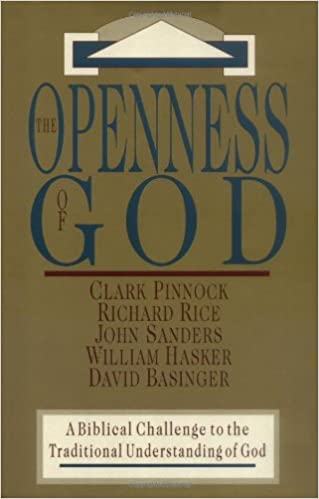
  • Book Review: The Openness of God

    Book Review: The Openness of God

    Open theism is a topic that tends to rustle a lot of feathers, especially in some conservative/fundamentalist camps where the view often gets immediately labeled as unorthodox or even blasphemous. When I was in seminary, it was always quickly dismissed as just the problematic view of a small minority of contemporary theologians, and the professors quickly rushed us back to the books and statements of their preferred Reformed/Calvinist guys.
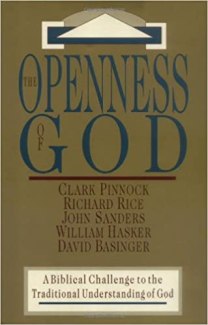
    Yet, the open view has come to be supported by a great many Christian philosophers and a growing number of biblical scholars, theologians, and influential pastors. I finally decided to make the time to start reading primary sources arguing for this view, and I’m glad I started with The Openness of God: A Biblical Challenge to the Traditional Understanding of God (IVP Academic, 1994). It was an excellent primer on the subject.

    In The Openness of God, five different authors set out to introduce open theism, offer a brief defense of it on biblical, theological, philosophical, and practical grounds, and explain why it should at least be considered as an orthodox Christian viewpoint.

    Open theism (also referred to as the “open view” of God or “free will theism”) challenges traditional understandings of God as absolutely immutable, impassible, and eternally decreeing everything that comes to pass. Instead, it posits that God is inherently relational, choosing to extend significant freedom of choice to his creations, and open to accepting new developments and even taking risks as part of that loving freedom.

    On an even more fundamental level, open theism makes an important claim about the nature of the future. While God’s omniscience means he knows everything that can possibly be known, the future cannot be known because it does not yet exist. God is therefore “open” to the future as something that has not yet come into being.

    This means that human choices (along with God’s actions and reactions) help determine what kind of future comes into being, and God can therefore be genuinely affected by our choices — experiencing joy and sorrow (Gen 6:5-6; Matt 8:10; Luke 15), learning (Gen 22:12; Jer 32:35), and even changing his mind (Exo 32:9-14; 1 Sam 15:11, 35; Jonah 3:10). The future is thus neither exhaustively foreknown nor eternally foreordained; instead, God interacts with the decisions of people to bring about his desired ends.

    Such an interpretation of God’s nature and his interaction with the world sounds very counterintuitive to modern readers who are so inherently used to the idea that a perfect God ought to know everything that will happen in the future. And yet, openness theologians claim, this popular preconception is not drawn straight from Scripture, but rather has been filtered down to us by centuries of tradition rooted in Greek conceptions of God as a timeless, changeless entity. The open view of God stands as a challenge to go back to Scripture and consider whether the tradition got it right. In this sense, openness theologians continue the project instigated by the Protestant Reformers of always going back to the sources and measuring even the most cherished interpretations against Scripture.

    Each of the five chapter-length essays in The Openness of God does a good job covering its topic clearly and concisely. The authors state their case well, summarizing the weaknesses of alternate views and anticipating potential objections to their arguments. However, since this book is intended as an introduction to the subject for a popular audience, it doesn’t go into exhaustive detail or extensive argumentation.

    Readers who are already staunchly opposed to open theism probably won’t have their minds changed, and others like me who are at least open (pardon the pun) to the idea but not fully persuaded will likely need more convincing. I still had lingering questions after reading, but thankfully there are many resources furnished in the extensive endnotes.

    That aside, in my opinion the authors do succeed at making the case for at least seeing open theism as a valid doctrinal option. They demonstrate a clear concern for remaining faithful to the essentials of Christian orthodoxy and have a high regard for the authority of Scripture when forming their theological viewpoints. They also do a good job of pointing out the key problems inherent in the other main Christian approaches to the nature of God’s relationship to creation and time (Calvinism, Molinism, Classical Arminianism, and Process Theology).

    And they raise a very good point that’s well worth considering when they argue that, no matter what theological conclusion we come to regarding God’s relationship to time and the future, on a practical level nearly every believer lives, prays, and worships as if they really do have a genuine, give-and-take relationship with God and as if their choices genuinely do matter and affect him personally. While by no means settling the issue, it should at least give us pause and invite us to consider whether such concrete realities tell us something important about how God has, in his unmatched wisdom and love, decided to structure his creation.

    The Bottom Line: All in all, The Openness of God is a great introduction to an important topic and also a great exercise in practical theology. I found it very informative and enjoyable to read, even if not ultimately persuasive enough to shift my position at the moment. Recommended to anyone wanting to better understand different perspectives on the nature of God.

    If I get some time, I may interact more with the contents of this book (and/or arguments for and against open theism in general) in future posts.


    A Postscript: I know that some readers in my circles may be among those who have been led to feel that open theism is “beyond the bounds” of Christian orthodoxy (as some of its detractors claim). However, I did not find that any of the claims in The Opennness of God fell outside of the core essentials of the Christian faith as expressed in, for example, the Nicene Creed (to take an early Christian confession that pretty much all Christians agree on). Nothing I read here went against the spirit of what C. S. Lewis would call “mere Christianity.”

    It seems to me that many of open theism’s most vocal opponents really are concerned less with the actual claims of open theists and instead are reacting to what they perceive are possible implications of the view. Or, in the case of Calvinists, they simply have issues with open theism for the same reasons they have issues with all other schools of thought that don’t support meticulous divine determinism (the idea that God has already preordained everything that comes to pass). Most of the arguments I’ve seen Calvinists level against open theism are essentially the same ones they would level against forms of Molinism or Arminianism or any other system that affirms libertarian free will.

    Anyone struggling with whether or not to even consider open theism as an option should read this super-brief primer by Greg Boyd, and then this essay responding to unfair criticisms of the view. 
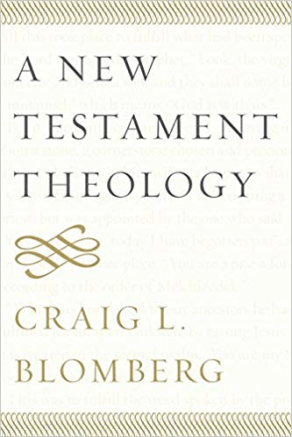
  • Book Review: A New Testament Theology by Craig L. Blomberg

    Book Review: A New Testament Theology by Craig L. Blomberg

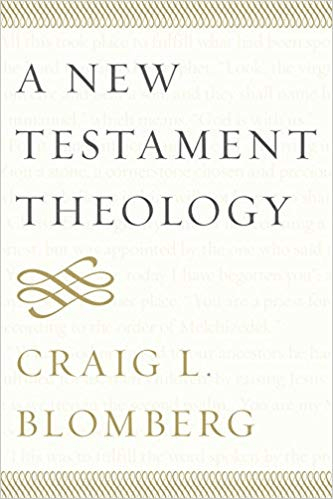
    Craig Blomberg is a scholar whose work I’ve really appreciated, particularly his works on the Gospels and his biblical theology of money and possessions. Now he’s added a complete New Testament theology to his already substantial body of work.

    While there is no shortage of New Testament theologies out there, Blomberg’s work seeks to contribute to the conversation by focusing on the theme of fulfillment as the central focus of the New Testament. What was promised by God in the Old Testament has found fulfillment in the life, death, resurrection, and reign of Jesus Christ, and the entire New Testament bears witness to this truth in a variety of ways. I think this is a really helpful lens through which to unpack the theologies of the NT authors.

    Blomberg gives a very broadly evangelical, mildly conservative perspective. I found him to be quite fair and balanced on the range of topics that inevitably come up in a NT theology. Obviously not everyone will agree with all of his positions, but there are a lot of valuable insights to be gleaned. I especially found his chapters on James and Paul’s writings to be standouts.

    I also liked that while most NT theologies treat 2 Peter and Jude together (due to their obvious similarities), Blomberg examined 1 and 2 Peter side-by-side. (He grouped Jude in with the chapter on James, which came across as a bit of a stretch at first but was an interesting experiment).

    A nice bonus to the book is that he spends a lot of time documenting the historical reliability of the NT writings before he goes into analyzing their theology, making this just as valuable a resource for apologetics as it is for biblical theology. I also love the massive bibliography represented in the footnotes — Blomberg did a very impressive amount of research for this, and there were a lot of sources cited that were new and useful to me.

    As far as the book’s weaknesses, obviously there are always going to be some topics that get shorter treatment (otherwise the book would span volumes). Blomberg doesn’t devote much space to subjects like angels, demons, and Satan, arguing that those are not main themes the NT authors dwell on but instead are incidental to the discussion. Still, there are a lot of important background assumptions about spiritual beings that shape the NT authors’ theologies, so I thought they deserved a bit more attention.

    All in all, this was a solid NT theology. Nothing game-changing, but it was balanced, readable, and would make an excellent resource even if only for the bibliography/footnotes alone! I would put it toward the top of the more recent NT theologies, above the popular ones by Beale, Schreiner, etc.

    Recommended.

    (Available from: Amazon / Publisher)


  • What Are Scholars Saying About the Holy Spirit? (Reading Reflections on Thiselton)

    What Are Scholars Saying About the Holy Spirit? (Reading Reflections on Thiselton)

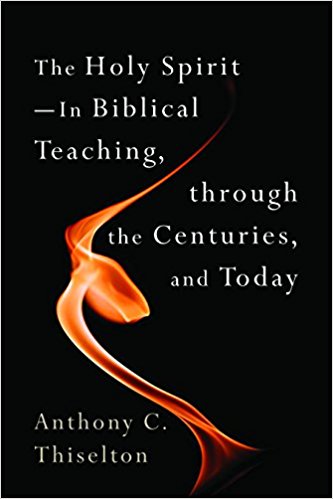
    Thiselton Holy Spirit Cover

    I recently finished reading Anthony Thiselton’s book, The Holy Spirit – In Biblical Teaching, through the Centuries, and Today. It was a fun coincidence that I stumbled across this book when I did. My church had just concluded a sermon series on the Holy Spirit and spiritual gifts, and my wife and I were desiring to dig a little deeper into what scholars are saying about the subject. So of course when I saw this tome sitting on the sale table at my seminary’s bookstore I snatched it up. And I was not disappointed!

    Thiselton is a prominent British theologian famous for his commentary on 1 Corinthians and his books on biblical interpretation, so I already knew this book on the Holy Spirit would reflect a lifetime of serious scholarship. Throughout church history, theologians and ministers have often wrestled with how to understand the person and work of the Holy Spirit, as well as the nature and role of spiritual gifts. Thiselton helps lay a foundation by examining what the Bible says about the Spirit of God before surveying in detail the scholarly conversations about the Spirit from the early church to today. Anyone who wants to become familiar with academic discussions on the Holy Spirit would do well to start here.

    Now, I have to give one important disclaimer! Clocking in at 500 pages and jam-packed with advanced scholarly interaction, Thiselton’s book is not for the faint of heart! Thankfully, though, he has also produced a condensed, reader-friendly version (link below)!

    Definitely check out the abridged version if you’re interested in learning more about the Holy Spirit, spiritual gifts, or views on the Spirit in church history, and especially if you’re going to be teaching on these topics. It’s a great resource. (I’d only recommend the original version if you’ve already had some exposure to seminary-level research.)


    A Call for Dialogue

    The thing I appreciated most about Thiselton’s book was his commitment to fostering open and respectful dialogue on this controversial topic. Considering how heated the conversations can get when people discuss the nature and role of the Spirit, I loved seeing such a gifted scholar as Thiselton calling for balance and dialogue.

    Among the other things I appreciated in Thiselton’s book:

    • He constantly called for a focus on what Scripture teaches as being of central importance.
    • He was willing to critique the weak points of both cessationists (those who think that the more “showy” gifts like miracles and tongues ceased, either after the first generation of apostles died or after the canon of Scripture was closed), as well as of continuationists/charismatics (like myself) with a gracious attitude. Thiselton shows us all where we need to clarify our thinking, but without vilifying either side.
    • He referenced and quoted from a broad range of voices from all across the theological spectrum and from every era of church history. You get the usual greats – Athanasius, Augustine, Basil, Luther, Calvin, etc., but you also get to hear from lesser-known figures like Hilary of Poitiers, Philoxenus of Syria, and Bonaventure, to name a few. Thiselton also interacts heavily with modern writers like Karl Barth, James D. G. Dunn, Gordon Fee, and many others. This allowed for multiple perspectives to be heard.

    Key Insights I Gleaned

    Here are some of Thiselton’s main points that I think are worth pondering deeply:

    1) The Spirit’s goal is to glorify Christ.

    So, if you want to be more Spirit-led, focus more on Christ (see pp. 70-71).

    2) Your spiritual gifts are not about you.

    Spiritual gifts are not primarily for us as individuals or for our self-fulfillment. They are for the purpose of building up the community of God. “It is not so much a matter of having a gift as of being a gift” (Jean-Jacques Suurmond, quoted on p. 85).

    3) The biblical concept of prophecy can include both “on-the-spot” words from God AND prepared proclamations of the gospel message.

    In Thiselton’s words, “The ‘where and when’ of prophecy, I believe, should not exclude either charismatic spontaneity or prepared, reflective preaching” (p. 176). This means we shouldn’t limit our concept of “prophecy” only to spontaneous utterances, and we should never undervalue the importance of preparation and study in ministry. Dependence upon the Holy Spirit should never be an excuse for such unspiritual qualities as laziness or neglect of learning. At the same time, though, Thiselton rightly affirms that the Lord indeed still speaks fresh words to his people through his Spirit – it’s not an “either/or” situation.

    4) The “gift of healing” is not just miraculous, but also includes giftedness at treating others medically.

    When Paul talks about the gift of healing in 1 Corinthians 12, he specifically mentions (in the Greek) “gifts of healings” (plural!). Thiselton points out that for the majority of church history this has been understood to mean both spontaneous, miraculous recoveries and/or God gifting people with medical skill to treat others (pp. 102-03, 114-20). We shouldn’t make a big divide between God working through more mundane natural processes and God working dramatically or “supernaturally.” Again, it’s not “either/or.”

    5) Being Spirit-led should not be confused with doing what’s new.

    It’s true enough that many churches are unhealthy because they’re tied to dry, religious formalism and rejecting fresh moves of the Spirit. But there’s an equal and opposite danger of being too obsessed with “new” and “fresh,” to the neglect of our past heritage (pp. 484-85). A healthy church learns from the past while being attuned to God’s will for the present. Perhaps you could say we need solid roots in the past along with fresh winds from the Spirit.

    6) A biblical understanding of the Kingdom of God helps us understand why prayers for healing are not always answered the way we might hope.

    This is a complex but important point. Let me try to explain briefly: Through the Spirit’s presence in believers, the Kingdom of God is already present to a degree, and this is why miraculous healings can and should be sought. To deny that God ever miraculously heals in response to prayer is to deny the current inbreaking of God’s Kingdom. But on the other hand, the Kingdom is not yet here in its fullest form – that will only be when Christ returns. It is only then that we will be delivered from all sickness and all death forever. It is not on this side of Christ’s return that we will experience complete and total healing in all cases.

    As Thiselton writes, this concept of the “already/not-yet” of the Kingdom “explains the ambiguity of expectancy and prayer in relation to healings.”

    “Sometimes God allows, as it were, the opening of Christmas presents before Christmas, and heals as if the End were already here. But clearly the end is not yet. . . . It seems a distraction from this important eschatological question to browbeat us with the question: Is it the will of God to heal? Of course it is; but when and where?” (p. 487).

    This last point is a powerful one, and cuts through a lot of the false expectancy taught in so many Pentecostal circles. Again Thiselton hits the nail on the head:

    “If expectancy is raised to a high pitch, there must be a degree of depression and misplaced self-recrimination from those for whom it is claimed that their Christian faith and trust was somehow deficient. If healing were a uniform and universal phenomenon, in cases of disappointment this would make the problem of suffering and evil much more acute” (p. 487).

    In other words, for those who sincerely expected a healing that did not occur, the feeling that their faith was insufficient can cause horrible disillusionment and self-doubt. Yes, God desires to heal – but in some cases that healing only comes on the other side of eternity.

    Those are a few of the many thought-provoking nuggets of wisdom Thiselton offers. What do you think of his observations? Do you disagree with any of them?

    What are your favorite books on the Holy Spirit?

    Let me know in the comments!