Tag: Arminianism

  • The Earliest Church Fathers on Election and Predestination (Part Two: Apostolic Fathers)

    The Earliest Church Fathers on Election and Predestination (Part Two: Apostolic Fathers)

    Christians have long wrestled with the subject of how God’s plans and actions in salvation interact with human responsibility and choice. And it is common for proponents of any theological system to appeal to the writings of theologians from the early church to support their views. After all, we should pay attention to how those who learned the gospel within a generation or two from Christ’s apostles talk about salvation, seeing as they are closer to the source.

    In the previous post, we looked at the writings associated with Clement of Rome, one of the earliest sources outside of the New Testament. Today we’ll turn our attention to the rest of those writings traditionally labelled the Apostolic Fathers.

    The Epistles of Ignatius of Antioch (around AD 110)

    Ignatius was bishop of the church in Antioch, and was famously martyred in Rome in the early years of the second century. On his way to martyrdom, he wrote seven letters to churches throughout the empire. These letters are primarily situational and practical, and as such they don’t delve too deeply into theological topics like election. But there are still numerous incidental references to it.

    In several of the letters’ openings, Ignatius refers to his audience as those who are elect of God. He writes that the church at Ephesus was “predestined before the ages for lasting and unchangeable glory forever, united and elect through genuine suffering by the will of the Father and of Jesus Christ our God” (Ephesians, Salutation). [1] Ignatius seems to take a very high view of God’s action in choosing his church, more so than what we saw in the Clementine writings.

    This does not mean, however, that Ignatius thinks God’s actions leave no room for human choice, or that God limits his grace only to a select few. He encourages prayer for all non-believers (“the rest of humankind”), “that they may find God, for there is in them hope for repentance” (Ephesians 10:1). In Ephesians 14:1-2 the bishop speaks of faith and love as necessary conditions for salvation: “faith is the beginning and love is the end. …For the work is a matter not of what one promises now, but of persevering to the end in the power of faith.” Elsewhere he writes that the life of Christ “is not in us unless we voluntarily choose to die into his suffering” (Magnesians 5:2).

    We also find again in Ignatius’s writings (as in Clement’s) several statements that seem to imply that individual believers must ratify their elect status through their lifestyle, and can only reach final salvation if they persevere in faith — and, as Ignatius in particular loves to emphasize, if they remain in union with the church under the authority of their bishop! He says in Ephesians 4:2 that church members must work toward unity and mutual submission “in order that [the Father] may both hear you and, on the basis of what you do well, acknowledge that you are members of his Son. It is, therefore, advantageous for you to be in perfect unity, in order that you may always have a share in God.”

    Nonetheless, Ignatius affirms that it is by God’s preparative grace that believers can, indeed, do the work of God: “because you are stones of a temple, prepared beforehand for the building of God the Father, hoisted up to the heights by the crane of Jesus Christ, which is the cross, using as a rope the Holy Spirit; your faith is what lifts you up, and love is the way that leads up to God” (Ephesians 9:1).

    Polycarp, Bishop of Smyrna, Letter to the Philippians (around AD 110)

    Polycarp was the bishop of the church in Smyrna, a personal friend of Ignatius, and a disciple of the apostle John — quite a strong pedigree for this church father! We have only one surviving document from him — a letter to the church in Philippi, written on the occasion of Ignatius’ death.

    Polycarp is very beholden to Paul’s epistles, especially the pastorals. He builds most of the core of his teaching off of Paul’s instructions about church order and leadership qualifications from 1 Timothy. Along with that, he uses Pauline phraseology to refer to salvation, as when he writes: “knowing that by grace you have been saved, not because of works, but by the will of God through Jesus Christ” (1:3).

    He also maintains the balance of NT soteriology (and aligns closely with all the other Fathers) by stressing that faith must persevere and bear fruit to be genuine and result in final salvation:

    “But the one who raised him from the dead will raise us also, if we do his will and follow his commandments and love the things he loved, while avoiding every kind of unrighteousness…” (2:2).

    “If we please him in this present world, we will receive the world to come as well, inasmuch as he promised that he will raise us from the dead and that if we prove to be citizens worthy of him, we will also reign with him — if, that is, we continue to believe” (5:2).

    For Polycarp, as it was for Paul, faith is not just mental assent but a continuing loyalty or faithfulness. Final salvation is, again, contingent on perseverance in the faith.

    Also I should mention one unique use of election terminology in Polycarp’s epistle. In 1:1, he speaks of Christians suffering persecution (likely with his recently-martyred friend, Ignatius, in mind) as those “confined by chains suitable for saints, which are the diadems of those who are truly chosen by God and our Lord.” In other words, those who are willing to suffer the ultimate test for their faith are seen by Polycarp as having undoubtedly proven their elect status.

    The Epistle of Barnabas (between AD 70 and 132)

    The document traditionally called the “Epistle of Barnabas” is actually an anonymous tract that appears to have been composed to demonstrate how Christians are distinct from mainstream Judaism and, in fact, the true beneficiaries of the Jewish scriptures and covenants. With that focus, the concept of election comes to the fore in a few places.

    A couple of passages in Barnabas connect election to God’s foreknowledge of those who would believe in Christ. The first is in chapter 3:

    “So for this reason, brothers and sisters, the one who is very patient, when he foresaw how the people whom he had prepared in his beloved would believe in all purity, revealed everything to us in advance, in order that we might not shipwreck ourselves as proselytes to their law” (3:6).

    The last phrase is significant, in that it brings up the danger of returning to traditional Judaism as a way in which the elect could potentially “shipwreck” their faith (compare Hebrews 6:1-6; 1 Timothy 1:19). But also note that God’s work of preparing people through Christ (“his beloved”) is involved in their coming to faith. The other passage that mentions God’s foreknowledge is 6:14, which speaks of God fulfilling the prophecy of Ezekiel 11:19 and giving new hearts of flesh to those “whom the Spirit of the Lord foresaw.”

    The phraseology here in Barnabas is quite pregnant, and leaves open to interpretation how much emphasis we should give to God’s work of preparing people vs. his foreknowing of people’s faith. However, other passages in Barnabas make quite clear that human volition is a major deciding factor.

    In keeping with the rest of the Apostolic Fathers, the author of Barnabas once again displays the idea that final salvation can be missed if Christians do not persevere in faith and good works, or if they fall into error. Indeed, Barnabas is even more extreme on this point.

    The author himself is merely “hoping to be saved” (1:3). Believers should “give very careful attention to our salvation, lest the evil one should cause some error to slip into our midst and thereby hurl us away from our life” (2:10). In 19:1 he says that “if any desire to make their way to the designated place, let them be diligent with respect to their works.” And in 21:6, he says we must be “seeking out what the Lord seeks from you and then doing it, in order that you may be found in the day of judgment.”

    To drive the point home, the failures of Israel in the OT are held up as the key example of the danger of apostasy — even for those who are called! — in chapter 4:

    “Let us never fall asleep in our sins, as if being ‘called’ were an excuse to rest, lest the evil ruler gain power over us and thrust us out of the kingdom of the Lord. Moreover consider this as well, my brothers and sisters: when you see that after such extraordinary signs and wonders were done in Israel, even then they were abandoned, let us be on guard lest we should be found to be, as it is written, ‘many called, but few chosen’” (4:13-14).

    Thus Barnabas, perhaps more than any other of the writings of the Apostolic Fathers, seeks to enforce the idea that the believer’s calling is conditional and must be maintained through much effort in order to ensure final inclusion among the elect (compare 2 Peter 1:10).

    The Shepherd of Hermas (between AD 90 and 154)

    The last text we’ll examine today is The Shepherd of Hermas, a complex writing that contains a mix of apocalyptic and allegorical visions intended to promote ethical living in the church. The Shepherd was one of the most popular Christian works in the first few centuries of the church, though we know little about its author other than that he appears to have been a Gentile freedman living in or near Rome and involved with the church there.

    Some of the earliest Church Fathers (including Irenaeus, Clement of Alexandria, and Origen) treated Hermas as authoritative Scripture, and even Athanasius (who was highly influential in shaping the canon as we know it) encouraged new believers to read it as discipleship material. (The analogy I’ve often heard is that The Shepherd of Hermas is a bit like an ancient equivalent to The Pilgrim’s Progress.)

    Seeing as it focuses more on Christian ethics and growth in virtue, Hermas does not discuss the topics of election or predestination in any great detail. But when the topic of salvation is discussed, the emphasis is almost entirely on the side of human volition. Indeed, one of the most striking teachings of the book is that if people “repent with all their heart, they will be enrolled with the saints in the books of life” (Vision 1.3:2). [2] According to Hermas, God gives repentance to those he foresees are “about to serve him with all their heart” (Similitude 8.6:2). Thus, there is no doubt that whoever wrote Hermas believed salvation was contingent on human choice.

    That doesn’t mean God’s grace is absent from the discussion. God is said to have, in his mercy, “instilled righteousness in you in order that you may be justified and sanctified from all evil and all perversity” (Vision 3.9:1; cf 4.3:5). However, and in keeping with every other writing thus far, perseverance in this sanctity is necessary in order to reach final salvation (Vision 1.3:4; 2.3:2; Mandate 7.1; 8.7-12; Similitude 6.1:3; 8.8:2; 8.11:1). Mandate 10.2:5 even warns that continued sin might cause the Holy Spirit to leave a believer! According to Similitude 8.6:3, God’s seal on believers can be broken. Hermas mentions apostasy and blasphemy against the Spirit as being the unforgivable sins (Similitude 6.2:3; 9.26:5; cf. Hebrews 6:1-6; 1 John 5:16).

    In Vision 3 chapter 8, Hermas sees a vision of different Christian virtues personified as women building a tower. The first and foundational virtue is Faith, and “through her God’s elect are saved” (Vision 3.8:3). However, the other virtues are described as also being necessary in order for one to be included in the church and final salvation. Faith must be supplemented with and expressed through a life of virtue (compare 2 Peter 1:3-11; see also Vision 4.2:4; Similitude 9.13:2).

    In a later passage, Hermas is told to go and preach “to all people, in order that they may repent and live to God, for the Lord in his compassion sent me to give repentance to all, though some, because of their deeds, do not deserve to be saved” (Similitude 8.11:1). In other words, the offer of salvation is universal. In that same verse, we’re told that God “wants those who were called through his Son to be saved,” implying in context that even those who are called could miss salvation if they don’t repent in time (much like in Barnabas).


    Thus, we may notice a trend in each of the writings from the century after the New Testament was written: all of these Christian thinkers viewed the believer’s calling and election as something that was contingent on their choices. One’s willingness to live a life of obedience to God in Christ and to persevere in the faith was the deciding factor, and even the most sincere believer could be at risk of failing to attain final salvation by committing apostasy.

    While none of the Apostolic Fathers writes in any kind of detailed, systematic fashion about how election works or whether God’s initial justification of a Christian is unconditional, they unanimously assert the contingency of final salvation. And their understanding of God’s offer of repentance is that it is genuinely universal, extended to all people and effective for those who believe (which is foreknown by God).

    When we turn in a future post to look at the early Christian Apologists from the second century, such as Justin Martyr and Irenaeus, we will see an even more explicit emphasis on this universal offer of salvation and the freedom of humanity to accept or reject it. Indeed, in the face of the prevailing Greek notions of Fate, the Christian Apologists’ constant refrain will be that every person is responsible for his or her own choices, “for there is no coercion with God.”


    [1] All quotations of the Fathers are from Michael W. Holmes, The Apostolic Fathers: Greek Texts and English Translations, 3rd ed. (Baker Academic, 2009).

    [2] The Shepherd of Hermas is divided into three sections — the Visions, the Mandates (or Commandments), and the Similitudes (or Parables). Citations of Hermas typically include references to these divisions, with chapters and verses in each Vision, Mandate, or Similitude (e.g., Vision 1, chapter 3, verse 2).
  • Book Review: The Openness of God

    Book Review: The Openness of God

    Open theism is a topic that tends to rustle a lot of feathers, especially in some conservative/fundamentalist camps where the view often gets immediately labeled as unorthodox or even blasphemous. When I was in seminary, it was always quickly dismissed as just the problematic view of a small minority of contemporary theologians, and the professors quickly rushed us back to the books and statements of their preferred Reformed/Calvinist guys.

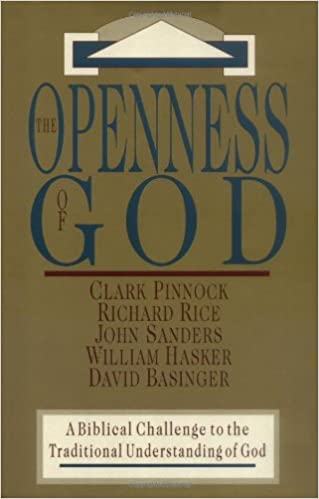
    Yet, the open view has come to be supported by a great many Christian philosophers and a growing number of biblical scholars, theologians, and influential pastors. I finally decided to make the time to start reading primary sources arguing for this view, and I’m glad I started with The Openness of God: A Biblical Challenge to the Traditional Understanding of God (IVP Academic, 1994). It was an excellent primer on the subject.

    In The Openness of God, five different authors set out to introduce open theism, offer a brief defense of it on biblical, theological, philosophical, and practical grounds, and explain why it should at least be considered as an orthodox Christian viewpoint.

    Open theism (also referred to as the “open view” of God or “free will theism”) challenges traditional understandings of God as absolutely immutable, impassible, and eternally decreeing everything that comes to pass. Instead, it posits that God is inherently relational, choosing to extend significant freedom of choice to his creations, and open to accepting new developments and even taking risks as part of that loving freedom.

    On an even more fundamental level, open theism makes an important claim about the nature of the future. While God’s omniscience means he knows everything that can possibly be known, the future cannot be known because it does not yet exist. God is therefore “open” to the future as something that has not yet come into being.

    This means that human choices (along with God’s actions and reactions) help determine what kind of future comes into being, and God can therefore be genuinely affected by our choices — experiencing joy and sorrow (Gen 6:5-6; Matt 8:10; Luke 15), learning (Gen 22:12; Jer 32:35), and even changing his mind (Exo 32:9-14; 1 Sam 15:11, 35; Jonah 3:10). The future is thus neither exhaustively foreknown nor eternally foreordained; instead, God interacts with the decisions of people to bring about his desired ends.

    Such an interpretation of God’s nature and his interaction with the world sounds very counterintuitive to modern readers who are so inherently used to the idea that a perfect God ought to know everything that will happen in the future. And yet, openness theologians claim, this popular preconception is not drawn straight from Scripture, but rather has been filtered down to us by centuries of tradition rooted in Greek conceptions of God as a timeless, changeless entity. The open view of God stands as a challenge to go back to Scripture and consider whether the tradition got it right. In this sense, openness theologians continue the project instigated by the Protestant Reformers of always going back to the sources and measuring even the most cherished interpretations against Scripture.

    Each of the five chapter-length essays in The Openness of God does a good job covering its topic clearly and concisely. The authors state their case well, summarizing the weaknesses of alternate views and anticipating potential objections to their arguments. However, since this book is intended as an introduction to the subject for a popular audience, it doesn’t go into exhaustive detail or extensive argumentation.

    Readers who are already staunchly opposed to open theism probably won’t have their minds changed, and others like me who are at least open (pardon the pun) to the idea but not fully persuaded will likely need more convincing. I still had lingering questions after reading, but thankfully there are many resources furnished in the extensive endnotes.

    That aside, in my opinion the authors do succeed at making the case for at least seeing open theism as a valid doctrinal option. They demonstrate a clear concern for remaining faithful to the essentials of Christian orthodoxy and have a high regard for the authority of Scripture when forming their theological viewpoints. They also do a good job of pointing out the key problems inherent in the other main Christian approaches to the nature of God’s relationship to creation and time (Calvinism, Molinism, Classical Arminianism, and Process Theology).

    And they raise a very good point that’s well worth considering when they argue that, no matter what theological conclusion we come to regarding God’s relationship to time and the future, on a practical level nearly every believer lives, prays, and worships as if they really do have a genuine, give-and-take relationship with God and as if their choices genuinely do matter and affect him personally. While by no means settling the issue, it should at least give us pause and invite us to consider whether such concrete realities tell us something important about how God has, in his unmatched wisdom and love, decided to structure his creation.

    The Bottom Line: All in all, The Openness of God is a great introduction to an important topic and also a great exercise in practical theology. I found it very informative and enjoyable to read, even if not ultimately persuasive enough to shift my position at the moment. Recommended to anyone wanting to better understand different perspectives on the nature of God.

    If I get some time, I may interact more with the contents of this book (and/or arguments for and against open theism in general) in future posts.


    A Postscript: I know that some readers in my circles may be among those who have been led to feel that open theism is “beyond the bounds” of Christian orthodoxy (as some of its detractors claim). However, I did not find that any of the claims in The Opennness of God fell outside of the core essentials of the Christian faith as expressed in, for example, the Nicene Creed (to take an early Christian confession that pretty much all Christians agree on). Nothing I read here went against the spirit of what C. S. Lewis would call “mere Christianity.”

    It seems to me that many of open theism’s most vocal opponents really are concerned less with the actual claims of open theists and instead are reacting to what they perceive are possible implications of the view. Or, in the case of Calvinists, they simply have issues with open theism for the same reasons they have issues with all other schools of thought that don’t support meticulous divine determinism (the idea that God has already preordained everything that comes to pass). Most of the arguments I’ve seen Calvinists level against open theism are essentially the same ones they would level against forms of Molinism or Arminianism or any other system that affirms libertarian free will.

    Anyone struggling with whether or not to even consider open theism as an option should read this super-brief primer by Greg Boyd, and then this essay responding to unfair criticisms of the view. 

  • No One Can Come to Jesus Unless the Father Draws Them: Two Views on Election in John 6

    No One Can Come to Jesus Unless the Father Draws Them: Two Views on Election in John 6

    (Unless otherwise noted, all Scripture quotations are from the CSB).

    In John 6, Jesus makes a number of startling claims. He’s in the middle of a dialogue with a crowd of Jewish people who were denying the claims he was making about himself. Specifically, they struggled to accept that he truly had “come down from heaven” (6:41-42). In response to their unbelief, Jesus says, among other things:

    “Everyone the Father gives me will come to me, and the one who comes to me I will never cast out” (6:37).

    No one can come to me unless the Father who sent me draws him, and I will raise him up on the last day” (6:44).

    “He said, ‘This is why I told you that no one can come to me unless it is granted to him by the Father’” (6:65).

    Why does Jesus tell these people that only those who are drawn by the Father can come to him? Here I’ll do my best to briefly summarize two possible views on this topic.


    Option 1: Unconditional, Individual Election

    Here’s one way we could interpret Christ’s statements: We could see John 6 as teaching that God already decided (unconditionally) that certain people would believe and be saved — and only those people will come to Jesus. Calvinist interpreters, in particular, look to John 6 as a foundational passage for this doctrine of unconditional election. On this reading, people only choose to believe in Jesus because God the Father, before time began, predestined them to do so. And then, at some point during their earthly life, he draws them irresistibly to Jesus.

    Among the details in the passage that might support such a reading are: 1) the intense emphasis on the inability of many in Jesus’ audience to accept his teaching, 2) the fact that Jesus’ words focus on individuals, and 3) the Greek term for “draw” (helkō), which in many contexts refers to a strong action like drawing in a net of fish (John 21:11) or actually dragging someone (Acts 16:19).

    On the other hand, reading John 6 as a timeless affirmation of unconditional election does involve a few difficulties. One is the fact that elsewhere in John’s Gospel, Jesus teaches that every person’s eternal destiny will be based on whether or not they choose to put their faith in him (John 3:18; 5:24). Another is the question of how the “drawing” in John 6 relates to Jesus’ “drawing” (same Greek word) of all people in John 12:32.

    We’re also told in John 3:16 that God loves the whole world (specifically referring, in John’s writings especially, to the world of unbelieving humanity). Holding to a doctrine of unconditional election raises the difficult question of how exactly God’s love extends to the unbelievers he chooses not to draw.

    There have, of course, been numerous thoughtful answers to these questions by Calvinist scholars. Many of them point out that no one would choose salvation unless God first overpowered their rebellious wills, and that his decision to leave some in their sins is to display his just wrath against sin. This is all so that salvation is completely by God’s grace.


    Option 2: The Drawing of Faithful Jews to Jesus as Their Messiah

    Another way we could interpret John 6 is to see it as describing a unique situation in history — namely, the transfer of faithful Israelites under the Mosaic Covenant to their newly-arrived Messiah, Jesus. On this view, the people whom the Father was drawing to Jesus on that particular occasion were those Jewish people who were already faithfully responding to God’s revelation through the Torah and the Prophets.

    Right after Jesus says that no one can come to him unless the Father draws them (6:44), he immediately gives an explanation of what he means: “It is written in the Prophets: And they will all be taught by God. Everyone who has listened to and learned from the Father comes to me ” (6:45, emphasis added).

    Notice the parallel: the Father’s action of drawing people to Jesus is tied to the people’s action of heeding the words of the prophets. So the way Jesus himself explains it, God had already been preparing his people for their Messiah through the proclamation of his word. Those who were being drawn were those who were heeding what the Spirit of God was saying through the Hebrew Scriptures and the teachings of Jesus.

    The problem is, not everyone in Israel was responsive; the majority were not receptive at all. But there was a faithful remnant — we see this exemplified in the disciples (well, except for Judas!) who remained with Jesus because they understood he had “the words of eternal life” and believed (6:68).

    This minority of faithful Jews were the ones the Father drew to their Messiah. He ensured that no one who was responsive to his word missed out on its fulfillment in Jesus. Thus, when we read John 6, we shouldn’t see Jesus as offering philosophical speculations about eternity past; rather, he was addressing the issue of how only those who were receptive to the Father under the Old Covenant would be receptive to their promised Messiah, Jesus, now that he was finally on the scene.

    John’s Gospel in particular is concerned with the question, “Now that the Messiah has come, why did so many Jewish people reject him?” This is a very important topic for John, as he makes clear in his prologue: “he [Jesus] came to his own, and his own people did not receive him” (John 1:11). On the other hand, “But to all who did receive him, who believed in his name, he gave the right to become children of God” (1:12).

    With the arrival of Messiah, a massive shift in history was taking place. God was drawing the faithful remnant of Jews to their Messiah. Related to the salvation of the believing remnant of Israel was the full inclusion of Gentiles, too,  into God’s community. This is why Jesus later stresses that he has “other sheep that are not of this fold,” and he “must bring them also” (10:16). This refers to God-fearing Gentiles — those who, like the remnant of Israel, were already being taught by the Father and learning from him through the Jewish Scriptures.

    Later on in John’s Gospel, Jesus says that he will draw “all people” to himself when he is “lifted up” (12:32). In other words, through Jesus’ atoning work on the cross, the drawing activity of God through his Word/Messiah would be radically extended to include the entire Gentile world (see also the “mystery” Paul refers to in Ephesians 3:1-13). [1]

    In my opinion, this view does a better job of situating Jesus’ teaching firmly within its first-century Jewish context, and better accounts for how John’s Gospel describes the seismic salvation-historical shift that took place in Jesus’ ministry. That’s not to say it’s unquestionably the right view — one could still debate whether God decreed that the remnant would be receptive to the word, and of course other passages that touch on election/predestination have to be considered. But it does mean that John 6 can be faithfully interpreted in a way that coheres with a conditional view of election, without doing injustice to the text.


    Conclusion

    No matter which of these two views you end up taking, they both affirm that God is the one who has made salvation possible — a salvation found only by his grace through Jesus Christ. Faithful Christians can (and should) continue to test their interpretations against Scripture, and hold those interpretations with a gracious and humble attitude.

    Obviously, discussion about the interpretation of John 6 will continue. But I know that some people in my particular circles (within American evangelicalism) have only ever been exposed to Calvinist readings of John 6, so at the very least I hope this post will present a viable alternative they may not have considered.

    What do you think? Which reading do you prefer, and why? Are there some aspects of the alternative view that you hadn’t considered? Let me know in the comments.

    I close with this nice quote from Gerald Borchert’s commentary on John:

    “Salvation is never achieved apart from the drawing power of God, and it is never consummated apart from the willingness of humans to hear and learn from God. To choose one or the other will ultimately end in unbalanced, unbiblical theology. . . . Rather than resolving the tension, the best resolution is learning to live with the tension and accepting those whose theological commitments differ from ours.” [2]

    For more on the topic of election/predestination, check out my previous posts:
    Calvinism & Arminianism: What I Wish Everyone Knew About the Debate
    – Recommended Resources on Calvinism & Arminianism

    See you down the path.


    [1] This statement in John 12 cautions against seeing the “drawing” activity of God as something that leads irresistibly to salvation, since not everyone among the Gentiles will inevitably be saved.

    [2] Gerald L. Borchert, John 1-11, NAC vol 25A (Nashville: Broadman & Holman, 1996), 268-69.

  • Recommended Resources on Calvinism & Arminianism

    Recommended Resources on Calvinism & Arminianism

    Following up on my last post, I figured it would be good to give some recommend material for those who want to dig deeper into the topic of election/predestination, or into the debate between Calvinism and Arminianism in general.

    If you’ve been a Christian for any length of time, you’ve probably already given this subject some thought. And maybe you’ve even taken an stance on it – whether Calvinist, Arminian, or something else altogether!

    But whether you’ve settled on a position or you’re just now setting out into these deep waters, it’s good to consider each side of the debate. To help with that, here are a few books that I’ve found to be the most helpful. Each of these has had an impact on my own thinking — even the ones where I disagreed with the author’s conclusions. They’ve helped me to clarify my own position and challenged me to keep exploring Scripture.

    Along that same line, I want to issue a personal challenge to you, dear reader: If you already identify with a particular position, read a work arguing for the other side! 

    Two reasons I encourage this. Firstly, it’s important that you hear the best arguments your opponents have to offer, out of respect for them. Make sure you really know what it is you disagree with. And secondly, seeing that other Christians have logical reasons for their views helps keep you humble. It fosters greater unity when you can at least understand where folks of different theological persuasions are coming from.

    Without further ado, here are my top recommended resources on election/predestination!


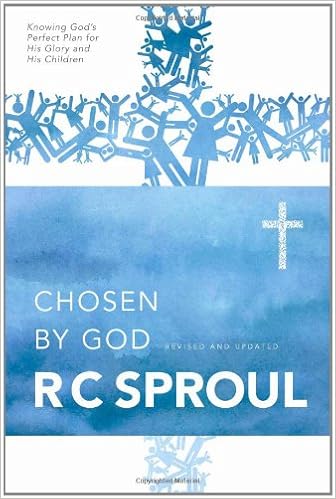
    Chosen By God by R. C. Sproul

    Sproul’s short book is a classic primer on the Calvinist understanding of election (that God unconditionally elects individuals to salvation or damnation). It’s concise, thorough, and readable. Even though it’s the one on this list that I find the most disagreement with (for example, at one point he implies that Calvinism is the only truly Protestant view, which is very much incorrect), it’s still worth reading to get a quick introduction to and defense of Calvinism.


    hand in Hand: The Beauty of God’s Sovereignty and Meaningful Human Choice by Randy Alcorn.

    Alcorn’s book is a great example of moderate Calvinism, and he goes more in-depth than Sproul in his discussion of how God’s providence intersects with human choice from a compatibilist perspective. Alcorn examines a great number of Scripture passages, while also covering the philosophical elements, all without getting overly technical. What I appreciate most is Alcorn’s tone – he’s a great example of how to defend your view with fairness and charity. Also, his first chapter gives some fantastic perspective on the Calvinist/Arminian debate as a whole.


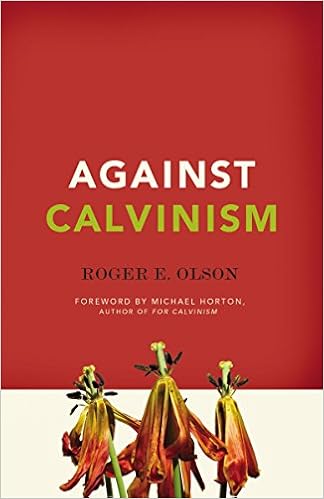
    Against Calvinism: Rescuing God’s Reputation from Radical Reformed Theology by Roger Olson.

    I think Olson’s book is one that every Christian should read at least once, whether you end up agreeing with him or not. The reason it’s so good is that he begins by defining and explaining Calvinism thoroughly before he explains why he disagrees with it, so you’ll get clear definitions of both sides. It’s a great model for how debate should happen. Olson never sets up straw-man arguments – he extensively quotes the best exponents of Calvinism, articulates clearly the challenges to their views, and provides a well-written and passionate case for Arminianism. 


    Grace, Faith, Free Will by Robert Picirilli.

    Just as Sproul’s Chosen by God is a good primer on Calvinism, Picirilli’s book is an excellent introduction to classical Arminian thought. He defends the view that election is tied to God’s foreknowledge of people’s faith-decision. Picirilli also covers a great deal of Scripture, although with certain Bible passages his book could have benefitted from more extensive exegesis and discussion.


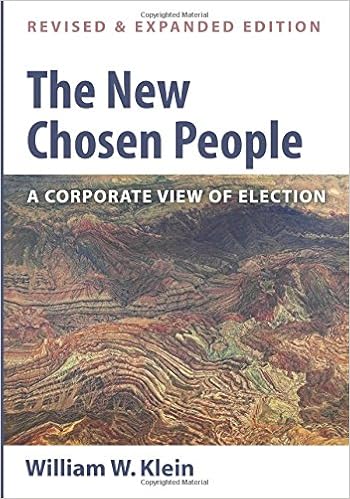
    The New Chosen People (Revised & Expanded Edition): A Corporate View of Election by William Klein.

    Klein’s work is probably the best modern treatment of the corporate view of election. He examines Scripture in-depth to argue that election is far more about group identity than about an individual’s personal destiny. If that idea alone sounds new to you, you need to pick up Klein’s book! He explores the Old Testament, intertestamental Jewish literature, and the New Testament, and his coverage of “election” terminology in Scripture is itself worth the price of the book.


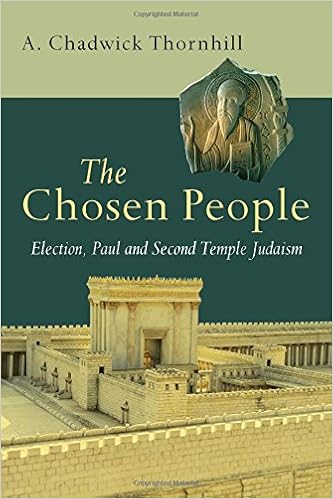
    The Chosen People: Election, Paul, and Second Temple Judaism by A. Chadwick Thornhill.

    I add this as a bonus, as it also supports the corporate view of election and complements Klein’s book nicely. Where Thornhill’s book differs from Klein’s is that it focuses more attention on what Jewish thinkers were saying about election and predestination in the days shortly before the New Testament was written. In other words, you’ll learn more about how the apostle Paul and other New Testament writers were joining a conversation that was already underway. You’ll get deeper background on how the imagery of election and predestination was being understood in the first century, and learn how Scripture develops that conversation. 


    I hope you’ll read at least one (if not more) of these, and that they’ll help sharpen your thinking on this controversial and challenging topic!

    Let me know what you think! Have I left out any of your favorites? Drop me a comment!

    See you down the path.