Category: Resource Recommendations

  • Book Review: The Openness of God

    Book Review: The Openness of God

    Open theism is a topic that tends to rustle a lot of feathers, especially in some conservative/fundamentalist camps where the view often gets immediately labeled as unorthodox or even blasphemous. When I was in seminary, it was always quickly dismissed as just the problematic view of a small minority of contemporary theologians, and the professors quickly rushed us back to the books and statements of their preferred Reformed/Calvinist guys.
    Yet, the open view has come to be supported by a great many Christian philosophers and a growing number of biblical scholars, theologians, and influential pastors. I finally decided to make the time to start reading primary sources arguing for this view, and I’m glad I started with The Openness of God: A Biblical Challenge to the Traditional Understanding of God (IVP Academic, 1994). It was an excellent primer on the subject.

    In The Openness of God, five different authors set out to introduce open theism, offer a brief defense of it on biblical, theological, philosophical, and practical grounds, and explain why it should at least be considered as an orthodox Christian viewpoint.

    Open theism (also referred to as the “open view” of God or “free will theism”) challenges traditional understandings of God as absolutely immutable, impassible, and eternally decreeing everything that comes to pass. Instead, it posits that God is inherently relational, choosing to extend significant freedom of choice to his creations, and open to accepting new developments and even taking risks as part of that loving freedom.

    On an even more fundamental level, open theism makes an important claim about the nature of the future. While God’s omniscience means he knows everything that can possibly be known, the future cannot be known because it does not yet exist. God is therefore “open” to the future as something that has not yet come into being.

    This means that human choices (along with God’s actions and reactions) help determine what kind of future comes into being, and God can therefore be genuinely affected by our choices — experiencing joy and sorrow (Gen 6:5-6; Matt 8:10; Luke 15), learning (Gen 22:12; Jer 32:35), and even changing his mind (Exo 32:9-14; 1 Sam 15:11, 35; Jonah 3:10). The future is thus neither exhaustively foreknown nor eternally foreordained; instead, God interacts with the decisions of people to bring about his desired ends.

    Such an interpretation of God’s nature and his interaction with the world sounds very counterintuitive to modern readers who are so inherently used to the idea that a perfect God ought to know everything that will happen in the future. And yet, openness theologians claim, this popular preconception is not drawn straight from Scripture, but rather has been filtered down to us by centuries of tradition rooted in Greek conceptions of God as a timeless, changeless entity. The open view of God stands as a challenge to go back to Scripture and consider whether the tradition got it right. In this sense, openness theologians continue the project instigated by the Protestant Reformers of always going back to the sources and measuring even the most cherished interpretations against Scripture.

    Each of the five chapter-length essays in The Openness of God does a good job covering its topic clearly and concisely. The authors state their case well, summarizing the weaknesses of alternate views and anticipating potential objections to their arguments. However, since this book is intended as an introduction to the subject for a popular audience, it doesn’t go into exhaustive detail or extensive argumentation.

    Readers who are already staunchly opposed to open theism probably won’t have their minds changed, and others like me who are at least open (pardon the pun) to the idea but not fully persuaded will likely need more convincing. I still had lingering questions after reading, but thankfully there are many resources furnished in the extensive endnotes.

    That aside, in my opinion the authors do succeed at making the case for at least seeing open theism as a valid doctrinal option. They demonstrate a clear concern for remaining faithful to the essentials of Christian orthodoxy and have a high regard for the authority of Scripture when forming their theological viewpoints. They also do a good job of pointing out the key problems inherent in the other main Christian approaches to the nature of God’s relationship to creation and time (Calvinism, Molinism, Classical Arminianism, and Process Theology).

    And they raise a very good point that’s well worth considering when they argue that, no matter what theological conclusion we come to regarding God’s relationship to time and the future, on a practical level nearly every believer lives, prays, and worships as if they really do have a genuine, give-and-take relationship with God and as if their choices genuinely do matter and affect him personally. While by no means settling the issue, it should at least give us pause and invite us to consider whether such concrete realities tell us something important about how God has, in his unmatched wisdom and love, decided to structure his creation.

    The Bottom Line: All in all, The Openness of God is a great introduction to an important topic and also a great exercise in practical theology. I found it very informative and enjoyable to read, even if not ultimately persuasive enough to shift my position at the moment. Recommended to anyone wanting to better understand different perspectives on the nature of God.

    If I get some time, I may interact more with the contents of this book (and/or arguments for and against open theism in general) in future posts.


    A Postscript: I know that some readers in my circles may be among those who have been led to feel that open theism is “beyond the bounds” of Christian orthodoxy (as some of its detractors claim). However, I did not find that any of the claims in The Opennness of God fell outside of the core essentials of the Christian faith as expressed in, for example, the Nicene Creed (to take an early Christian confession that pretty much all Christians agree on). Nothing I read here went against the spirit of what C. S. Lewis would call “mere Christianity.”

    It seems to me that many of open theism’s most vocal opponents really are concerned less with the actual claims of open theists and instead are reacting to what they perceive are possible implications of the view. Or, in the case of Calvinists, they simply have issues with open theism for the same reasons they have issues with all other schools of thought that don’t support meticulous divine determinism (the idea that God has already preordained everything that comes to pass). Most of the arguments I’ve seen Calvinists level against open theism are essentially the same ones they would level against forms of Molinism or Arminianism or any other system that affirms libertarian free will.

    Anyone struggling with whether or not to even consider open theism as an option should read this super-brief primer by Greg Boyd, and then this essay responding to unfair criticisms of the view. 

  • Top 10 Theology Books That Have Impacted My Life

    Top 10 Theology Books That Have Impacted My Life

    It’s now been over two weeks since we’ve been sheltering at home. I’ve posted every day for 14 days. After all the research I did for yesterday’s post, I’m feeling a little brain-dead today. So here’s something on the lighter side. It’s Friday, after all.

    Without too much commentary, here are the top ten books that I would say have had the biggest impact on me when it comes to my theological perspective. Some of these brought about massive paradigm shifts as a result of reading them. Some have affected the course of my life in pivotal seasons. Their place here does not imply that I agree with every idea proposed in all of them, but that does not diminish the importance they’ve had in my journey.

    1. Mere Christianity by C. S. Lewis — The one that jump-started my journey as a theologian, and a constant reminder of the beauty of the core doctrines all Christians can agree on, even amidst the great diversity in the church.
    2. The Reason for God by Tim Keller — The cogent arguments in this book helped save my faith in a season of intense doubt (read more about that here).
    3. The Grace Awakening by Charles Swindoll — God used this book to remind me how radical his grace toward me really is, and it opened my eyes to how badly I needed to learn to have grace with myself, too.
    4. Living by the Book by Howard G. Hendricks & William Hendricks — My introduction to the basics of biblical exegesis back when I was a total noob in college. Everybody’s gotta start somewhere.
    5. Against Calvinism by Roger Olson — Helped me put my finger on the philosophical problems my previously-held Calvinistic framework never could quite explain and that I always felt terribly uneasy about.
    6. Following the Master: A Biblical Theology of Discipleship by Michael J. Wilkins — Honed my abiding passion for discipleship into what eventually became a course I now teach annually for college interns.
    7. Justification by N. T. Wright, and Salvation by Allegiance Alone by Matthew Bates — Putting these together as a tie for #7 since I read them back-to-back and since both helped me get more comfortable swimming in the massive pool that is the New Perspectives on Paul movement. Also, both these books helped me articulate a fuller definition of “faith” that’s more accurate to what the NT envisions.
    8. Five Views on Biblical Inerrancy edited by J. Merrick & Stephen M. Garrett — Phew, boy! This one forced me to reexamine all of my presuppositions about how the Bible works and how it’s meant to be read. I’d say my faith in Scripture’s truthfulness and authority is stronger (but also more nuanced) than ever thanks to reading it.
    9. Inspiration and Incarnation by Peter Enns — Similar to the one above. After deconstructing my initial doctrine of Scripture, this particular book by Enns was helpful for reconstruction, and I’ve since adopted the “progressive or genre-based inerrancy” approach he articulates.
    10. Reading Revelation Responsibly by Michael J. Gorman, and Revelation: Anchor Yale Bible Commentary by Craig R. Koester — I list these two together as a tie because I read them back-to-back in a season when I was reexamining my entire approach to eschatology (last things) and the book of Revelation. Gorman’s provocative book put the nail in the coffin of my previous “Left Behind” dispensationalist approach, while Koester’s excellent commentary opened my eyes to the literary, historical, and theological beauty of Revelation when the fearmongering of American end-times culture is, pardon the pun, left behind.

    And those are the top ten theology books that have influenced me. At least, the ones whose influence I can most clearly bring to mind; others have no doubt left more indelible marks.

    What books have most changed your life or your thinking? Let me know in the comments.

    See you down the path.

  • Best Commentaries on 1 Peter

    Best Commentaries on 1 Peter

    If you want to go deeper in your study of a book of the Bible, it’s important to have a few good commentaries at hand. The best ones will explain the nuances of the original language, introduce the historical circumstances behind the book, unpack the theological connections with other portions of Scripture, and offer good material for reflection, preaching, and application.

    Any time I’m studying or teaching a biblical book, I make a point to compare as many of the major scholarly commentaries as I can, for my own benefit and so I can make reliable recommendations to you!

    When it comes to 1 Peter, there are a number of good commentaries available. Scholarly discussion of 1 Peter often revolves around two key background matters: 1) authorship (whether the letter was actually written by the apostle Peter or was composed in his name after his death), and 2) audience (was it written to Jews or Gentiles, primarily?). A commentator’s conclusion on these two questions will inevitably shape their interpretation of 1 Peter.

    Here are the top five commentaries I’ve found most helpful for studying and teaching 1 Peter:


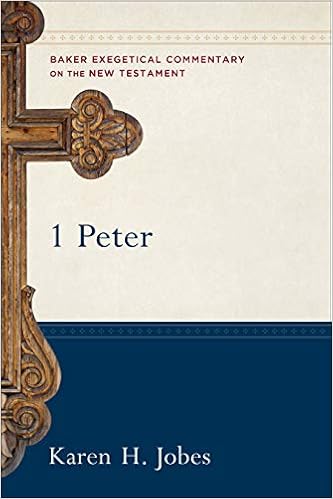
    1. Karen H. Jobes, 1 Peter (BECNT; Baker, 2005).

    Level: Semi-Technical

    This one is a bit on the technical side, but still manages to be accessible to lay readers. 

    Jobes argues extensively for the traditional view of Petrine authorship among recent commentaries, and argues that the apostle wrote to Jewish followers of Jesus who moved into Asia Minor as a result of Roman colonization efforts in the 50s C.E.

    Jobes covers all the important exegetical details while at the same time offering great insights for preaching and teaching. Pastors and serious students of 1 Peter can’t afford to pass this one up.


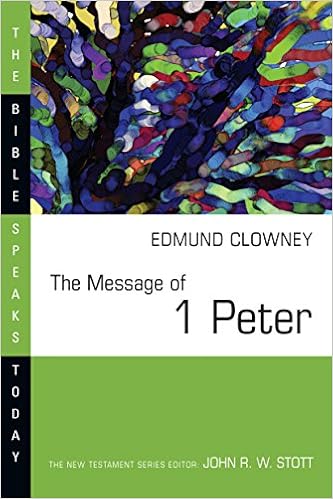
    2. Edmund P. Clowney, The Message of 1 Peter (BST; IVP Academic 1989).

    Level: Pastoral, Devotional

    Clowney’s book reads less like a traditional commentary and more like a series of sermons on 1 Peter. I enjoy using it as a supplement to Jobes, since Clowney offers many great quotes and reflections for preaching.

    He writes from a Reformed perspective, holds the traditional view of authorship, and thinks Peter wrote mainly to Gentile Christians. Even where my own perspective differs, I appreciate Clowney’s reflections. He does a great job tying 1 Peter to other Scripture and bringing out the theological significance. Plus he’s just really pleasant to read!


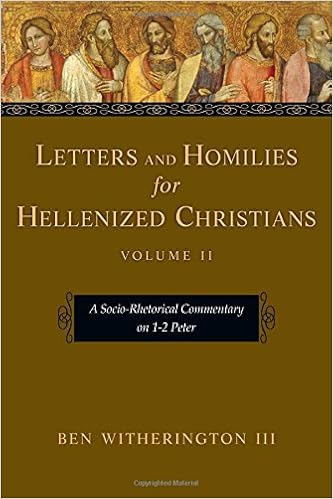
    3. Ben Witherington III, Letters and Homilies for Hellenized Christians: A Socio-Rhetorical Commentary on 1-2 Peter (IVP Academic, 2016).

    Level: Semi-Technical

    Witherington’s commentaries are unique in that they focus especially on the literary and rhetorical character of the New Testament books, while also drawing out their theology. He sheds light on the rhetorical techniques Peter used to encourage his audience in the midst of their trials and persuade them toward holy living so they could be witnesses to the Gentiles.

    Witherington upholds Petrine authorship and makes an extensive case for a primarily Jewish audience. This commentary is geared more towards scholars and academic students, but interested lay readers and pastors will find much benefit as well (not to mention it also covers 2 Peter!).


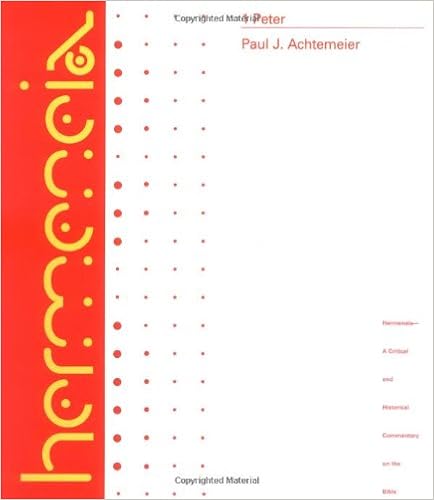
    4. Paul J. Achtemeier, 1 Peter (Hermeneia; Fortress Press, 1996).

    Level: Technical

    Achtemeier’s commentary in the Hermeneia series differs from the others on this list in that he believes 1 Peter is pseudonymous (written by someone other than the apostle Peter) between 80 and 100 C.E. While this may be jarring to more conservative readers, his commentary is still very much worth consulting.

    I’ve found it to be one of the best when it comes to Greco-Roman historical background on 1 Peter, and his discussion of the type of persecution the epistle addresses is excellent. I’ve also found it helpful when it comes to questions of translation in the Greek. It is very much on the technical/scholarly side, but if you already have some exposure to academic New Testament studies you should definitely consult Achtemeier.


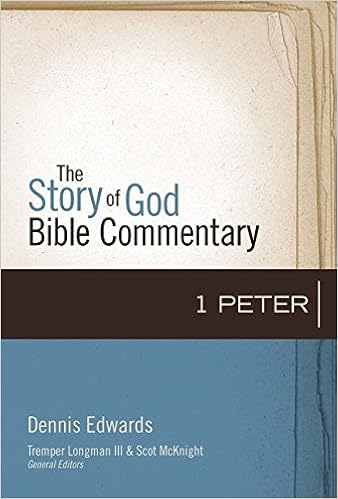
    5. Dennis R. Edwards, 1 Peter (SoGBC; Zondervan, 2017).

    Level: Semi-Technical, Pastoral

    Edwards’ commentary doesn’t add much that is new or original to discussion of 1 Peter, but where he shines is in applying 1 Peter to contemporary life. The Story of God Bible Commentary series features in-depth, practical reflections after the comments on every passage (called “Live the Story”), and Edwards draws parallels between Peter’s words to his exiled audience and civil-rights issues that churches in America face today.

    His commentary is useful for that reason alone, but his exegesis of 1 Peter also strikes a nice balance between being scholarly and pastoral. He sees Peter as the author and views the audience as mostly Gentile Christians. This one is a good value-buy for busy lay readers, pastors, and Sunday school teachers, but it isn’t quite as stellar as Jobes for matters of interpretation.


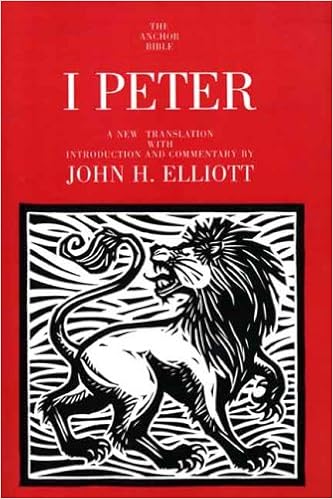
    Honorable Mention: John H. Elliott, 1 Peter (AYB; Yale University Press, 2000).

    Many scholars credit John Elliott as being responsible for the recent resurgence of academic interest in 1 Peter (his academic articles on 1 Peter in the 1970s drew attention to the need for more research on this epistle), so I have to give him a shout-out. At over 900 pages, Elliott’s massive commentary is not for the faint of heart — to call it “encyclopedic” would not be an overstatement! It’s an amazing resource for serious scholars, even if others have since carried the conversation forward.

    Elliott champions the view that Peter’s audience was composed of literal resident-aliens (not just spiritual/metaphorical exiles). He argues for pseudonymous authorship and sees the audience as mostly Gentile. (In my opinion, Jobes has done the best job of taking Elliott’s suggestion of literal exiles in a more plausible direction — Jewish colonists addressed by the apostle Peter himself.) 


    And those are my top picks on 1 Peter. Are there others not mentioned here that you’ve found helpful? If so, let me know in the comments!

    See you down the path.

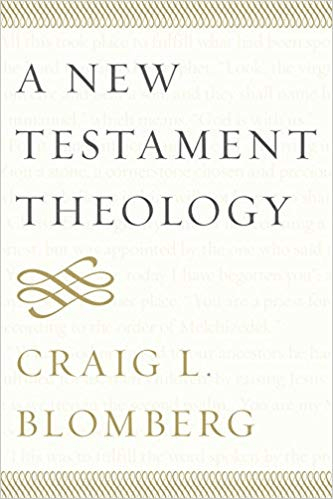
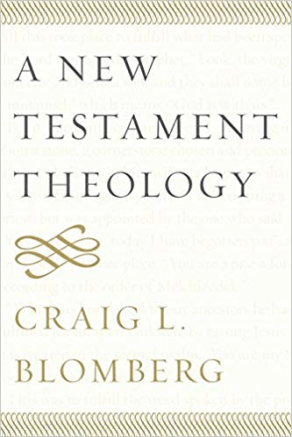
  • Book Review: A New Testament Theology by Craig L. Blomberg

    Book Review: A New Testament Theology by Craig L. Blomberg

    Craig Blomberg is a scholar whose work I’ve really appreciated, particularly his works on the Gospels and his biblical theology of money and possessions. Now he’s added a complete New Testament theology to his already substantial body of work.

    While there is no shortage of New Testament theologies out there, Blomberg’s work seeks to contribute to the conversation by focusing on the theme of fulfillment as the central focus of the New Testament. What was promised by God in the Old Testament has found fulfillment in the life, death, resurrection, and reign of Jesus Christ, and the entire New Testament bears witness to this truth in a variety of ways. I think this is a really helpful lens through which to unpack the theologies of the NT authors.

    Blomberg gives a very broadly evangelical, mildly conservative perspective. I found him to be quite fair and balanced on the range of topics that inevitably come up in a NT theology. Obviously not everyone will agree with all of his positions, but there are a lot of valuable insights to be gleaned. I especially found his chapters on James and Paul’s writings to be standouts.

    I also liked that while most NT theologies treat 2 Peter and Jude together (due to their obvious similarities), Blomberg examined 1 and 2 Peter side-by-side. (He grouped Jude in with the chapter on James, which came across as a bit of a stretch at first but was an interesting experiment).

    A nice bonus to the book is that he spends a lot of time documenting the historical reliability of the NT writings before he goes into analyzing their theology, making this just as valuable a resource for apologetics as it is for biblical theology. I also love the massive bibliography represented in the footnotes — Blomberg did a very impressive amount of research for this, and there were a lot of sources cited that were new and useful to me.

    As far as the book’s weaknesses, obviously there are always going to be some topics that get shorter treatment (otherwise the book would span volumes). Blomberg doesn’t devote much space to subjects like angels, demons, and Satan, arguing that those are not main themes the NT authors dwell on but instead are incidental to the discussion. Still, there are a lot of important background assumptions about spiritual beings that shape the NT authors’ theologies, so I thought they deserved a bit more attention.

    All in all, this was a solid NT theology. Nothing game-changing, but it was balanced, readable, and would make an excellent resource even if only for the bibliography/footnotes alone! I would put it toward the top of the more recent NT theologies, above the popular ones by Beale, Schreiner, etc.

    Recommended.

    (Available from: Amazon / Publisher)


  • Women in Ministry: Parting Thoughts & Recommended Reading

    Women in Ministry: Parting Thoughts & Recommended Reading

    In last month’s posts I sought to explain why my views on women in ministry have shifted from being more restrictive and hierarchical to more inclusive. This was not a hasty change, nor was it motivated by any agenda other than seeking to be faithful to the Bible’s own witness regarding gender and leadership.

    I once assumed that the Bible forbade all women from ever having authority over men in the church. This seemed to me to be the “plain” meaning of certain passages like 1 Timothy 2:11-15, and it was the dominant perspective in the cultural circles I grew up in. Women can’t be pastors or elders or preachers; they can only teach other women or children. That’s “God’s design.”

    But then I was encouraged to pay more attention to how often Scripture presents women in significant leadership roles, especially as part of the community of Christ’s followers. I had to consider what the implications were if there could be female deacons (like Phoebe), female teachers (like Priscilla), and female apostles (like Junia).

    I was challenged to learn more about the original context of passages like 1 Timothy 2:11-15 and 1 Corinthians 14:33-36. I saw that my previous understanding of these passages was missing the points Paul was originally trying to make in the culture he was writing in.

    And I’ve done more homework on the history behind how and why the long tradition of barring women from ministry rose to prominence, discovering in the process that the logic behind that tradition is completely out of sync with the biblical picture. 

    That’s why I’m now compelled not only to speak out in favor of allowing women to serve in high levels of ministry, but also to implore churches to encourage women to step up and exercise their gifts for the benefit of the body of Christ! I began this journey asking, “Could this be okay?” And I’ve arrived at a place where my soul is shouting, “We need this!” We need women in ministry!

    Female voices need to be heard in the church. When half of the body is silenced, the whole body suffers. 

    Whether you agree that women should be allowed to be pastors and preachers or not, I implore you, dear reader: Consider how you or your church can do more to encourage women, to let female voices be heard, and to give women a platform to do all that God is calling them to do. Not only that, but recognize and honor the women who are serving and giving of themselves for the cause of Christ.

    On a related but incredibly important note, for those churches that have women as part of their paid staff, pay them what they deserve for the work they do! 

    There is no excuse — biblically or theologically or ethically — for a church to pay or recognize women less than men simply because of their gender, or to bar them from a pastoral title and salary but then expect them to do the same level of work as the male pastors for less pay. If anyone should be leading the way in fair and equal treatment of staff, it needs to be the church! “The laborer deserves to be paid” (1 Timothy 5:8). Many congregations have a long way to to go in this matter.

    My prayer in writing all that I’ve written is to see Paul’s vision in Ephesians 4:12-13 come to pass: that all of God’s people — his sons and daughters — would be equipped to carry out the work of ministry, to build up the body of Christ, until we all reach unity and maturity in the faith.


    If you’ve missed any of my previous posts, here are links to the whole series:

    Part 1: Preliminary Remarks

    Part 2: 1 Timothy 2:11-15 and the Question of Women in Ministry

    Part 3: Addressing “Biblical” Objections to Women in Ministry

    Part 4: Addressing Potential Historical and Theological Objections to Women in Ministry


    If, after reading my thoughts on the subject, you want to go deeper or still have questions, here is my recommended reading list on women in ministry:

    Online resources:

    • Why I Believe in Women in Ministry (Blog Series)
      This recent blog series by New Testament professor Nijay K. Gupta was the catalyst for my recent exploration of this topic. It spans 22 total posts, but each one is fairly brief and readable.
    • “Women’s Service in the Church: The Biblical Basis”
      This essay by N. T. Wright is a fantastic summary of most of the key issues.
    • This series of online articles by William Witt (Professor of Systematic Theology and Ethics at Trinity School for Ministry) on women’s ordination is an incredible and important resource, especially for info on tradition and church history as well as on the theological questions about women in ministry.

    Books:


    See you down the path.

  • Recommended Resources on Calvinism & Arminianism

    Recommended Resources on Calvinism & Arminianism

    Following up on my last post, I figured it would be good to give some recommend material for those who want to dig deeper into the topic of election/predestination, or into the debate between Calvinism and Arminianism in general.

    If you’ve been a Christian for any length of time, you’ve probably already given this subject some thought. And maybe you’ve even taken an stance on it – whether Calvinist, Arminian, or something else altogether!

    But whether you’ve settled on a position or you’re just now setting out into these deep waters, it’s good to consider each side of the debate. To help with that, here are a few books that I’ve found to be the most helpful. Each of these has had an impact on my own thinking — even the ones where I disagreed with the author’s conclusions. They’ve helped me to clarify my own position and challenged me to keep exploring Scripture.

    Along that same line, I want to issue a personal challenge to you, dear reader: If you already identify with a particular position, read a work arguing for the other side! 

    Two reasons I encourage this. Firstly, it’s important that you hear the best arguments your opponents have to offer, out of respect for them. Make sure you really know what it is you disagree with. And secondly, seeing that other Christians have logical reasons for their views helps keep you humble. It fosters greater unity when you can at least understand where folks of different theological persuasions are coming from.

    Without further ado, here are my top recommended resources on election/predestination!


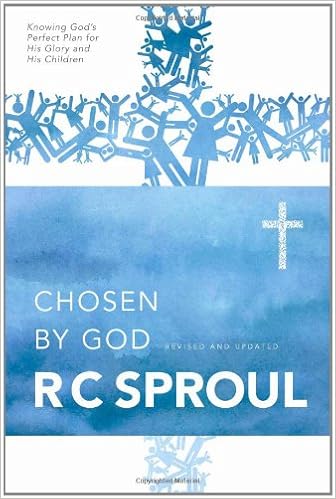
    Chosen By God by R. C. Sproul

    Sproul’s short book is a classic primer on the Calvinist understanding of election (that God unconditionally elects individuals to salvation or damnation). It’s concise, thorough, and readable. Even though it’s the one on this list that I find the most disagreement with (for example, at one point he implies that Calvinism is the only truly Protestant view, which is very much incorrect), it’s still worth reading to get a quick introduction to and defense of Calvinism.


    hand in Hand: The Beauty of God’s Sovereignty and Meaningful Human Choice by Randy Alcorn.

    Alcorn’s book is a great example of moderate Calvinism, and he goes more in-depth than Sproul in his discussion of how God’s providence intersects with human choice from a compatibilist perspective. Alcorn examines a great number of Scripture passages, while also covering the philosophical elements, all without getting overly technical. What I appreciate most is Alcorn’s tone – he’s a great example of how to defend your view with fairness and charity. Also, his first chapter gives some fantastic perspective on the Calvinist/Arminian debate as a whole.


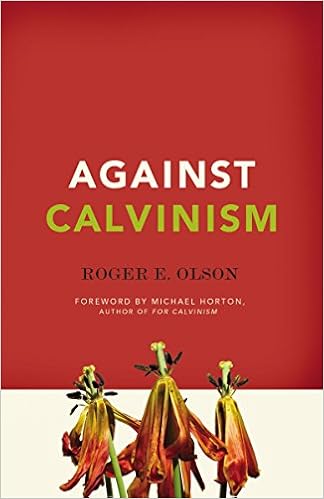
    Against Calvinism: Rescuing God’s Reputation from Radical Reformed Theology by Roger Olson.

    I think Olson’s book is one that every Christian should read at least once, whether you end up agreeing with him or not. The reason it’s so good is that he begins by defining and explaining Calvinism thoroughly before he explains why he disagrees with it, so you’ll get clear definitions of both sides. It’s a great model for how debate should happen. Olson never sets up straw-man arguments – he extensively quotes the best exponents of Calvinism, articulates clearly the challenges to their views, and provides a well-written and passionate case for Arminianism. 


    Grace, Faith, Free Will by Robert Picirilli.

    Just as Sproul’s Chosen by God is a good primer on Calvinism, Picirilli’s book is an excellent introduction to classical Arminian thought. He defends the view that election is tied to God’s foreknowledge of people’s faith-decision. Picirilli also covers a great deal of Scripture, although with certain Bible passages his book could have benefitted from more extensive exegesis and discussion.


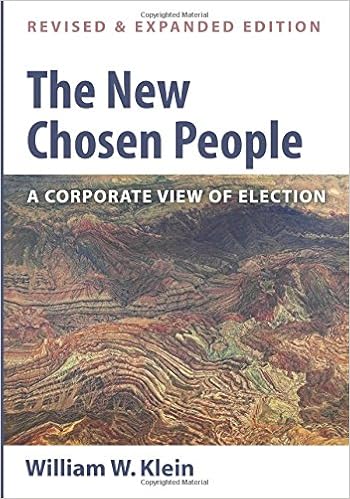
    The New Chosen People (Revised & Expanded Edition): A Corporate View of Election by William Klein.

    Klein’s work is probably the best modern treatment of the corporate view of election. He examines Scripture in-depth to argue that election is far more about group identity than about an individual’s personal destiny. If that idea alone sounds new to you, you need to pick up Klein’s book! He explores the Old Testament, intertestamental Jewish literature, and the New Testament, and his coverage of “election” terminology in Scripture is itself worth the price of the book.


    The Chosen People: Election, Paul, and Second Temple Judaism by A. Chadwick Thornhill.

    I add this as a bonus, as it also supports the corporate view of election and complements Klein’s book nicely. Where Thornhill’s book differs from Klein’s is that it focuses more attention on what Jewish thinkers were saying about election and predestination in the days shortly before the New Testament was written. In other words, you’ll learn more about how the apostle Paul and other New Testament writers were joining a conversation that was already underway. You’ll get deeper background on how the imagery of election and predestination was being understood in the first century, and learn how Scripture develops that conversation. 


    I hope you’ll read at least one (if not more) of these, and that they’ll help sharpen your thinking on this controversial and challenging topic!

    Let me know what you think! Have I left out any of your favorites? Drop me a comment!

    See you down the path.