Category: revelation

  • Revelation 3:10 and the Timing of the Rapture

    Revelation 3:10 and the Timing of the Rapture

    What is Jesus promising when he says he’ll keep the faithful Philadelphian Christians from the “hour of testing” (3:10)? Is this talking about a pre-tribulation rapture?

    This is one of the few places in Revelation where some interpreters see a reference to a rapture of Christians before a seven-year great tribulation. Three main lines of evidence are used to support this:

    1) Jesus’ language about an “hour of testing that is going to come on the whole world to test those who live on the earth” is widely agreed to be a reference to the terrifying judgment of God at the end of history. [1]

    2) The specific Greek wording of being “kept from” that “hour” of testing seems to imply total, physical separation from that time period, and not merely spiritual protection through it. [2]

    3) The letters to the seven churches have implications for all Christians everywhere (as I belabored in my previous post), so something of this promise should be relevant to all those “with ears to hear” in any generation. [3]

    On all of these details, I am actually inclined to agree with pre-trib interpreters. But, there’s one interesting little fact that most supporters of a pre-tribulation rapture often miss that really hurts their position, and it’s that the “hour” is not the whole tribulation!

    When Jesus refers to “the hour of testing,” he’s not referring to a seven-year period of tribulation, but to a very limited time at the tail end of the tribulation!

    The tribulation is consistently referred to throughout Revelation with the time-reference “1,260 days,” or three and a half years (Rev 11:3; 12:6, 14; derived from the “half-week” prophecy of Daniel 9:27). Nowhere is it described as an “hour.” In fact, Allen Kerkeslager points out that instances of an “hour” of time in Revelation always refer to the very final day, at the end of the tribulation, when Christ returns and the evil empire of “Babylon” is finally overthrown (Rev 11:11-13; 14:7, 15; 18:10, 17, 19). [4]

    We also see this kind of time reference in the Gospels, where Jesus consistently refers to the time of his actual Second Coming as “that day or that hour” (Matt 24:44, 50; 25:13; Luke 12:39-40, 46; John 5:25). [5] This will be the time when God’s full wrath is vented on unbelievers on the earth, when he overthrows “Babylon” in “a single hour.”

    Believers will be delivered from that horrible day by the post-tribulation rapture, which will happen concurrently with Christ’s descent from heaven at the Second Coming (see Mark 13:24-27; 1 Thes 4:16-17; 1 Cor 15:52).

    Since Christians living in the first century believed that the events leading up to Christ’s return could begin taking place any day, this promise that they would not experience the day of final wrath on the earth was applicable to them just as it is to us should we happen to be alive at the end. The Philadelphian Christians just happened to experience this protection through their physical deaths, which technically is still a form of physical separation from an earthly trial!

    These Christians  — and us, as well — would still have to be faithful through all other trials (including the possibility of imprisonment or martyrdom for their faith, as well as the attacks of the coming Beast and his empire). But these will pale in comparison to the outpouring of God’s full and final wrath on non-believers on the last day of history. That hour of trial we are exempt from, by the grace of God through our faith in Christ.

    All of this information lines up with the fact that elsewhere in Scripture and in Revelation believers are told to endure to the very end, when Christ will appear to the whole world (Matt 24:13; Mark 13:13; 2 Thes 2:1-10; 1 Pet 4:12-13; Rev 7:14; 13:10).

    To sum up: The “hour of testing” is not referring to the whole time of tribulation, but only to the events connected with the very final day of history and the Second Coming, when Christ descends from heaven and God pours out his final wrath on “Babylon” and those who worship the Beast. When Christ promises believers in Rev 3:10 that he will “keep” them from this hour of trial, it is indeed via the rapture, but I’m convinced this will be a post-tribulation rapture!


    [1] See Grant R. Osborne, Revelation, BECNT (Baker, 2002), 193. He calls this the consensus view, and summarizes the usual two pieces of support: the global scope of the trial and the fact that “those who dwell on the earth” is a stock phrase throughout the book for unbelievers who follow the Beast. Osborne takes a post-tribulational view, though.

    [2] See Buist M. Fanning, Revelation, ZECNT (Zondervan, 2020), 177 for some pretty convincing arguments why we shouldn’t see Rev 3:10 as merely referring to spiritual preservation through the tribulation, and why supposed parallels with John 17:15 won’t work.

    [3] Though see Sam Storms’ blog post, “Kept From the Hour of Trial (Revelation 3:10-11),” for an example of the view that Rev 3:10 is in fact a promise only for the first-century Philadelphian church. This used to be my own approach.

    [4] Allen R. Kerkeslager, “The Day of the Lord, the ‘Hour’ in the Book of Revelation, and Rev 3:10,” unpublished paper delivered at the annual 1991 Annual Meeting of the Society of Biblical Literature; cited in G. K. Beale, Revelation, NIGTC (Eerdmans, 1999), 292.

    [5] John Murray, “The Interadventual Period and the Advent: Matthew 24-25,” reprinted in his Collected Writings, Vol. 2 (Banner of Truth Trust, 1996), 394-95; cited in Jonathan Menn, Biblical Eschatology: Second Edition (Resource Publications, 2018), 142-43.
  • The Book of Revelation is a Musical?!

    The Book of Revelation is a Musical?!

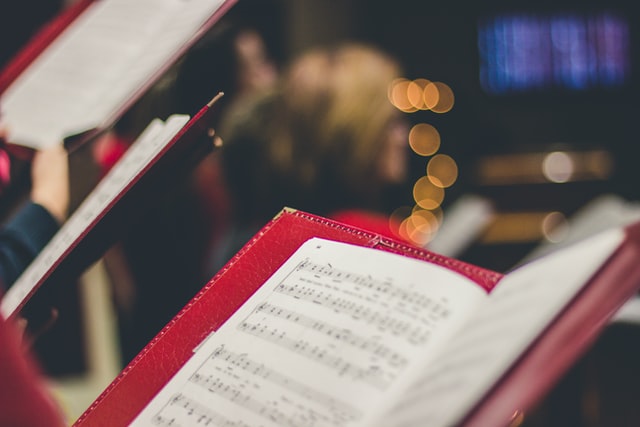
    When you’re reading a book of the Bible, one of the easiest mistakes to make is to breeze past the parts that were originally sung. The book of Revelation is a case-in-point. It’s positively teeming with songs — more so than any other book of the New Testament. But what’s the point of all the music?

    Why is John’s Apocalypse, the last book in the Christian canon, a musical?

    Well, okay. I suppose I should admit that technically the term “musical” only refers to modern media forms. According to most sources, a musical is a play or film that uses song to advance the plot or develop the characters. So, since Revelation is a book, it doesn’t fully count.

    But still! The point I want to make today is that the book of Revelation uses songs to advance its plot, just like modern musicals do. The hymnic portions scattered throughout Revelation aren’t there just for show; they develop and enforce the key themes and ideas of the book.

    I’ll explain how below. But first, how do we know which parts were sung?

    Revelation’s Musical Numbers

    Most modern translations will indicate when the original text was meant to be read as poetry or music by indenting the text a little bit and setting it in poetic lines. The CSB translation, for example, has 28 of these poetic sections in Revelation.

    Of these poetic passages, only two are explicitly referred to as songs: the “new song” in 5:9-10, and the “song of Moses and of the Lamb” in 15:3-4. But several others are very clearly songs, too, even if they aren’t labeled as such.

    Other sections that many scholars agree should be seen as hymnic or musical include:

    • The “Holy, Holy, Holy” hymn of the living creatures (4:8).
    • The song of the elders (4:11).
    • The praises of the angelic hosts and every living creature (5:11-13).
    • The song of the elders, redux (11:17-18).
    • “The Accuser of our brothers has been thrown down” (12:10-12).
    • “Just are you, O Holy One” (15:5-7).
    • The final Hallelujahs of heaven (19:1-8).

    These songs are all interspersed throughout the main narrative portion of Revelation (chapters 4-21), and they show up at key turning points throughout the story that unfolds in John’s visions.

    The Message of the Music

    The first songs in Revelation 4:8-11 are hymns of worship to God from the celestial beings around his throne. They focus on God’s holy character and on why he is worthy of worship. We could see these musical numbers as an intro or overture of sorts, setting the musical (and spiritual) tone for what’s to come. They introduce one of the main themes of the book: Only God truly deserves our worship and devotion.

    And as we read the rest of Revelation, we will discover that the book centers around a conflict between those who are competing for this worship! There are enemies — the dragon in the heavens and his minions, the beasts, on the earth — who are trying to lay claim to this worship and this authority. They will be introducing discord into the melody of the book as they accuse God’s people day and night (12:10).

    No wonder, then, that we’re told the angels worship God with hymns day and night (4:8) — they’re trying to drown out the unholy voices of the enemy! This is a musical battle! The heavenly worship is a weapon in a cosmic struggle.[1]

    Revelation’s second musical number (5:9-14) reflects on the first great plot-twist in the book: No one in heaven is worthy to open the scroll in God’s hand, except for the “Lion of the Tribe of Judah” — but this “lion” appears as a sacrificed lamb! The one who is worthy is the one who was slain, and the song explains this further: the Lamb won his victory over evil by laying down his life for God’s people and God’s purposes.

    And so heaven breaks out in praise and cheer for the Lamb (aka Jesus) and, in the surprising conclusion to the song, their worship is shared between the One on the throne and the Lamb! Jesus is shown to be worthy of the same worship as his Father. This musical number expands our vision of the One who is worthy of our worship, and fills out an even bigger picture of why he deserves praise: because of the love and sacrifice he’s shown to redeem his creatures.

    The next three musical numbers all revolve around the highest point of drama and conflict in Revelation — the struggle of God’s kingdom against the earthly kingdoms under the rule of the Dragon/Satan (11:17-18; 12:10-12; 15:1-7). These songs highlight God’s justice and certain victory over evil, even before that victory has been fully realized. It’s as good as done, because the good and holy God is the one who is acting. He is just in bringing destruction back upon those who have been destroying his creation (11:18), and he is faithful to vindicate those who have stayed loyal to him.

    The grand finale comes as the conflict concludes (19:1-8), and it is grand indeed! A string of “Hallelujahs” rings out from a massive crowd in heaven as God overthrows the armies of the Beast and brings about his kingdom on earth at last. Evil is defeated, heaven and earth meet, and Jesus and his people are now able to enjoy the consummation of all their hopes and longings to finally be together forever. Hence, the final lyrics paint the picture of a great wedding banquet — the greatest party in history.

    This musical has a happy ending.

    The Power of Song

    Whether you love musicals or hate them, one thing that can make a good musical so powerful is the emotional effect music has on its listeners.

    When a story is not just told but sung, it stirs up strong feelings and engages an entirely different part of our brains (and souls). It also becomes more memorable (just ask anyone who’s had a song stuck in their head!).  

    Because of these qualities, music also has great power to shape our affections and values. So when the book of Revelation repeatedly highlights its main themes in song form, it’s driving home the values that God wants to cultivate in the book’s readers/hearers.

    (Keep in mind that the books of the New Testament would originally have been read out loud/performed to a listening congregation — which is why Revelation pronounces a blessing on those who “hear” it in 1:3; 22:17-18.)

    As Craig Koester summarizes it,

    “Worship expresses fundamental loyalties and commitments. As the hymns define the character of God, they shape the identities of those who worship him. The divine actions affirmed in the hymns include creation, redemption through sacrifice, and the exercise of justice and truth. By praising these acts of God and the Lamb, the hymns shape the way worshipers see their place in a world where they live with competing claims upon their loyalties, while fostering their hope in God’s kingdom. As the hymns provide a means of expressing faith, they also shape the faith of readers who identify with the worshipers in the narrative.”[2]

    Now, obviously we no longer have the melodies to which these songs were originally sung, nor do we still speak the Koine Greek in which they were originally written.

    But there have been many, many songs inspired by the lyrics in Revelation down through the years (some of them better than others; this one is my personal favorite, though it’s a bit dated now). The sheer volume of contemporary worship lyrics and classic English hymns that have taken wording from Revelation illustrates the power that this book’s poetry has had upon its readers throughout the centuries.

    But besides listening to music inspired by Revelation, another way we can appreciate the book’s musical nature is by taking more time than usual to ponder its song lyrics.

    Read them more meditatively, recognizing that they are very intentional and important to the overall message of the book. Don’t just breeze by them. Sit with them a while. Try to imagine the wonder of hearing these words as a song.

    And consider that there is more focus on beauty than on terror in this last book of the canon.

    See you down the path.


    [1] Sigve K. Tonstad, Revelation, Paideia Commentaries on the New Testament (Grand Rapids: Baker Academic, 2019), 108-09.

    [2] Craig R. Koester, Revelation: A New Translation with Introduction and Commentary, Anchor Yale Bible Commentary, vol. 38A (Yale University, 2014), 130, emphasis added.