Author: Derek DeMars

  • Love Cannot Be Hidden: A Challenge from John Wesley

    Love Cannot Be Hidden: A Challenge from John Wesley


    I’ve been chewing on this quote from John Wesley this week:


    “Love cannot be hid any more than light; and least of all when it shines forth in action, when ye exercise yourselves in the labour of love, in beneficence of every kind. As well may men think to hide a city as to hide a Christian.”[1]


    Wesley was commenting on a familiar passage – Matthew 5:14-16, part of Jesus’ most famous sermon. Right off the bat, what stands out most to me in Wesley’s comment is the notion that real love cannot be hidden. It naturally shows itself in attitudes and actions.

    If you flip the idea around, it implies that if you aren’t reaching out to others with loving actions, then there isn’t really any love there. Or, at the very least, it calls into question the level of love that’s there. People who have the love of Jesus don’t withdraw and fixate on themselves and their feelings and comforts – unless their only love is for themselves!

    Because as Wesley points out, love doesn’t stay still. It flows. It radiates like light. It manifests itself in beneficence toward others. That’s probably why the apostle Paul describes God’s love in fluid terms – God wants to pour it into our hearts and channel it through us to those around us (see Romans 5:5).

    Such love is visible. It isn’t hidden, and it doesn’t stay still.

    Of course, I think Wesley would agree with me that this doesn’t mean love will always be recognized by others or received well by them. You can certainly try to share God’s love with someone and it not be acknowledged by that person. But just because a person may close their eyes doesn’t mean light isn’t shining.

    I say all this to say that Wesley’s quote is really giving me pause. I have to look at my life and ask if any love is visible. I can tell myself I love others all day long, but the real question is, would they say they’ve received love from me?

    I think I’d probably give myself a pretty low grade on this lately. I tend to stay wrapped-up in my own thoughts and studies (occupational hazard!). And I worry that sometimes I come across as being a bit aloof. By God’s grace I’m trying to be better about reaching out in kindness to others and really communicating to them that I love them – and, far more, that God loves them.

    We should also take this beyond the level of individuals. How are our local churches doing? Is your church shining forth in action, exercising yourselves “in the labour of love, in beneficence of every kind”?

    Wesley says that it ought to be easier for people to try to hide a whole city than to hide a Christian. It’s an exaggeration for emphasis, of course, but it hammers home an important truth: God’s love should be visible in us. It’s true of individual believers and it’s true of the church.

    I’d put it this way – if your church community were to somehow disappear overnight, would your town/city miss it?

    Love shines forth in action. The community of Jesus’ followers – the church – should be radiating such labors of love that the broader community would feel its absence tremendously were it not there.

    More than having a nice building or glitzy production values on Sunday mornings, our loving and active engagement with the community around us should be of stellar quality and beauty and appeal. I think (and I’m pretty confident Wesley would agree) that we should give just as much thought to the church’s activities Monday-through-Saturday as we do to those on Sunday. We should make ourselves indispensable by providing loving services that truly impact others in our community.

    Real love – God’s love – cannot be hid. It does not stand still. It shines forth. It gets to work.

    How are you doing at this? Will your love shine forth today?

    See you down the path.


    [1] John Wesley, “Sermon on the Mount, IV,” in The Works of John Wesley, 1:539; quoted in Stephen W. Rankin, Aiming at Maturity: The Goal of the Christian Life (Cascade Books, 2011): 125.


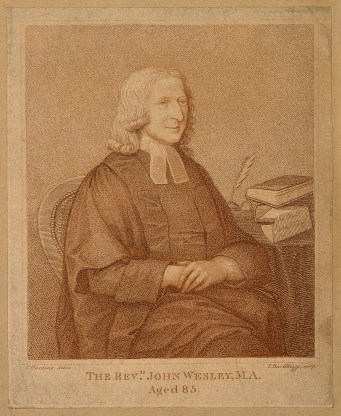
    Photo Credit: Wellcome Library, London. Wellcome Images images@wellcome.ac.uk http://wellcomeimages.org John Wesley. Stipple engraving by F. Bartolozzi after J. Zoffany, 1760.
     

  • What Are Scholars Saying About the Holy Spirit? (Reading Reflections on Thiselton)

    What Are Scholars Saying About the Holy Spirit? (Reading Reflections on Thiselton)

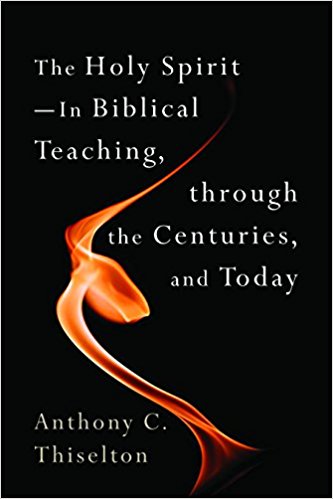
    Thiselton Holy Spirit Cover

    I recently finished reading Anthony Thiselton’s book, The Holy Spirit – In Biblical Teaching, through the Centuries, and Today. It was a fun coincidence that I stumbled across this book when I did. My church had just concluded a sermon series on the Holy Spirit and spiritual gifts, and my wife and I were desiring to dig a little deeper into what scholars are saying about the subject. So of course when I saw this tome sitting on the sale table at my seminary’s bookstore I snatched it up. And I was not disappointed!

    Thiselton is a prominent British theologian famous for his commentary on 1 Corinthians and his books on biblical interpretation, so I already knew this book on the Holy Spirit would reflect a lifetime of serious scholarship. Throughout church history, theologians and ministers have often wrestled with how to understand the person and work of the Holy Spirit, as well as the nature and role of spiritual gifts. Thiselton helps lay a foundation by examining what the Bible says about the Spirit of God before surveying in detail the scholarly conversations about the Spirit from the early church to today. Anyone who wants to become familiar with academic discussions on the Holy Spirit would do well to start here.

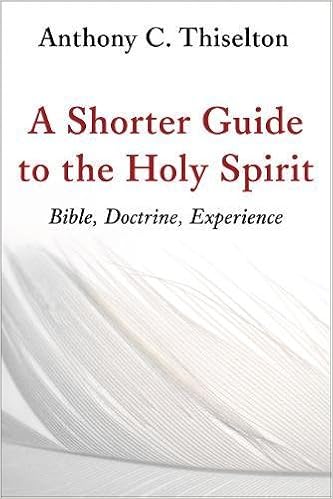
    Now, I have to give one important disclaimer! Clocking in at 500 pages and jam-packed with advanced scholarly interaction, Thiselton’s book is not for the faint of heart! Thankfully, though, he has also produced a condensed, reader-friendly version (link below)!

    Definitely check out the abridged version if you’re interested in learning more about the Holy Spirit, spiritual gifts, or views on the Spirit in church history, and especially if you’re going to be teaching on these topics. It’s a great resource. (I’d only recommend the original version if you’ve already had some exposure to seminary-level research.)


    A Call for Dialogue

    The thing I appreciated most about Thiselton’s book was his commitment to fostering open and respectful dialogue on this controversial topic. Considering how heated the conversations can get when people discuss the nature and role of the Spirit, I loved seeing such a gifted scholar as Thiselton calling for balance and dialogue.

    Among the other things I appreciated in Thiselton’s book:

    • He constantly called for a focus on what Scripture teaches as being of central importance.
    • He was willing to critique the weak points of both cessationists (those who think that the more “showy” gifts like miracles and tongues ceased, either after the first generation of apostles died or after the canon of Scripture was closed), as well as of continuationists/charismatics (like myself) with a gracious attitude. Thiselton shows us all where we need to clarify our thinking, but without vilifying either side.
    • He referenced and quoted from a broad range of voices from all across the theological spectrum and from every era of church history. You get the usual greats – Athanasius, Augustine, Basil, Luther, Calvin, etc., but you also get to hear from lesser-known figures like Hilary of Poitiers, Philoxenus of Syria, and Bonaventure, to name a few. Thiselton also interacts heavily with modern writers like Karl Barth, James D. G. Dunn, Gordon Fee, and many others. This allowed for multiple perspectives to be heard.

    Key Insights I Gleaned

    Here are some of Thiselton’s main points that I think are worth pondering deeply:

    1) The Spirit’s goal is to glorify Christ.

    So, if you want to be more Spirit-led, focus more on Christ (see pp. 70-71).

    2) Your spiritual gifts are not about you.

    Spiritual gifts are not primarily for us as individuals or for our self-fulfillment. They are for the purpose of building up the community of God. “It is not so much a matter of having a gift as of being a gift” (Jean-Jacques Suurmond, quoted on p. 85).

    3) The biblical concept of prophecy can include both “on-the-spot” words from God AND prepared proclamations of the gospel message.

    In Thiselton’s words, “The ‘where and when’ of prophecy, I believe, should not exclude either charismatic spontaneity or prepared, reflective preaching” (p. 176). This means we shouldn’t limit our concept of “prophecy” only to spontaneous utterances, and we should never undervalue the importance of preparation and study in ministry. Dependence upon the Holy Spirit should never be an excuse for such unspiritual qualities as laziness or neglect of learning. At the same time, though, Thiselton rightly affirms that the Lord indeed still speaks fresh words to his people through his Spirit – it’s not an “either/or” situation.

    4) The “gift of healing” is not just miraculous, but also includes giftedness at treating others medically.

    When Paul talks about the gift of healing in 1 Corinthians 12, he specifically mentions (in the Greek) “gifts of healings” (plural!). Thiselton points out that for the majority of church history this has been understood to mean both spontaneous, miraculous recoveries and/or God gifting people with medical skill to treat others (pp. 102-03, 114-20). We shouldn’t make a big divide between God working through more mundane natural processes and God working dramatically or “supernaturally.” Again, it’s not “either/or.”

    5) Being Spirit-led should not be confused with doing what’s new.

    It’s true enough that many churches are unhealthy because they’re tied to dry, religious formalism and rejecting fresh moves of the Spirit. But there’s an equal and opposite danger of being too obsessed with “new” and “fresh,” to the neglect of our past heritage (pp. 484-85). A healthy church learns from the past while being attuned to God’s will for the present. Perhaps you could say we need solid roots in the past along with fresh winds from the Spirit.

    6) A biblical understanding of the Kingdom of God helps us understand why prayers for healing are not always answered the way we might hope.

    This is a complex but important point. Let me try to explain briefly: Through the Spirit’s presence in believers, the Kingdom of God is already present to a degree, and this is why miraculous healings can and should be sought. To deny that God ever miraculously heals in response to prayer is to deny the current inbreaking of God’s Kingdom. But on the other hand, the Kingdom is not yet here in its fullest form – that will only be when Christ returns. It is only then that we will be delivered from all sickness and all death forever. It is not on this side of Christ’s return that we will experience complete and total healing in all cases.

    As Thiselton writes, this concept of the “already/not-yet” of the Kingdom “explains the ambiguity of expectancy and prayer in relation to healings.”

    “Sometimes God allows, as it were, the opening of Christmas presents before Christmas, and heals as if the End were already here. But clearly the end is not yet. . . . It seems a distraction from this important eschatological question to browbeat us with the question: Is it the will of God to heal? Of course it is; but when and where?” (p. 487).

    This last point is a powerful one, and cuts through a lot of the false expectancy taught in so many Pentecostal circles. Again Thiselton hits the nail on the head:

    “If expectancy is raised to a high pitch, there must be a degree of depression and misplaced self-recrimination from those for whom it is claimed that their Christian faith and trust was somehow deficient. If healing were a uniform and universal phenomenon, in cases of disappointment this would make the problem of suffering and evil much more acute” (p. 487).

    In other words, for those who sincerely expected a healing that did not occur, the feeling that their faith was insufficient can cause horrible disillusionment and self-doubt. Yes, God desires to heal – but in some cases that healing only comes on the other side of eternity.

    Those are a few of the many thought-provoking nuggets of wisdom Thiselton offers. What do you think of his observations? Do you disagree with any of them?

    What are your favorite books on the Holy Spirit?

    Let me know in the comments!