Author: Derek DeMars

  • Women in Ministry: Parting Thoughts & Recommended Reading

    Women in Ministry: Parting Thoughts & Recommended Reading

    In last month’s posts I sought to explain why my views on women in ministry have shifted from being more restrictive and hierarchical to more inclusive. This was not a hasty change, nor was it motivated by any agenda other than seeking to be faithful to the Bible’s own witness regarding gender and leadership.

    I once assumed that the Bible forbade all women from ever having authority over men in the church. This seemed to me to be the “plain” meaning of certain passages like 1 Timothy 2:11-15, and it was the dominant perspective in the cultural circles I grew up in. Women can’t be pastors or elders or preachers; they can only teach other women or children. That’s “God’s design.”

    But then I was encouraged to pay more attention to how often Scripture presents women in significant leadership roles, especially as part of the community of Christ’s followers. I had to consider what the implications were if there could be female deacons (like Phoebe), female teachers (like Priscilla), and female apostles (like Junia).

    I was challenged to learn more about the original context of passages like 1 Timothy 2:11-15 and 1 Corinthians 14:33-36. I saw that my previous understanding of these passages was missing the points Paul was originally trying to make in the culture he was writing in.

    And I’ve done more homework on the history behind how and why the long tradition of barring women from ministry rose to prominence, discovering in the process that the logic behind that tradition is completely out of sync with the biblical picture. 

    That’s why I’m now compelled not only to speak out in favor of allowing women to serve in high levels of ministry, but also to implore churches to encourage women to step up and exercise their gifts for the benefit of the body of Christ! I began this journey asking, “Could this be okay?” And I’ve arrived at a place where my soul is shouting, “We need this!” We need women in ministry!

    Female voices need to be heard in the church. When half of the body is silenced, the whole body suffers. 

    Whether you agree that women should be allowed to be pastors and preachers or not, I implore you, dear reader: Consider how you or your church can do more to encourage women, to let female voices be heard, and to give women a platform to do all that God is calling them to do. Not only that, but recognize and honor the women who are serving and giving of themselves for the cause of Christ.

    On a related but incredibly important note, for those churches that have women as part of their paid staff, pay them what they deserve for the work they do! 

    There is no excuse — biblically or theologically or ethically — for a church to pay or recognize women less than men simply because of their gender, or to bar them from a pastoral title and salary but then expect them to do the same level of work as the male pastors for less pay. If anyone should be leading the way in fair and equal treatment of staff, it needs to be the church! “The laborer deserves to be paid” (1 Timothy 5:8). Many congregations have a long way to to go in this matter.

    My prayer in writing all that I’ve written is to see Paul’s vision in Ephesians 4:12-13 come to pass: that all of God’s people — his sons and daughters — would be equipped to carry out the work of ministry, to build up the body of Christ, until we all reach unity and maturity in the faith.


    If you’ve missed any of my previous posts, here are links to the whole series:

    Part 1: Preliminary Remarks

    Part 2: 1 Timothy 2:11-15 and the Question of Women in Ministry

    Part 3: Addressing “Biblical” Objections to Women in Ministry

    Part 4: Addressing Potential Historical and Theological Objections to Women in Ministry


    If, after reading my thoughts on the subject, you want to go deeper or still have questions, here is my recommended reading list on women in ministry:

    Online resources:

    • Why I Believe in Women in Ministry (Blog Series)
      This recent blog series by New Testament professor Nijay K. Gupta was the catalyst for my recent exploration of this topic. It spans 22 total posts, but each one is fairly brief and readable.
    • “Women’s Service in the Church: The Biblical Basis”
      This essay by N. T. Wright is a fantastic summary of most of the key issues.
    • This series of online articles by William Witt (Professor of Systematic Theology and Ethics at Trinity School for Ministry) on women’s ordination is an incredible and important resource, especially for info on tradition and church history as well as on the theological questions about women in ministry.

    Books:


    See you down the path.

  • Why Have Women Traditionally Been Excluded from Ministry? And Other Objections to Women in Ministry Answered (Pt. 4)

    Why Have Women Traditionally Been Excluded from Ministry? And Other Objections to Women in Ministry Answered (Pt. 4)

    So far in this series on women in ministry we’ve talked about my journey with the subject and why I interpret 1 Timothy 2:11-15 as not forbidding female pastors. In the last post I addressed some potential objections to women in ministry from other biblical passages. Now we’ll consider some broader theological questions about men and women, as well as what is the biggest stumbling block for some:


    Why has the church traditionally barred women from the pastorate/clergy for so many centuries?


    Let’s start with that. Because while I absolutely believe that Scripture takes priority over tradition, we should not ignore the importance of tradition for testing our interpretations. If we’re going to throw out a large chunk of historical precedence, we ought to have good reason. And to do so, we need to ask: Why did the tradition rise to prominence, and is it really reflecting biblical truth?

    In this case, we’ve already seen that women held prominent leadership positions during the first century, when the New Testament was written. Junia was an apostle (Rom 16:7), Phoebe was a deaconess (Rom 16:1-2), and Paul considered Priscilla one of his coworkers (Rom 16:3; Acts 18:24-26). This means that any universal bans on women in ministry would have been postbiblical developments.

    So did the earliest churches in the post-apostolic era include female ministers?

    Turns out, many of them did! There is archaeological evidence for female deacons/ministers throughout the first several centuries of the church, as well as written evidence attesting to women in leadership positions.

    In a letter to Emperor Trajan (111 C.E.), the Roman governor Pliny mentions that he obtained information by torturing two Christian women “called by them ‘deaconesses’ (Latin: ministrae).” In the 300s C.E., we find in a Christian letter a curious reference to a woman called “Madame Teacher.” In the fifth century, a woman named Olympias was lauded as a deaconess and founder of a monastery.[1]

    Also in the fifth century, Theodoret of Cyrus makes this interesting comment on Romans 16:7, where the female apostle Junia is mentioned: “…[Paul] says that they are of note, not among the disciples, but the teachers; nor among ordinary teachers, but the Apostles.” In other words, it seems this ancient church father took Paul’s words to be affirming a very authoritative female teacher.

    However, although women often ministered in the earliest churches, there is a noticeable movement toward male-only leadership by the third and fourth centuries that became overwhelmingly dominant throughout the Middle Ages. Why the change?

    According to church historian William Witt, there is one key reason, which he lays out in this excellent article:

    “Historically, there is a single argument that was used in the church against the ordaining of women. Women could not be ordained to the ministry (whether understood as Catholic priesthood or Protestant pastorate) because of an inherent ontological defect. Because of a lack of intelligence, or a tendency to irrationality or emotional instability, a greater susceptibility to temptation, or an inherent incapacity to lead, women were held to be inferior to men, and, thus, were not eligible for ordination. Moreover, this argument was used to exclude women not only from clerical ministry, but from all positions of leadership over men, and largely to confine women to the domestic sphere.”

    Witt goes on to cite a number of comments from prominent church fathers and theologians (including Origen, Tertullian, Chrysostom, Thomas Aquinas, and several Reformers) that clearly exhibit their misogynistic assumptions. These men were deeply enmeshed in the prejudices of their times, so it’s hard to blame them too much.

    But it’s also hard to follow them on this.

    Because the major problem with their line of reasoning is that it is simply not true — women are not inherently intellectually inferior to men. Science doesn’t back it up, experience doesn’t back it up, and Scripture nowhere legitimates such a view (unless we take a wrong view of 1 Tim 2:13-15, as I’ve belabored already).

    So the major flaw with the “argument from tradition” against women in ministry is that the reasoning behind the tradition is flawed. It relies on incorrect assumptions about women that, while common in the ancient and medieval periods, is not exactly in keeping with the truths we see in Scripture and in nature — that women and men are equally created in the image of God (Genesis 1:27), equally redeemed and united in Christ (Galatians 3:28), and equally capable of leading, teaching, and stewarding authority.

    But there were always outliers, in spite of the larger consensus on male priesthood that built up during the medieval period. It simply isn’t true to say that arguments in favor of female ministers only show up after the feminist movement of the modern era. As New Testament scholar Craig Blomberg points out,

    “Some of this history has, in fact, been suppressed during the last century by those who have wanted to pretend that it was only with the rise of modern, secular women’s liberation in the 1960s and 1970s that any churches have opened all leadership doors to both genders. . . . E.g., the facts that the Evangelical Free Church of America ordained women and Moody Bible Institute supported the ordination of women before the fundamentalist-modernist controversy of the 1910s and 1920s.” — Craig L. Blomberg, A New Testament Theology (Baylor University Press, 2018), pg. 286.

    And as Witt concludes in his article,

    “It is all to the good that Catholics and Protestants have embraced the inherent ontological equality of men and women and no longer argue against women’s ordination based on an inherent inferiority, irrationality, or sinfulness of women. However, in so doing, they can no longer argue that they are simply adhering to the church’s historic stance against the ordination of women.”

    In other words, if you don’t think that women are inherently inferior to men, but you still want to exclude women from ministry, then your position technically isn’t the “traditional” one; rather, it’s a quite recent innovation!

    Let’s turn now from the “tradition” issue to some other theological arguments commonly brought up against women in church leadership.


    Broader Theological Arguments Briefly Considered

    #1: God is identified in male terms throughout Scripture, so shouldn’t his representatives be male?

    This potential objection seems incredibly beside the point, since Genesis 1:27 tells us that God created all humanity, male and female, in his image:

    “So God created humankind in his image,
    in the likeness of God he created him,
    male and female he created them.” (LEB)

    Thus, it would seem appropriate that both men and women be able to serve as God’s ministers. I only mention this objection preemptively, as I’ve never found it to be a good support for an all-male pastorate.

    #2: The Old Testament priesthood was restricted to males, so shouldn’t the pastorate be, too?

    Perhaps this question is a little less beside the point, but at the same time, there is considerable discontinuity between the levitical priesthood and the “priesthood of all believers” we see in the New Testament. For example, 1 Peter 2:9 and Revelation 1:6; 5:10; 20:6 refer to all Christians (whether male or female) as priests now.

    Plus, when one considers the importance of ritual purity for priesthood in the ancient Near East, you can see a very practical reason why women were barred from the Israelite priesthood: they would be ritually unclean (and therefore unable to officiate) due to menstruation for an entire week out of every month!

    Under the New Covenant that Christ initiated, such concerns for ritual purity were replaced by an emphasis on moral purity — a purity of the heart. And with that change there is no reason to restrict priesthood in the new temple of God (=the church community; see 1 Corinthians 3:16; Ephesians 2:21-22) — on the basis of gender.

    #3: So then why did Christ only appoint men to be his twelve apostles?

    Jesus certainly took a big step forward from his Jewish contemporaries when he allowed women to follow him and learn as his disciples. That much is largely undisputed. But when it came time for him to choose his primary successors — the twelve apostles — he chose all men. Why not include a woman or two, if he wanted to truly show equality? Doesn’t it mean he wouldn’t support female church leaders?

    Why Jesus chose twelve men is a good question to ask, but as an objection to female pastors it’s actually a flawed argument. Consider how I could turn it on its head by saying, “Well, the twelve apostles were also all Jewish men, so therefore we should never have any non-Jewish church pastors, right??” It’s a non-sequitur.

    This kind of argumentation can also be dismissed when you keep in mind that there is a very important historical reason why Jesus chose men to comprise the Twelve: they were to be a symbolic reenactment of the original twelve patriarchs of Israel, who founded the twelve tribes. By choosing twelve Jewish men in particular to be his inner circle, Jesus was symbolically showing that he was founding the new people of God — the new Zion, the restored Israel — around himself. This action was a powerful messianic claim in and of itself.

    In light of this, it should be clear that the choosing of twelve male apostles was a very unique situation in history — one that shouldn’t factor in to the discussion of whether we can have female pastors today.


    We’re almost done with the topic of women in ministry for now. In my next post I’ll offer a few parting thoughts regarding my change in perspective on the matter, as well as some recommendations for further research in case you’re still wanting to do some more digging.

    Let me know if you’ve found these posts helpful! Have I answered your pressing questions, or do you have others I haven’t covered? Let me know in the comments.

    See you down the path.


    [1] References are from Ruth A. Tucker & Walter Liefeld, Daughters of the Church: Women and Ministry from New Testament Times to the Present (Zondervan: 2010), 91, 94, 120.

  • Women in Ministry, Pt. 3: Addressing Some Biblical Questions

    Women in Ministry, Pt. 3: Addressing Some Biblical Questions

    In my previous post I argued that 1 Timothy 2:11-15 (often viewed as the strongest biblical passage against female pastors) is not a universal, absolute prohibition against women having authority in the church. Rather, it was addressing a particular, local situation in Ephesus at the time it was written.

    But of course, having been brought up to assume that complementarianism was the only possible view, there were still a number of important theological questions I had to work through before I could go from saying, “1 Timothy 2 isn’t a universal prohibition,” to saying, “Women can be pastors, too.”

    My goal in these next two posts is to briefly address what I personally saw as the biggest objections to affirming women at all levels of ministry. In this one we’ll focus on problems arising from specific passages of Scripture; in the next we’ll move on to theological and historical questions.

    I’ll start by answering some common arguments against my proposed reading of 1 Timothy 2:11-15. Then we’ll look at some other key passages of Scripture that pertain to the issue, like 1 Corinthians 14, Ephesians 5, and others.


    Additional Questions About 1 Timothy and Women in Ministry


    Doesn’t Paul’s use of Adam and Eve in 1 Tim 2:13-15 constitute a timeless principle about how men and women were created in hierarchy?

    We touched on this last time, but it deserves a bit more attention. It’s commonly asserted that when Paul says “Adam was formed first, then Eve,” he is setting that up as a basis for a male-dominated hierarchy intended by God at creation. This relates to the ancient idea of “primogeniture,” which is basically the concept that the firstborn had more rights, authority, and inheritance than their younger siblings/peers. Adam was made first, therefore he had authority over Eve.

    But think about this: Even though Adam is given dominion over the animals in Genesis 2 and names them all to show his authority over them, he doesn’t give Eve a name until Genesis 3:20 — after they’ve sinned and God announces that now the man will “rule over” the woman (Gen 3:16). Prior to the Fall, Adam and Eve are entirely equal. She is taken from his side to be his “helper,” a term used elsewhere of military reinforcements and even of God himself (she is hardly man’s subordinate!). And at the very beginning, Genesis 1:27 stresses that “male and female” were both made equally in the image of God to co-rule over creation. It seems pretty apparent, then, that any idea of hierarchy between the sexes is foreign to the context of Genesis 1-2.

    Think about this, too: Throughout the book of Genesis, a common trend we see over and over is God’s choosing of the younger to inherit the covenant blessings instead of the firstborn (Isaac over Ishmael; Jacob over Esau; Judah and Joseph over their older brothers)! In other words, the concept of “primogeniture” is constantly turned on its head throughout the Old Testament, to highlight the fact that God’s ways are different than the ways of worldly society. All the more reason not to read it into Genesis 1-2 or 1 Timothy 2:13-15.

    If Paul is trying to counter the beliefs of the Artemis cult in Ephesus, why doesn’t he come out and say so explicitly?

    Perhaps a lot of confusion could have been avoided if Paul had simply mentioned Artemis outright. Then again, though, it’s precarious for us to cast judgment on what we today think an ancient author could or should have said. We’re talking about letters — and in the case of 1 Timothy, a very personal letter!

    We have only one side of a conversation that took place between two people who were already intimately acquainted with the pressing issues going on at the time of writing. It’s like we’re listening to just one half of a telephone conversation — of course there are going to be bits and pieces of the context that we have to piece together ourselves. This is how good interpretation works, with any ancient text — even Scripture.

    It would have been nice if Paul had spelled out in more detail the kind of false teaching he was arguing against in Colossians, too, for example. Or if the epistle of Hebrews mentioned who wrote it. Or if John told us exactly what the “sin that leads to death” was (1 John 5:16). It would save us a lot of guesswork. But as it is, we have to do the work of piecing together the context as best we can, using the text before us and the insights we can glean from archaeology and historiography.

    How was I supposed to understand 1 Timothy correctly if I didn’t have access to any of this cultural-background information?

    Don’t get me wrong — I believe anyone who is a believer in Christ and has the Holy Spirit guiding them can understand the basic truths of Scripture without having to be an expert in the ancient culture of Ephesus. At the same time, though, remember that it was me looking at how Scripture holds up women in leadership in other passages that made me reexamine whether I was understanding 1 Timothy 2 correctly.

    Not only does Scripture help us interpret Scripture, but part of how Christ builds his church up to maturity is by gifting certain Christians to be teachers, to learn how to interpret the Bible and study the ancient context so they can help other Christians understand it. You don’t have to be an expert, but you can and should avail yourself of resources that go more in-depth for you. That’s what us teachers are for, we who invest our lives in studying Scripture with a view to enriching the life of the church.

    Why does 1 Timothy 3 go on to say that overseers should be “the husband of one wife”? Doesn’t that rule out female overseers?

    It’s true that 1 Timothy 3:2 (CSB) says “An overseer, therefore, must be above reproach, the husband of one wife, self-controlled, sensible, respectable, hospitable, able to teach…” etc. But again, I see 1 Timothy as primarily addressing some serious cultural problems that were arising in the church at Ephesus at the time Paul was writing — problems like the Artemis cult, or false teachers arguing that marriage was forbidden (see 1 Tim 4:3).

    We’ve already seen how Paul’s words in 1 Tim 2 suggest that the women in Timothy’s church in particular were in no shape to be overseers just yet, since they first needed to be taught. Also, we should ask why Paul lists “husband of one wife” before other qualifications you’d think would be even more important — like being self-controlled and able to teach. Obviously there were some serious issues going on concerning marriage in Ephesus.

    Some interpreters even see in Paul’s statement here a suggestion that some of the men in Ephesus were beginning to practice polygamy. But most take Paul’s words to be a generic way of saying that overseers (pastors or elders today) should be faithful to the spouse they have (which is how I interpret it).


    Other Bible Passages Concerning the Roles of Men and Women


    Doesn’t Paul also command women to be silent in church in 1 Corinthians 14:33-36?

    Here’s the passage:

    As in all the churches of the saints, 34 the women should be silent in the churches, for they are not permitted to speak, but are to submit themselves, as the law also says. 35 If they want to learn something, let them ask their own husbands at home, since it is disgraceful for a woman to speak in the church. 36 Or did the word of God originate from you, or did it come to you only?”

    This is another passage that, like 1 Tim 2:11-15, seems pretty straightforward (and pretty harsh!) at first glance. But believe it or not, this is a passage where even more interpreters are convinced Paul was addressing a cultural issue limited to his time period!

    That’s because shortly before this, in 1 Corinthians 11:1-16, Paul gives instructions about how women are to pray and prophesy in the church. His instructions in chapter 14, therefore, have to do with something besides the ordinary exercise of ministry. I should point out that the Greek word for “woman” is also the word used for “wife” (gyne), and the mention of asking “their own husbands” in verse 35 points to seeing only the married women in Paul’s congregations being addressed here.

    The focus, then, is on wives not disrupting the service to ask their husbands questions (or perhaps to challenge their husbands when they prophesy, bringing dishonor on them in public). The fact that women of the time were typically less educated is probably at play again here. Paul’s overarching, universal point is that church services are to be orderly and not clamorous. He was correcting a specific problem that was common at the time, rather than stifling all female speakers forever (otherwise, how could he commend female church leaders like Phoebe, Priscilla, and Junia elsewhere in his writings?).

    What about the passages that command for wives to be submissive to their husbands (Ephesians 5:22-24; Colossians 3:18; 1 Peter 3:1-7)?

    This concept doesn’t necessarily rule out women from serving as pastors, since a woman can be a pastor and still be submissive to her husband. As an analogy, consider that a male pastor could have governing officials in his congregation. The pastor gets to preach the word of God authoritatively to them and shepherd them, but he must still submit to their governing authority in a societal sense. I would imagine a female pastor’s relationship to her husband could function quite well just the same.[1]

    But consider, too, that while Paul does command “submission” in the home, he qualifies it (in Ephesians 5, at least) in a context of “mutual submission” (Eph 5:21). All the commands after verse 21 are grammatically connected to the initial commands to “be filled with the Spirit” (5:18) and to submit to fellow believers. The wives are to respect their husbands as part of their obedience to Christ (“as to the Lord,” v. 22), and the husbands are to “submit” (in a sense) to their wives by loving them sacrificially and nurturing them as they would their own body (5:25-33). This is a remarkably egalitarian family model for the time Paul was writing.

    Even in Colossians 3:18-19 and 1 Peter 3:1-7, where the language of mutual submission is absent, the fact that Paul and Peter give commands to husbands to love their wives was counter-cultural for the time. There is more that could be said on this, but again, the role of husbands and wives in the home doesn’t really have the kind of direct bearing on the topic of women in ministry that some complementarians claim it does.


    For my more egalitarian brothers and sisters in Christ, these may be questions you’ve already considered. But for me, coming from the church background that I did, reading these kinds of verses stirred up so much confusion when I first began this journey. Thankfully, I now see far more continuity with the whole of scripture.

    I’ve landed in quite a different spot than where I began, and hopefully these posts help you to understand why.

    But we’re not done yet! After all, if Scripture doesn’t forbid women ministers, then why is it that women have traditionally been excluded from the pastorate/clergy for the majority of church history?

    We’ll look at that next time!

    See you down the path.


    [1] I didn’t come up with this analogy myself, but I was unable to track down where I first came across it.

  • First Timothy 2:11-15 and the Question of Women in Ministry

    First Timothy 2:11-15 and the Question of Women in Ministry

    In my last post I shared two reasons why I began reexamining my initial complementarian position on women in ministry — first, the ways female Bible teachers helped me grow spiritually, and second, the challenging points raised by my seminary classmates who were egalitarian.

    In this post, I’ll be sharing two even bigger reasons why I’ve dug into this subject more — the first being the examples the Bible itself gives of women in positive leadership positions, and the second being a greater awareness of the cultural context of 1 Timothy 2:11-15, which has traditionally been considered the strongest passage against women pastors.

    [Disclaimer: This will be a lengthier post than I normally write, but there are a lot of important details to cover, and I thought it best to keep it together rather than dividing it into multiple posts, so please bear with me!]

    First, the text under consideration:

    11 A woman is to learn quietly with full submission. 12 I do not allow a woman to teach or to have authority over a man; instead, she is to remain quiet. 13 For Adam was formed first, then Eve. 14 And Adam was not deceived, but the woman was deceived and transgressed. 15 But she will be saved through childbearing, if they continue in faith, love, and holiness, with good sense.” — 1 Timothy 2:11-15 (CSB)

    Here’s how I would summarize the complementarian understanding of the passage: The Apostle Paul is laying down a timeless rule for all women to only be in a submissive role in the church. They can’t hold authority as pastors, because God has ordained that the men are to be the heads, the authority. Paul then grounds this command in the pattern set all the way back at creation: Adam was made first (to be the leader), and women — like Eve — are in danger of falling prey to deception and sin if they violate this hierarchy. They should accept their God-given role as women (here exemplified in childbearing and providing nurture in the home).

    Maybe this is how you understand it, too. Maybe you’ve heard some influential evangelical leaders champion this view (guys like John Piper, Wayne Grudem, or John MacArthur). And maybe you’ve been told that any alternative interpretation isn’t really motivated by a sincere desire to submit to the truth of Scripture, but is driven by the liberal, hyper-feminist spirit of our postmodern age.

    I want to make as clear as I can that such statements as that last one are patently false and unnecessarily alarmist.

    It may be true in some cases, but the reality is that there is a substantial number of godly Bible scholars, pastors, and theologians, with the utmost regard for the truth of Scripture, who are convinced that this is the wrong way to read 1 Tim 2:11-15 — people like Gordon Fee, Scot McKnight, Craig Keener, and N. T. Wright, among others.

    For my part, the concern that drives me is a concern to be completely faithful to God’s truth as revealed in Scripture, to handle it rightly, and to not take it out of context. And it is that concern — not feminism or conservatism; not political correctness or chauvinism; not personal gain (I’m not, myself, a woman, after all!) — that has driven me to take a close, hard look at whether the complementarian reading is correct.


    And what really threw me for a loop was the realization of just how frequently Scripture itself holds up women in leadership roles as positive examples.


    Within the Old Testament:

    The prophet Micah ranks Miriam alongside Moses and Aaron as the leaders of Israel (Micah 6:4).

    Deborah served as Israel’s judge and as a prophetess — in other words, she held civil and spiritual authority as God’s spokeswoman in Israel (Judges 4-5).

    Huldah was a prophetess who taught King Josiah about the Torah (2 Kings 22).

    Turning to Paul’s own writings:

    He lists Priscilla as one of his ministry coworkers (Romans 16:3). Acts 18:24-26 mentions that she helped teach Apollos (a male Christian leader).

    Paul says that Junia was “outstanding among the apostles” (Romans 16:7). Some interpreters/translations have tried to see this as saying she was considered noteworthy by the apostles, but this is seriously unlikely — the early church fathers (who spoke Greek) took the statement to mean Junia was a female apostle, and many NT scholars today are also convinced (for more detail, see this post by one).

    And Phoebe was a deaconess of the church in Cenchreae (Romans 16:1-2). Some interpreters try to say that she was merely a “servant” of the church, but the Greek word (diakonos) is the same one used in 1 Tim 3:8-13 to designate a formal leadership role. The fact that Paul also calls her a “benefactor” in v. 2 further implies that she was, indeed, a person of significant authority in the church.

    So, however we interpret 1 Timothy 2:11-15, it has to square with the fact that not all women in all times/places were prevented from having authoritative, spiritual leadership roles over men in biblical times! (Subsequent church tradition is a separate matter.) That fact alone gave me serious pause when approaching 1 Tim 2:11-15 from my initial perspective.

    With that in mind, here are four other important interpretive/contextual factors to consider when it comes to understanding why Paul says what he does in 1 Tim 2:11-15.


    Four Important Factors for Interpreting 1 Tim 2:11-15


    #1: “Quietness” in verse 12 doesn’t mean absolute silence (contrary to translations like the KJV/NKJV).

    This is because the same Greek term is used a few verses earlier, in 1 Tim 2:2, to describe the condition all Christians should seek to live in. So unless we want to say all Christians (male and female) are never to speak, teach, share the gospel, etc., we should see it as referring to an attitude of calmness and harmony (compare also 2 Thessalonians 3:12).

    #2: Paul allowing women to learn as students was actually fairly radical for his time.

    Women were typically excluded from education in Jewish and Greco-Roman society. So while we tend to focus on the negative tone of this passage, Paul was actually giving Timothy a positive instruction to let the Ephesian women learn the true gospel. 

    This was especially vital because the spread of false teaching is a constant concern in these letters. The women of Ephesus needed to be taught the truth so that they would be prepared against distortions. This implies that these women in particular weren’t ready to be teachers because they first needed to be taught. One may reasonably assume that once Timothy’s female congregants got up to speed, they could then teach if so gifted.

    Also, “quietness and submission” were the qualities expected of good students in the Roman world. The submissiveness Paul calls for is submission to the content being taught, not submission to men in general.

    #3: The word Paul uses for “having authority over” men is a bizarre term.

    The Greek word is “authentein,” and it only shows up here in the New Testament. It has sparked all manner of debate, but a growing number of scholars see it as having a very negative overtone, in the sense of “domineering over” or “usurping authority.” In fact, this is how the word was interpreted in many ancient and medieval translations of 1 Timothy (see this article for much more detail).

    The fact that Paul uses this obscure word and not one of the more common words for “authority” he uses elsewhere suggests that he is not talking about the regular exercise of teaching authority in the church, but something more insidious.

    So why does Paul issue this command for the women to learn and not teach or “usurp authority” over the men? I’ve already mentioned the likelihood that Timothy’s female congregants were deficient in their understanding of God’s word because of the lack of education for women at the time, and thus they weren’t qualified.

    But there’s also another reason — one that not only explains Paul’s concern that the women might try to usurp the men, but also explains why Paul brings up Adam and Eve the way he does. And this reason has to do with the culture of Ephesus at the time.

    #4: Paul’s use of the Adam & Eve story makes perfect sense when understood as a counterpoint to the beliefs of the Artemis cult in Ephesus.

    Worship of the Greek goddess Artemis was a dominant feature of Ephesian culture (see Acts 19:23-41). Among the many myths pertaining to Artemis, three features stand out as pertinent to 1 Timothy 2:11-15:

    1) Artemis was worshiped by a cult of female priestesses;
    2) Her worshipers believed that she was created before her male consort (from which they assumed women had superiority over men).
    And 3) she was often appealed to as a deliverer for women during childbirth. Mortality rates during childbirth were very high in the ancient Roman world, which made Artemis a very popular deity (for more detail on Artemis’ role in childbirth, see this post by one of my seminary professors).

    This cultural background helps explain so much that is potentially puzzling about Paul’s use of the Adam & Eve story. It would mean that Paul was using the true creation story not as a basis for patriarchy, but as a corrective to the false mythology rampant in the Ephesian culture Timothy was ministering in.

    It also explains the bizarre reference to women being “saved through childbirth,” which always confused me before I was made aware of this context. At the time this letter was written, Christian women may have felt pressure from the cultural climate around them to avoid marriage and childbirth, or to rely on Artemis for safety (which the false teachers may have leveraged for influence). Paul dismantles these myths with the truth of Scripture to prevent female churchgoers from being led astray or promoting disorder.

    Paul’s overarching goal in these letters to Timothy was to safeguard the apostolic gospel and ensure it was passed on accurately to the next generation. Along with that was a concern to preserve order and harmony so that the church could have a good witness to outsiders. Both of these goals would have been thwarted if the unlearned women in Ephesus usurped authority from the men after the manner of the Artemis cult.

    The fact that the women in Ephesus in particular were susceptible to the false teaching going around is evident from 2 Timothy 3:6-7. All of this points us toward seeing Paul’s instructions as addressing a very specific cultural situation. Not all women at all times and places share the same lack of education that allows them to fall prey to false teaching (unless we want to assert that all women are inherently more gullible or less intelligent than men, which is simply not true — we’ll talk more about that idea in a future post, since it factors in to discussions of later church traditions!).


    Drawing Some Conclusions


    We’ve looked at the cultural context of 1 Timothy, the unusual vocabulary Paul uses in his instructions to women, and the fact that Scripture elsewhere commends women in high levels of ministry leadership.

    Putting all these factors together points us to the conclusion that in 1 Timothy 2:11-15 Paul was addressing a specific, local situation rather than giving universal, timeless instruction. 

    Here’s how I now understand Paul’s words in this passage: Paul wants the women in Timothy’s congregations to be allowed to learn God’s word so that they will be prepared against falsehood. They are to learn with a respectful attitude, and not be disruptive. Because of their lack of education they shouldn’t be teaching yet, much less usurping authority over the men (after the manner of Artemis’ followers). This danger prompts Paul to cite the story of Adam and Eve as a corrective — Woman wasn’t made first; Adam was. The first woman was actually deceived, serving as an archetype for any woman who gives in to false teaching. And the Ephesian Christian women who stayed faithful to living out the gospel could be assured of protection through childbirth — no need to go back to a false religion for help.

    The implication of all this is that 1 Timothy 2:11-15 should not be used as a proof-text for prohibiting gifted, mature Christian women from serving in any level of ministry.

    This was not a conclusion I came to flippantly, nor was it because of any “hidden agenda” or desire for political correctness. It was the result of prayerful study, patient dialogue with other Jesus-loving believers, and most of all just me paying more attention to how Scripture holds up women as equal to men in Christ (see Galatians 3:28) and mentions them serving as apostles and deaconesses!

    Perhaps you disagree. There are a lot of other important questions and objections that might be coming to your mind; questions like: How does all of this pertain to the roles of husbands and wives? What about other passages that talk about women’s roles? Why did Christ only appoint men to be his twelve apostles? Are we sure there wasn’t hierarchy before the Fall of humanity?

    I had to wrestle with these questions myself, so I do want to address them. But this post has gone on long enough, so that will be my focus in the next one!

    In the meantime, though, my hope is that all of this will encourage you to keep looking at the text of Scripture and keep seeking God’s heart on the matter. Don’t just take my word for it.

    See you down the path.

  • Women in Ministry: Some Preliminary Remarks

    Women in Ministry: Some Preliminary Remarks

    I recently had the opportunity to speak at a Bible study where the passage under consideration was 1 Timothy 2. If you’re familiar with that chapter, you know that it is particularly important — central, really — to conversations about whether women should be allowed to be pastors. The key section is verses 11-15, which read:

    “A woman is to learn quietly with full submission. I do not allow a woman to teach or to have authority over a man; instead, she is to remain quiet. For Adam was formed first, then Eve. And Adam was not deceived, but the woman was deceived and transgressed. But she will be saved through childbearing, if they continue in faith, love, and holiness, with good sense.” — 1 Timothy 2:11-15 (CSB)

    This is the single most debated and commented-upon paragraph in Paul’s Pastoral Epistles (1 & 2 Timothy and Titus) — at least in the last two centuries, when women’s rights became a major subject of public discourse. On one side, some Christians argue that these verses function as an absolute, universal command for all churches. On that reading, women are prohibited from authoritative (i.e. pastoral) leadership roles.

    Conversely, other Christians assert that Paul’s words were addressing a specific, local situation in their ancient context, and therefore can only be applied to limited, analogous situations today. If that’s the case, it doesn’t prohibit capable, gifted women from serving at any level of ministry.

    Now, before I dive into my explanation of this passage (which I’ll do in a follow-up post), I want to share a little bit about my own journey wrestling with the broader topic of women in ministry.

    Examining My Inherited Assumptions

    As a young believer growing up in socially- and religiously-conservative evangelical circles, I never really had that much exposure to women pastors or teachers other than having the occasional female Sunday School teacher, or perhaps seeing a Joyce Meyer or Beth Moore Bible study being used in some of our church’s small groups. (Speaking of Beth Moore, the recent controversy over her leadership role in the Southern Baptist Convention makes this subject all the more timely.)

    In other words, my environment was decidedly complementarian. Within that camp, the Bible is understood as teaching that: 1) Men and women, while equal in worth, have different roles and must adhere to a God-ordained hierarchy; 2) Women at all times and places are not allowed to teach or have authority over men in the church (complementarians read 1 Tim 2:11-15 as an absolute), but they can teach other women or children; and 3) Women who did participate in ministry were limited from being a pastor, from preaching from the pulpit on Sundays, or from teaching men unless a male authority was involved to provide oversight and “headship.” 

    Then I went off to a Christian college and then seminary, where some of my Bible and theology classes were taught by some incredibly gifted female professors. I also read books, articles, and commentaries written by female Christian scholars. And I benefited greatly from the insights these women shared (one of my favorites being the stellar commentary on 1 Peter by Karen Jobes).

    The fact that I, as an adult male, was being taught Scripture by women caused me to start asking a few questions about the perspective I grew up with. Was it okay for these women to be teaching me?

    After some pondering and study, the conclusion I came to was, “Well, 1 Timothy must be talking about women not teaching men in the church as pastors.” After all, the rest of that epistle deals with issues arising in the church that needed correcting, and chapter 3 goes on to list qualifications for leaders in the church.

    And that is the most common complementarian explanation. Women can teach or have authority over men outside the church; they can work in education or politics, or as police officers, doctors, or military personnel. They just can’t be pastors.

    Notice that this interpretation is derived from context. It isn’t necessarily a literal, face-value reading of the text as it stands. If we did take these verses in a completely straightforward, literal manner, with no regard for context, then women would never have any form of authority over any men, ever.

    So my justification for being taught by female professors, or having female bosses at work, or listening to female politicians, but not supporting female pastors was from the literary context of 1 Timothy as a whole — it’s Scripture written to address only church situations.

    But what I had yet to do was to take it one step further and look more at the cultural context, as well. One of my assignments in seminary was to participate in a forum-style debate with my classmates over 1 Timothy 2:11-15, and I was surprised how little I previously understood about the culture of first-century Ephesus (in which Timothy was pastoring) or the potential strength of non-complementarian readings of Scripture.

    In the years since that assignment, I’ve sought to correct that weakness by studying both sides of the debate more thoroughly. We’ll talk more about that in the next post, where we’ll examine the text in more detail.

    See you down the path.
  • “You Have Christ In Your Neighbor”: The Significance of Being Made in the Image of God

    “You Have Christ In Your Neighbor”: The Significance of Being Made in the Image of God

    I’ve been seeing this quote about Christmas from the reformer/theologian Martin Luther floating around lately, and it resonated with some things God’s been putting on my mind these past few weeks.

    Luther was preaching about how the Lord Jesus was born in poverty, in a humble and dirty manger. And Luther challenged his listeners with these words:

    “There are many of you in this congregation who think to yourselves: ‘If only I had been there! How quick I would have been to help the baby! I would have washed his linen! How happy I would have been to go with the shepherds to see the Lord lying in the manger!’ Yes you would! You say that because you know how great Christ is, but if you had been there at that time you would have done no better than the people of Bethlehem. Childish and silly thoughts are these! Why don’t you do it now? You have Christ in your neighbor. You ought to serve him, for what you do to your neighbor in need you do to the Lord Christ himself.”

    What you do to your neighbor in need, you do to the Lord Christ himself.

    Luther’s statement brings up two theological themes I’ve been pondering lately and ties them together quite nicely: God’s concern for the needy, and the fact that humans are made in God’s image.

    There’s a powerful connection between the two in Scripture. Let’s take a look.

    Let Justice Flow Like Water

    I’ve been spending some time going back and studying the Old Testament prophets this month, and they speak much and often about God’s concern for those in need. They convey, in no uncertain terms, God’s hatred of injustice and his desire that all people — especially those who claim to know him! — would love their neighbor and ease the burden of the oppressed.

    As God announced through the prophet Isaiah, “Learn to do what is good. Pursue justice. Correct the oppressor. Defend the rights of the fatherless. Plead the widow’s cause” (Isaiah 1:17 CSB).

    In a time when the ancient Israelites were thinking they could get away with whatever selfish and immoral things they wanted so long as they kept up their religious rituals, God made clear he would have none of it:

    “I hate, I despise your feasts!
    I can’t stand the stench of your solemn assemblies.
    Even if you offer me your burnt offerings and grain offerings, I will not accept them;
    I will have no regard for your fellowship offerings of fattened cattle.
    Take away from me the noise of your songs!
    I will not listen to the music of your harps.
    But let justice flow like water,
    and righteousness, like an unfailing stream
    — Amos 5:21-24 (CSB).

    When those who claim to be God’s people live in a way that’s completely contrary to the loving, just, self-giving character of God, it essentially makes God sick to his stomach. He doesn’t even want “worship” services from people who pay him lip-service but then refuse to do what he’s told them to do.

    From people who say they love God, but then deny it by failing to love people made in his image.

    This is why Luther is so bold as to say, “You have Christ in your neighbor.” What he meant was that if you say you really want to serve the Lord Jesus with your life, then here’s your opportunity: serve the people in need around you. After all, they’re made in his image.

    “What you do to the image, you do to the god.”

    The very first statement the Bible ever makes about human beings is that we all are made “in God’s image” and according to his “likeness” (Genesis 1:26-27) Unlike anything else in the physical universe, humans alone bear the image of God.

    This is a profound truth that’s impossible to unpack completely, and scholars have spilled much ink trying to define what all it means to be made in God’s image.

    Some have tried defining it in terms of how we differ from animals — leading many medieval theologians to say that the “image of God” is our capacity for rational thought. The problem with this explanation is that it raises the question of whether people whose mental faculties are diminished still bear the image of God, leading most scholars to reject this definition as inadequate.

    A better definition comes from examining the Hebrew word for “image” that appears in Genesis — tselem. Interestingly, it’s a term that most often referred to statues or idols. When an ancient king conquered a foreign land, he would have tselem (statues, monuments) put in place as reminders of who was in charge. Coins, likewise, were stamped with the images of the rulers whose authority lay behind them.

    And though we don’t see them as often in the modern West, idols were very commonplace in the ancient Near East. Idols served as image-bearers of pagan gods and goddesses, and it was often assumed by the idol-worshipers that whatever you did to the image, you did to the god. 

    To the Israelites, trying to make an idol to represent God was forbidden for two very important reasons: 1) The true God is too great to ever be adequately represented by a man-made, inanimate object, and 2) He doesn’t need images to be made for him, because he already has them. People are his images!

    Simply by being what we are as humans, we serve as pointers to God’s presence in this world. We are icons of his rule and dominion, created to reign alongside him and carry out his purposes as his ambassadors here in creation. We are like statues pointing the world to its true King.

    Only, because of sin, we’re also broken statues. The image is there, but it’s tarnished; it’s obscured by our sins, our selfishness, our injustice, and our evil. Or by the evil that has been done to us.

    But the image is never totally removed. This is why every human being who’s ever lived is of the utmost value and dignity. How you treat them (or neglect them) matters deeply to God.

    Because what you do to the image, you’ve done to God.

    This is why Proverbs 19:17 (NLT) tells us that If you help the poor, you are lending to the Lord— and he will repay you!”

    It’s why, in the New Testament, James warns us against the absurd hypocrisy of praising God one moment but then cursing people made in his image the next (see James 3:9-10).

    And ultimately, it’s why Jesus tells us these powerful words: “Truly I tell you, whatever you did for one of the least of these brothers and sisters of mine, you did for me” (Matthew 25:40 CSB).

    This Christmas, consider the impact of how you treat those around you — those people who, no matter how much they may rub you the wrong way, are nonetheless made in the image of God.

    When you serve them, you serve Christ. When you bless them, you bring joy to Christ. When you mistreat or neglect them, you’ve mistreated the One whose image they bear.

    For you have Christ in your neighbor. Will you serve him today?

  • Recommended Resources on Calvinism & Arminianism

    Recommended Resources on Calvinism & Arminianism

    Following up on my last post, I figured it would be good to give some recommend material for those who want to dig deeper into the topic of election/predestination, or into the debate between Calvinism and Arminianism in general.

    If you’ve been a Christian for any length of time, you’ve probably already given this subject some thought. And maybe you’ve even taken an stance on it – whether Calvinist, Arminian, or something else altogether!

    But whether you’ve settled on a position or you’re just now setting out into these deep waters, it’s good to consider each side of the debate. To help with that, here are a few books that I’ve found to be the most helpful. Each of these has had an impact on my own thinking — even the ones where I disagreed with the author’s conclusions. They’ve helped me to clarify my own position and challenged me to keep exploring Scripture.

    Along that same line, I want to issue a personal challenge to you, dear reader: If you already identify with a particular position, read a work arguing for the other side! 

    Two reasons I encourage this. Firstly, it’s important that you hear the best arguments your opponents have to offer, out of respect for them. Make sure you really know what it is you disagree with. And secondly, seeing that other Christians have logical reasons for their views helps keep you humble. It fosters greater unity when you can at least understand where folks of different theological persuasions are coming from.

    Without further ado, here are my top recommended resources on election/predestination!


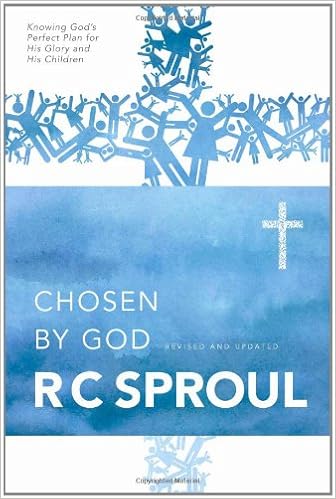
    Chosen By God by R. C. Sproul

    Sproul’s short book is a classic primer on the Calvinist understanding of election (that God unconditionally elects individuals to salvation or damnation). It’s concise, thorough, and readable. Even though it’s the one on this list that I find the most disagreement with (for example, at one point he implies that Calvinism is the only truly Protestant view, which is very much incorrect), it’s still worth reading to get a quick introduction to and defense of Calvinism.


    hand in Hand: The Beauty of God’s Sovereignty and Meaningful Human Choice by Randy Alcorn.

    Alcorn’s book is a great example of moderate Calvinism, and he goes more in-depth than Sproul in his discussion of how God’s providence intersects with human choice from a compatibilist perspective. Alcorn examines a great number of Scripture passages, while also covering the philosophical elements, all without getting overly technical. What I appreciate most is Alcorn’s tone – he’s a great example of how to defend your view with fairness and charity. Also, his first chapter gives some fantastic perspective on the Calvinist/Arminian debate as a whole.


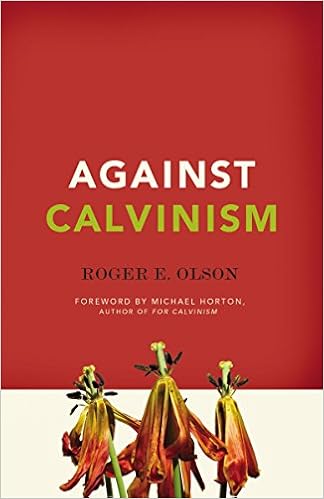
    Against Calvinism: Rescuing God’s Reputation from Radical Reformed Theology by Roger Olson.

    I think Olson’s book is one that every Christian should read at least once, whether you end up agreeing with him or not. The reason it’s so good is that he begins by defining and explaining Calvinism thoroughly before he explains why he disagrees with it, so you’ll get clear definitions of both sides. It’s a great model for how debate should happen. Olson never sets up straw-man arguments – he extensively quotes the best exponents of Calvinism, articulates clearly the challenges to their views, and provides a well-written and passionate case for Arminianism. 


    Grace, Faith, Free Will by Robert Picirilli.

    Just as Sproul’s Chosen by God is a good primer on Calvinism, Picirilli’s book is an excellent introduction to classical Arminian thought. He defends the view that election is tied to God’s foreknowledge of people’s faith-decision. Picirilli also covers a great deal of Scripture, although with certain Bible passages his book could have benefitted from more extensive exegesis and discussion.


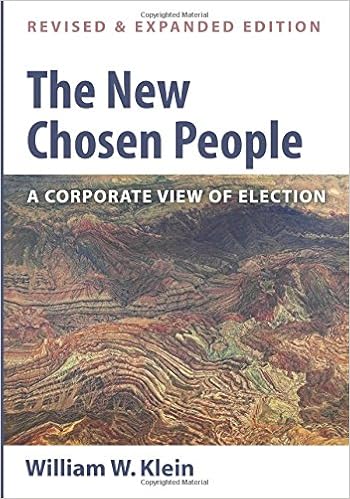
    The New Chosen People (Revised & Expanded Edition): A Corporate View of Election by William Klein.

    Klein’s work is probably the best modern treatment of the corporate view of election. He examines Scripture in-depth to argue that election is far more about group identity than about an individual’s personal destiny. If that idea alone sounds new to you, you need to pick up Klein’s book! He explores the Old Testament, intertestamental Jewish literature, and the New Testament, and his coverage of “election” terminology in Scripture is itself worth the price of the book.


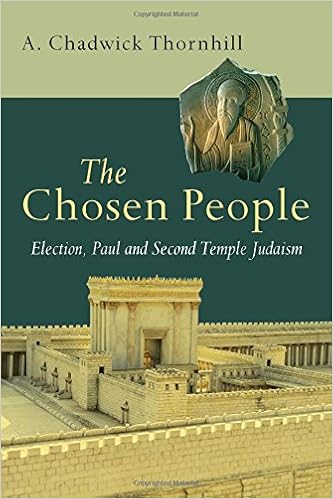
    The Chosen People: Election, Paul, and Second Temple Judaism by A. Chadwick Thornhill.

    I add this as a bonus, as it also supports the corporate view of election and complements Klein’s book nicely. Where Thornhill’s book differs from Klein’s is that it focuses more attention on what Jewish thinkers were saying about election and predestination in the days shortly before the New Testament was written. In other words, you’ll learn more about how the apostle Paul and other New Testament writers were joining a conversation that was already underway. You’ll get deeper background on how the imagery of election and predestination was being understood in the first century, and learn how Scripture develops that conversation. 


    I hope you’ll read at least one (if not more) of these, and that they’ll help sharpen your thinking on this controversial and challenging topic!

    Let me know what you think! Have I left out any of your favorites? Drop me a comment!

    See you down the path.


  • A Handy-Dandy Breakdown of Different Christian Denominations

    A Handy-Dandy Breakdown of Different Christian Denominations

    (*Updated June 24, 2023*).

    One topic that can be confusing for newer Christians is the seemingly endless variety of church denominations. Especially in the part of America where I live, you could find anywhere from three to thirty different types of churches in the same town!

    But what’s the difference between a “First Baptist” church and a “First United Methodist” church? How do you know whether you should attend an Assemblies of God church or a Presbyterian one?

    To help, here’s a quick overview of the different denominations of Christianity and what makes them distinct from each other.

    What Is a “Denomination”?

    A denomination is a branch or sub-group within Christianity that has a distinct name, organizational structure, and set of core doctrines. Denominations may differ in their interpretation of minor issues or on how churches should be run, but for the most part they agree on essential matters of doctrine about Christ and salvation.

    That said, there can be a great degree of variety even among churches within the same denomination. The best approach to choosing a denomination to join is to read the doctrinal statement of the particular church you’re considering (you can typically find them online). Examine whether that church takes an approach that you believe is biblical and that you can adhere to in good conscience.

    The “Big Three”: Main Branches of Christianity

    There are three major, overarching branches of Christianity: Roman Catholic, Protestant, and Eastern Orthodox.

    Roman Catholic: Catholics consider church tradition as equal in authority to the Bible, and also look to the Pope (the bishop of Rome) as the key human authority over the church. They also believe that Jesus’ sacrifice secured grace for all people, but individuals receive that grace through the sacraments offered in the Catholic Church (like Eucharist, baptism, confirmation, penance, etc.). It is common for Catholics to venerate Mary, the mother of Jesus, along with other saints.

    Eastern Orthodox: The Eastern Orthodox Church (or just “Orthodox Church,” or “Orthodox Catholic Church”) split from the Western (Roman Catholic) Church during the Middle Ages over issues of church leadership and theology. The Orthodox Church maintained that teams of bishops called synods should lead the church, rather than a single Pope. Theologically, the Orthodox Church places a high emphasis on mysticism, and considers salvation to involve achieving greater union with God (theosis). Like Roman Catholics, they consider church tradition to be just as authoritative as Scripture, and also practice veneration of Mary, the saints, and icons.

    Protestant: Protestant Christians split from the Catholic Church during the period now referred to as the Protestant Reformation. They denounced the extrabiblical traditions and corrupt practices of the medieval Roman Church and sought a return to Scripture alone for doctrine. While viewing tradition as helpful, Protestants today emphasize the need to respect Scripture as the highest authority for Christian belief and practice. Protestants also emphasize that salvation is by God’s grace through faith, not through works or rituals (even though those things are important).

    Major Denominations Within Protestantism

    Anglican and Episcopalian
    The Anglican Church is the national church of England. In America, the official presence of the English Church is in the form of the Episcopal Church (after the Greek word for “overseer”: episkopos), although there is also a more conservative branch known as the Anglican Church in North America (ACNA).
    Its main distinctive is its organizational structure, which is similar to Catholicism: one archbishop presides over a number of other bishops who in turn preside over local congregations. Anglican/Episcopal churches also tend to be very formal/liturgical in their worship services, place great value on historic traditions, and have a high view of the sacraments. They are also widely known for the Book of Common Prayer, which serves as a guide for Anglican worship services and daily prayer.
    In a nutshell: Catholic-flavored Protestantism.
    Famous members: C. S. Lewis, Theodore Roosevelt, J. I. Packer, John Stott, N. T. Wright, Bono.

    Presbyterian
    Gets its name from the Greek word for “elder” (presbuteros). Presbyterianism is noteworthy for its unique organizational structure, in which local congregations are governed by teams of elders who, in turn, are part of an overarching assembly of elders. In America, the largest of these assemblies are the PC-USA (which is more liberal in its leanings) and the PCA (which is more conservative). The Presbyterian denomination is also distinctive for holding to a fully Calvinist system of doctrine.
    In a nutshell: Elders and Calvinism.
    Famous members: B. B. Warfield, J. Vernon McGee, Jimmy Stewart, Ronald Reagan, Fred Rogers (of Mr. Rogers’ Neighborhood), R. C. Sproul, Tim Keller.

    Lutheran
    As the name implies, Lutheran churches are affiliated with the theology of Martin Luther, the German friar/professor who kick-started the Protestant Reformation.
    Lutherans have a high sacramental theology, perform infant baptisms, and hold to specific understandings of justification and amillennial eschatology. Like many other Protestant denominations, Lutherans have largely divided into liberal (ELCA) and conservative (LCMS) branches.
    In a nutshell: “This is the word of Martin Luther.” “Thanks be to God.”
    Famous members: Dietrich Bonhoeffer, Paul Tillich, Rudolph Bultmann, Dr. Seuss (purportedly).

    Baptist
    The Baptist denomination is one of the more well-known in the United States. Two things in particular make them unique. The first is their insistence that baptism must be reserved only for individuals mature enough to make a personal profession of faith (and done by full immersion, not sprinkling!). The second is their emphasis on the independence and self-governance of local church congregations (although many local Baptist churches choose to be affiliated with larger Baptist conventions, like the Southern Baptist Convention). Some Baptists also teach that certain spiritual gifts like healing, tongues, and prophecy died out once the New Testament was completed (this view is called cessationism).
    In a nutshell: Baptism for adults only; local church autonomy.
    Famous members: John Bunyan, Andrew Fuller, Charles Spurgeon, Martin Luther King, Jr., Billy Graham, Russell Moore, John Piper.

    Methodist 
    This denomination stems from the ministry of John Wesley in the 1700s. Wesley was an Anglican priest who pioneered new ministries on the American frontier. His followers, known as Methodists, subsequently split off into a new denomination. Methodist theology is traditionally Arminian. Some Methodists believe that Christians can achieve perfect sanctification in this life (Wesleyan Holiness Movement). Many also teach that one can lose their salvation through willful/persistent sin. Many Methodist churches also place a heavy emphasis on social activism. Methodist worship services are often more formal/liturgical, but some are contemporary. The largest Methodist body in the U.S. is the United Methodist Church, but they are currently undergoing a split, with the Global Methodist Church forming as the more conservative group.
    In a nutshell: Arminian theology and activism.
    Famous members: Francis Asbury, William Booth (founder of The Salvation Army), George W. Bush, I. Howard Marshall, Thomas Oden.

    Pentecostal and Charismatic 
    Pentecostalism is the largest Protestant denomination worldwide. It has grown especially in Asia and Africa thanks to missions endeavors. Its main distinctive is its emphasis on the continuance of the miraculous gifts of the Spirit (healing, tongues, and prophecy).
    Traditional Pentecostal distinctives also include: 1) the belief that the “baptism in the Holy Spirit” is an event subsequent to conversion, and 2) the belief that Spirit-baptism is always evidenced by speaking in tongues. Some branches of Pentecostalism also place an emphasis on trying to return to the conditions and practices of the first-century church (as described in the book of Acts). Pentecostalism also has many sub-denominations, including: Classical Pentecostalism, the Assemblies of God, the Foursquare Church, Holiness Pentecostals, and the Apostolic Church.
    [Important Note!: While Pentecostalism is a specific denomination, the term “charismatic” is a category description that says a church believes in the continuance of all spiritual gifts. In other words, a church can be charismatic without being Pentecostal. Non-Pentecostal charismatics believe that Spirit-baptism happens simultaneously with conversion and don’t teach that everyone must speak in tongues.]
    In a nutshell: “We really like the Holy Spirit here!”
    Famous members: Elvis Presley, Smith Wigglesworth, Joyce Meyer, John Wimber, Sam Storms, Gordon Fee, Craig Keener.

    Church of Christ and Disciples of Christ
    The Church of Christ denomination, while not as large as those mentioned above, is unique in its emphasis on simplicity and “Bible-only” teaching. They generally reject the use of creeds and historical theology when forming their doctrine. Some Churches of Christ are also known for forbidding the use of musical instruments in worship services.
    A closely-related denomination is the Disciples of Christ. This group also denies creeds, and teaches by way of having members read the Bible and and follow whatever it says to them. All that’s required to become a member is that you undergo believer’s baptism.
    In a nutshell: “No creed but the Bible (according to my own interpretation).”
    Famous members: Max Lucado, “Weird Al” Yankovic, Lyndon B. Johnson.

    Anabaptists 
    Anabaptist groups emerged out of the radical wing of the Protestant Reformation — those who distanced themselves from participating in society. Today, Anabaptist offshoots include the Mennonites, the Amish, and the Hutterites. They are well-known for their emphasis on pacifism, non-participation in military or political matters, and (in some cases) living in secluded, alternative communities.
    In a nutshell: Non-conformists.
    Famous members: Menno Simons, William Penn (founder of Pennsylvania), John Howard Yoder, Greg Boyd.

    And there you have it! Obviously much more detail could be given on any of these denominations and their own subgroups, but hopefully now you can at least tell your Lutherans from your Episcopalians.

  • God’s Sovereignty & Human Choice in Proverbs

    God’s Sovereignty & Human Choice in Proverbs

    One of the core teachings of Scripture (and something that really should go without saying) is that God is sovereign. He is in control of the world He has made. Nothing is outside of His power or authority. He calls the shots. After all, if he’s powerful enough to create this universe, it would make sense that he could do anything he wanted with it.

    This concept of God’s sovereignty is something that Proverbs emphasizes a lot, because Solomon knew that only a foolish person would deny God’s power over his creation. A wise person, on the other hand, would submit to God’s rule. (And remember, Proverbs is intended to help us become wise.)

    But it’s also a concept that can easily be pressed too far beyond what the Bible states. It’s all too easy to pick out a handful of verses, read them in a wooden manner outside their context, and string together the notion that God predetermines everything that happens — including people’s decisions! (The technical name for this philosophy is determinism; you also may have heard it called fatalism.)

    But lest we begin blaming God for our own evil actions and throw human responsibility out of the window, we need to look at some of the strongest statements on divine sovereignty in Proverbs and examine what they’re really saying.

    What’s really the point when we say God is “in control”? And how should that impact our decision-making?


    Solomon the Fatalist?

    Let’s look first at what are arguably the strongest statements on God’s sovereignty in Proverbs.

    Proverbs 16:4 (CSB) — “The Lord has prepared everything for his purpose— even the wicked for the day of disaster.”

    One might get the impression this verse is saying that God actually creates people wicked; that he purposefully authors evil. He makes some people be bad, but it’s okay because it’s all part of the plan.

    But that’s not what this verse is saying, for two reasons. One is that this would make nonsense out of all the verses in Proverbs (and the rest of Scripture) that speak of God’s judgment of evil (Prov 11:19, 21; 16:5; 21:12), his hatred of sin (Prov 6:16-19; 12:22; James 1:13-14), and his desire that people choose wisdom and righteousness (Prov 1:29-31; 3:31-33; 8:1-21; Ezekiel 18:21-32).

    And two, this interpretation doesn’t fit the original Hebrew of the verse. If we translate it literally, it says everything is made to correspond “to its answer” (לַֽמַּעֲנֵ֑הוּ). In other words, God sovereignly makes sure that everyone and everything reaches an appropriate outcome. The second line gives a specific illustration: namely, the wicked will certainly receive the “day of disaster” their actions merit.

    Let me say it this way: This is not a statement about predetermination, but about retribution! It’s saying God will ensure that each life’s outcome corresponds to its deeds. Compare the NET translation: “The Lord works everything for its own ends— even the wicked for the day of disaster,” or the GNT: “Everything the Lord has made has its destiny; and the destiny of the wicked is destruction.”

    Indeed, elsewhere Solomon points out how foolish it is to blame God for people’s wicked choices: “A person’s own foolishness leads him astray, yet his heart rages against the Lord” (Proverbs 19:3, CSB).

    God’s purpose is not to create evil, but to allow it, work it into a greater good, and ultimately judge it.

    Proverbs 21:1 (CSB)“A king’s heart is like channeled water in the Lord’s hand: He directs it wherever he chooses.”

    Here we are reminded that even though we may think that human rulers are in control, God is actually the King of kings. He sets boundaries on what human leaders can do.

    Again, we need to be careful not to take this verse in an overly deterministic manner, as if God dictates every choice human leaders make. That would mean that God specifically directed Hitler to order the murder of millions of Jews, for example (yikes!). But this is not at all what is implied by the imagery of this proverb.

    The illustration used here is of a farmer setting irrigation channels to steer water in his fields. It’s an image suggesting oversight, direction, and setting boundaries. This verse isn’t saying that God overrides or predetermines the will of human leaders; rather, it means that he guides and sets limits. And it’s a reminder that God’s power is to be respected more than that of human kings.[1]


    The Proper Response to God’s Sovereignty is Humility

    Proverbs 20:24 (ESV) – “A man’s steps are from the Lord; how then can man understand his way?”

    Here is a verse that gives a strong statement of God’s sovereign influence over human lives. It’s also tricky to translate, and the meaning depends on the two different Hebrew words for “man” that are used.

    Here’s a closer approximation of the Hebrew: “The Lord guides the course of life of even a mighty man (gever), so how can a mere mortal (adam) hope to fully comprehend his life?”

    The rhetorical intent seems to be to remind us not to get too overwhelmed by trying to figure out all there is to know of life, or to be jealous of seemingly powerful or influential people. Even the “mighty” don’t have it all figured out, and indeed they should be humbled by the fact that it is not they but God who is ultimately the master of their fate.

    On the other hand, the faithful can rest easy knowing that God is the one who manages the circumstances of their lives. We don’t have to have it all figured out before we can trust him.

    Proverbs 16:9 (NET) – “A person plans his course, but the Lord directs his steps.”

    Here the sovereignty of God is contrasted with the will of man. Make sure you notice that God’s involvement and human decisions are placed side-by-side and compared as regards their extent; the former does not remove the latter. God’s rule does not cancel out human decision-making.

    Far from saying that your every decision is predetermined by God, this proverb is telling us that we can and should make decisions and have plans, but we should also humbly recognize that the particular outcomes are subject to God’s sovereignty and the circumstances he allows.

    But before we make those plans and decisions, we should consider one more important feature of God’s sovereignty Proverbs reminds us of — and that’s that God will hold us accountable for our decisions. He is even able to examine our motives:

    Proverbs 21:2 (CSB) — “All a person’s ways seem right to him, but the Lord weighs hearts.”

    Proverbs 24:12 (CSB) — “If you say, “But we didn’t know about this,” won’t he who weighs hearts consider it? Won’t he who protects your life know? Won’t he repay a person according to his work?”

    There’s no pulling a fast one on the Ruler of all, so be sure to act and think accordingly!


    Some Practical Implications

    This emphasis on God’s sovereignty throughout Proverbs is meant to enforce several ideas in our minds:

    1. We ought to be humble and fear the Lord when it comes to making choices in our lives. Since he’s in charge, we should seek to honor him.

    2. We can find encouragement in the fact that God, not humanity, is ultimately in control of our destinies. God’s sovereignty is a good thing. Notice Proverbs 18:10 (NLT)“The name of the Lord is a strong fortress; the godly run to him and are safe.”

    Because Jesus is on the throne of the universe, we don’t have to be fearful when we make decisions, and we don’t have to be fearful of current events. He’s still in control, and he doesn’t feel threatened by the dilemmas we so often fixate on.

    But it’s also because he’s on the throne that we should seek him for guidance in our lives. Ultimately he alone knows what’s best.

    How do we seek the sovereign Lord’s guidance for our lives?

    As we look at that topic, I want to stress that Proverbs (and the rest of Scripture, with it) teaches us a balance between several ideas. Think of these like three tennis balls we constantly have to juggle when we make choices in our lives:

    1) We have a will of our own to make decisions. God created us to be personal beings who can make choices so that we can genuinely relate to him and to others.

    2) We ought to submit our will first and foremost to what God has already revealed in his word. That’s the ultimate source of direction.

    3) We can and should also ask God for personal guidance and wisdom for our unique life situations, but keeping (1) and (2) in mind.

    So for example, God isn’t necessarily going to tell you what to eat for lunch every day. No doubt he could, but it isn’t exactly high on heaven’s priority list whether you choose the burger or the taco!

    But even still, you can follow biblical principles like avoiding gluttony and being a wise steward of your money and relationships. Those still count as God’s directions for your life.

    We’ll talk more about direction in the book of Proverbs in the next post — should the sovereign Lord allow! 😉

    See you down the path.

    [1] Of course, the question of why God allows some human leaders to carry out such horrible atrocities like the genocides of the twentieth century is a difficult one no matter how one understands God’s sovereignty. We might ask why he didn’t set some much stricter limits on, for example, the Nazi regime’s choices. It’s a question worthy of bigger discussion, but for now suffice it to say that I trust God has his reasons, his perspective is far bigger than ours, and all evil and suffering ultimately come to a resolution on the cross where God himself suffered.

  • A Little Dose of Bible Humor

    Since so many of my small-group members are trudging through final exams this week, and since my workload has been quite hectic lately, I thought I’d post something on the more jovial side. To give you a little cheer, here are a few Bible verses that never fail to bring a smile to my face. Happy Friday!


    Here’s a verse I really, really need printed on a coffee mug:

    “If someone blesses his neighbor with a loud voice early in the morning, it will be counted as a curse to him.” – Proverbs 27:14 (NET)

    Sounds like King Solomon wasn’t a morning person! Neither am I, so this is totally my life verse right here.


    Here’s one verse you probably won’t find on one of those fancy “verse of the day” photos on social media:

    “Listen to the Lord’s word, you prostitute.” – Ezekiel 16:35 (GW)

    . . . Man, now that I think about it, I really want to see this in pretty, white letters over a blurry stock photo of a mountain range. Send it to all your backsliding neighbors! #inspiring


    It’s refreshing to me to know that even the writers of Scripture got a little sassy sometimes. Tucked away in 2 Chronicles is this great hidden gem, where God’s Word throws some major shade at King Jehoram:

    “Jehoram was thirty-two years old when he became king, and he reigned in Jerusalem eight years. He passed away, to no one’s regret, and was buried in the City of David, but not in the tombs of the kings” – 2 Chronicles 21:20 (NIV) 

    “Jehoram? Yeah, no one misses that dude.” – The Bible.


    Don’t ever doubt that God has a sense of humor. He knows all your quirks and shortcomings, and he still loves you even when you’re just desperately trying to hold your sanity together until the weekend.

    See you down the path.