Author: Derek DeMars

  • Revelation 3:10 and the Timing of the Rapture

    Revelation 3:10 and the Timing of the Rapture

    What is Jesus promising when he says he’ll keep the faithful Philadelphian Christians from the “hour of testing” (3:10)? Is this talking about a pre-tribulation rapture?

    This is one of the few places in Revelation where some interpreters see a reference to a rapture of Christians before a seven-year great tribulation. Three main lines of evidence are used to support this:

    1) Jesus’ language about an “hour of testing that is going to come on the whole world to test those who live on the earth” is widely agreed to be a reference to the terrifying judgment of God at the end of history. [1]

    2) The specific Greek wording of being “kept from” that “hour” of testing seems to imply total, physical separation from that time period, and not merely spiritual protection through it. [2]

    3) The letters to the seven churches have implications for all Christians everywhere (as I belabored in my previous post), so something of this promise should be relevant to all those “with ears to hear” in any generation. [3]

    On all of these details, I am actually inclined to agree with pre-trib interpreters. But, there’s one interesting little fact that most supporters of a pre-tribulation rapture often miss that really hurts their position, and it’s that the “hour” is not the whole tribulation!

    When Jesus refers to “the hour of testing,” he’s not referring to a seven-year period of tribulation, but to a very limited time at the tail end of the tribulation!

    The tribulation is consistently referred to throughout Revelation with the time-reference “1,260 days,” or three and a half years (Rev 11:3; 12:6, 14; derived from the “half-week” prophecy of Daniel 9:27). Nowhere is it described as an “hour.” In fact, Allen Kerkeslager points out that instances of an “hour” of time in Revelation always refer to the very final day, at the end of the tribulation, when Christ returns and the evil empire of “Babylon” is finally overthrown (Rev 11:11-13; 14:7, 15; 18:10, 17, 19). [4]

    We also see this kind of time reference in the Gospels, where Jesus consistently refers to the time of his actual Second Coming as “that day or that hour” (Matt 24:44, 50; 25:13; Luke 12:39-40, 46; John 5:25). [5] This will be the time when God’s full wrath is vented on unbelievers on the earth, when he overthrows “Babylon” in “a single hour.”

    Believers will be delivered from that horrible day by the post-tribulation rapture, which will happen concurrently with Christ’s descent from heaven at the Second Coming (see Mark 13:24-27; 1 Thes 4:16-17; 1 Cor 15:52).

    Since Christians living in the first century believed that the events leading up to Christ’s return could begin taking place any day, this promise that they would not experience the day of final wrath on the earth was applicable to them just as it is to us should we happen to be alive at the end. The Philadelphian Christians just happened to experience this protection through their physical deaths, which technically is still a form of physical separation from an earthly trial!

    These Christians  — and us, as well — would still have to be faithful through all other trials (including the possibility of imprisonment or martyrdom for their faith, as well as the attacks of the coming Beast and his empire). But these will pale in comparison to the outpouring of God’s full and final wrath on non-believers on the last day of history. That hour of trial we are exempt from, by the grace of God through our faith in Christ.

    All of this information lines up with the fact that elsewhere in Scripture and in Revelation believers are told to endure to the very end, when Christ will appear to the whole world (Matt 24:13; Mark 13:13; 2 Thes 2:1-10; 1 Pet 4:12-13; Rev 7:14; 13:10).

    To sum up: The “hour of testing” is not referring to the whole time of tribulation, but only to the events connected with the very final day of history and the Second Coming, when Christ descends from heaven and God pours out his final wrath on “Babylon” and those who worship the Beast. When Christ promises believers in Rev 3:10 that he will “keep” them from this hour of trial, it is indeed via the rapture, but I’m convinced this will be a post-tribulation rapture!


    [1] See Grant R. Osborne, Revelation, BECNT (Baker, 2002), 193. He calls this the consensus view, and summarizes the usual two pieces of support: the global scope of the trial and the fact that “those who dwell on the earth” is a stock phrase throughout the book for unbelievers who follow the Beast. Osborne takes a post-tribulational view, though.

    [2] See Buist M. Fanning, Revelation, ZECNT (Zondervan, 2020), 177 for some pretty convincing arguments why we shouldn’t see Rev 3:10 as merely referring to spiritual preservation through the tribulation, and why supposed parallels with John 17:15 won’t work.

    [3] Though see Sam Storms’ blog post, “Kept From the Hour of Trial (Revelation 3:10-11),” for an example of the view that Rev 3:10 is in fact a promise only for the first-century Philadelphian church. This used to be my own approach.

    [4] Allen R. Kerkeslager, “The Day of the Lord, the ‘Hour’ in the Book of Revelation, and Rev 3:10,” unpublished paper delivered at the annual 1991 Annual Meeting of the Society of Biblical Literature; cited in G. K. Beale, Revelation, NIGTC (Eerdmans, 1999), 292.

    [5] John Murray, “The Interadventual Period and the Advent: Matthew 24-25,” reprinted in his Collected Writings, Vol. 2 (Banner of Truth Trust, 1996), 394-95; cited in Jonathan Menn, Biblical Eschatology: Second Edition (Resource Publications, 2018), 142-43.

  • The Book of Revelation is a Musical?!

    The Book of Revelation is a Musical?!

    When you’re reading a book of the Bible, one of the easiest mistakes to make is to breeze past the parts that were originally sung. The book of Revelation is a case-in-point. It’s positively teeming with songs — more so than any other book of the New Testament. But what’s the point of all the music?

    Why is John’s Apocalypse, the last book in the Christian canon, a musical?

    Well, okay. I suppose I should admit that technically the term “musical” only refers to modern media forms. According to most sources, a musical is a play or film that uses song to advance the plot or develop the characters. So, since Revelation is a book, it doesn’t fully count.

    But still! The point I want to make today is that the book of Revelation uses songs to advance its plot, just like modern musicals do. The hymnic portions scattered throughout Revelation aren’t there just for show; they develop and enforce the key themes and ideas of the book.

    I’ll explain how below. But first, how do we know which parts were sung?

    Revelation’s Musical Numbers

    Most modern translations will indicate when the original text was meant to be read as poetry or music by indenting the text a little bit and setting it in poetic lines. The CSB translation, for example, has 28 of these poetic sections in Revelation.

    Of these poetic passages, only two are explicitly referred to as songs: the “new song” in 5:9-10, and the “song of Moses and of the Lamb” in 15:3-4. But several others are very clearly songs, too, even if they aren’t labeled as such.

    Other sections that many scholars agree should be seen as hymnic or musical include:

    • The “Holy, Holy, Holy” hymn of the living creatures (4:8).
    • The song of the elders (4:11).
    • The praises of the angelic hosts and every living creature (5:11-13).
    • The song of the elders, redux (11:17-18).
    • “The Accuser of our brothers has been thrown down” (12:10-12).
    • “Just are you, O Holy One” (15:5-7).
    • The final Hallelujahs of heaven (19:1-8).

    These songs are all interspersed throughout the main narrative portion of Revelation (chapters 4-21), and they show up at key turning points throughout the story that unfolds in John’s visions.

    The Message of the Music

    The first songs in Revelation 4:8-11 are hymns of worship to God from the celestial beings around his throne. They focus on God’s holy character and on why he is worthy of worship. We could see these musical numbers as an intro or overture of sorts, setting the musical (and spiritual) tone for what’s to come. They introduce one of the main themes of the book: Only God truly deserves our worship and devotion.

    And as we read the rest of Revelation, we will discover that the book centers around a conflict between those who are competing for this worship! There are enemies — the dragon in the heavens and his minions, the beasts, on the earth — who are trying to lay claim to this worship and this authority. They will be introducing discord into the melody of the book as they accuse God’s people day and night (12:10).

    No wonder, then, that we’re told the angels worship God with hymns day and night (4:8) — they’re trying to drown out the unholy voices of the enemy! This is a musical battle! The heavenly worship is a weapon in a cosmic struggle.[1]

    Revelation’s second musical number (5:9-14) reflects on the first great plot-twist in the book: No one in heaven is worthy to open the scroll in God’s hand, except for the “Lion of the Tribe of Judah” — but this “lion” appears as a sacrificed lamb! The one who is worthy is the one who was slain, and the song explains this further: the Lamb won his victory over evil by laying down his life for God’s people and God’s purposes.

    And so heaven breaks out in praise and cheer for the Lamb (aka Jesus) and, in the surprising conclusion to the song, their worship is shared between the One on the throne and the Lamb! Jesus is shown to be worthy of the same worship as his Father. This musical number expands our vision of the One who is worthy of our worship, and fills out an even bigger picture of why he deserves praise: because of the love and sacrifice he’s shown to redeem his creatures.

    The next three musical numbers all revolve around the highest point of drama and conflict in Revelation — the struggle of God’s kingdom against the earthly kingdoms under the rule of the Dragon/Satan (11:17-18; 12:10-12; 15:1-7). These songs highlight God’s justice and certain victory over evil, even before that victory has been fully realized. It’s as good as done, because the good and holy God is the one who is acting. He is just in bringing destruction back upon those who have been destroying his creation (11:18), and he is faithful to vindicate those who have stayed loyal to him.

    The grand finale comes as the conflict concludes (19:1-8), and it is grand indeed! A string of “Hallelujahs” rings out from a massive crowd in heaven as God overthrows the armies of the Beast and brings about his kingdom on earth at last. Evil is defeated, heaven and earth meet, and Jesus and his people are now able to enjoy the consummation of all their hopes and longings to finally be together forever. Hence, the final lyrics paint the picture of a great wedding banquet — the greatest party in history.

    This musical has a happy ending.

    The Power of Song

    Whether you love musicals or hate them, one thing that can make a good musical so powerful is the emotional effect music has on its listeners.

    When a story is not just told but sung, it stirs up strong feelings and engages an entirely different part of our brains (and souls). It also becomes more memorable (just ask anyone who’s had a song stuck in their head!).  

    Because of these qualities, music also has great power to shape our affections and values. So when the book of Revelation repeatedly highlights its main themes in song form, it’s driving home the values that God wants to cultivate in the book’s readers/hearers.

    (Keep in mind that the books of the New Testament would originally have been read out loud/performed to a listening congregation — which is why Revelation pronounces a blessing on those who “hear” it in 1:3; 22:17-18.)

    As Craig Koester summarizes it,

    “Worship expresses fundamental loyalties and commitments. As the hymns define the character of God, they shape the identities of those who worship him. The divine actions affirmed in the hymns include creation, redemption through sacrifice, and the exercise of justice and truth. By praising these acts of God and the Lamb, the hymns shape the way worshipers see their place in a world where they live with competing claims upon their loyalties, while fostering their hope in God’s kingdom. As the hymns provide a means of expressing faith, they also shape the faith of readers who identify with the worshipers in the narrative.”[2]

    Now, obviously we no longer have the melodies to which these songs were originally sung, nor do we still speak the Koine Greek in which they were originally written.

    But there have been many, many songs inspired by the lyrics in Revelation down through the years (some of them better than others; this one is my personal favorite, though it’s a bit dated now). The sheer volume of contemporary worship lyrics and classic English hymns that have taken wording from Revelation illustrates the power that this book’s poetry has had upon its readers throughout the centuries.

    But besides listening to music inspired by Revelation, another way we can appreciate the book’s musical nature is by taking more time than usual to ponder its song lyrics.

    Read them more meditatively, recognizing that they are very intentional and important to the overall message of the book. Don’t just breeze by them. Sit with them a while. Try to imagine the wonder of hearing these words as a song.

    And consider that there is more focus on beauty than on terror in this last book of the canon.

    See you down the path.


    [1] Sigve K. Tonstad, Revelation, Paideia Commentaries on the New Testament (Grand Rapids: Baker Academic, 2019), 108-09.

    [2] Craig R. Koester, Revelation: A New Translation with Introduction and Commentary, Anchor Yale Bible Commentary, vol. 38A (Yale University, 2014), 130, emphasis added.

  • Top 10 Theology Books That Have Impacted My Life

    Top 10 Theology Books That Have Impacted My Life

    It’s now been over two weeks since we’ve been sheltering at home. I’ve posted every day for 14 days. After all the research I did for yesterday’s post, I’m feeling a little brain-dead today. So here’s something on the lighter side. It’s Friday, after all.

    Without too much commentary, here are the top ten books that I would say have had the biggest impact on me when it comes to my theological perspective. Some of these brought about massive paradigm shifts as a result of reading them. Some have affected the course of my life in pivotal seasons. Their place here does not imply that I agree with every idea proposed in all of them, but that does not diminish the importance they’ve had in my journey.

    1. Mere Christianity by C. S. Lewis — The one that jump-started my journey as a theologian, and a constant reminder of the beauty of the core doctrines all Christians can agree on, even amidst the great diversity in the church.
    2. The Reason for God by Tim Keller — The cogent arguments in this book helped save my faith in a season of intense doubt (read more about that here).
    3. The Grace Awakening by Charles Swindoll — God used this book to remind me how radical his grace toward me really is, and it opened my eyes to how badly I needed to learn to have grace with myself, too.
    4. Living by the Book by Howard G. Hendricks & William Hendricks — My introduction to the basics of biblical exegesis back when I was a total noob in college. Everybody’s gotta start somewhere.
    5. Against Calvinism by Roger Olson — Helped me put my finger on the philosophical problems my previously-held Calvinistic framework never could quite explain and that I always felt terribly uneasy about.
    6. Following the Master: A Biblical Theology of Discipleship by Michael J. Wilkins — Honed my abiding passion for discipleship into what eventually became a course I now teach annually for college interns.
    7. Justification by N. T. Wright, and Salvation by Allegiance Alone by Matthew Bates — Putting these together as a tie for #7 since I read them back-to-back and since both helped me get more comfortable swimming in the massive pool that is the New Perspectives on Paul movement. Also, both these books helped me articulate a fuller definition of “faith” that’s more accurate to what the NT envisions.
    8. Five Views on Biblical Inerrancy edited by J. Merrick & Stephen M. Garrett — Phew, boy! This one forced me to reexamine all of my presuppositions about how the Bible works and how it’s meant to be read. I’d say my faith in Scripture’s truthfulness and authority is stronger (but also more nuanced) than ever thanks to reading it.
    9. Inspiration and Incarnation by Peter Enns — Similar to the one above. After deconstructing my initial doctrine of Scripture, this particular book by Enns was helpful for reconstruction, and I’ve since adopted the “progressive or genre-based inerrancy” approach he articulates.
    10. Reading Revelation Responsibly by Michael J. Gorman, and Revelation: Anchor Yale Bible Commentary by Craig R. Koester — I list these two together as a tie because I read them back-to-back in a season when I was reexamining my entire approach to eschatology (last things) and the book of Revelation. Gorman’s provocative book put the nail in the coffin of my previous “Left Behind” dispensationalist approach, while Koester’s excellent commentary opened my eyes to the literary, historical, and theological beauty of Revelation when the fearmongering of American end-times culture is, pardon the pun, left behind.

    And those are the top ten theology books that have influenced me. At least, the ones whose influence I can most clearly bring to mind; others have no doubt left more indelible marks.

    What books have most changed your life or your thinking? Let me know in the comments.

    See you down the path.

  • Views on Hell in Ancient Judaism

    Views on Hell in Ancient Judaism

    Beliefs about the nature of hell have always been diverse. This was the case even in ancient Judaism before and during the time of Jesus, as well as in early Christianity. For those who are curious, here’s a small sampling of some ancient Jewish writings on hell. These writings are from the time just before and during the ministry of Jesus and the writing of the NT (c. 200 BCE to 100 CE), so they can help give us a bit of a window into the cultural context and show us what prevailing opinions might lie behind what the NT authors wrote.

    This list is far from exhaustive, as I’m by no means an expert in this arena, but it should be enough to demonstrate that there wasn’t a unanimous tradition on the subject even in those early days other than that God would, in fact, judge unrepentant sinners with some kind of fiery punishment in the afterlife. Opinions differed on the nature of the punishments in hell, as well as their duration (eternal torment vs. eventual annihilation).


    Second-Temple Jewish literature on hell: [1]

    The popular Jewish book of 1 Enoch (compiled in parts from around 200 BCE until around 100 CE) speaks a lot about the bad fate coming to sinners on the day of God’s judgment. It is difficult to say with certainty whether the book as a whole envisions the wicked suffering torment forever after the final judgment, or merely suffering for a time and then being annihilated, but the balance seems to me to skew toward the latter.

    For instance, 1 Enoch 22:10-11 might suggest eternal torment: “in like manner, the sinners are set apart when they die and are buried in the earth and judgment has not been executed upon them in their lifetime, upon this great pain, until the great day of judgment–and to those who curse (there will be) plague and pain forever, and the retribution of their spirits. They will bind them there forever…”

    But other passages suggest annihilation, such as 1 Enoch 38:1, 5-6: “When the congregation of the righteous shall appear, sinners shall be judged for their sins, they shall be driven from the face of the earth…. At that moment, kings and rulers shall perish, they shall be delivered into the hands of the righteous and holy ones, and from thenceforth no one shall be able to induce the Lord of the Spirits to show them mercy, for their life is annihilated.” Similarly, 1 Enoch 91:14 speaks of the wicked being “written off for eternal destruction.”

    Still other passages in the middle of 1 Enoch speak of the wicked being led away from God’s presence and destroyed on the day of judgment, with language like the wicked “vanishing away from before [God’s] face,” being chained and imprisoned, and being “cast into the furnace of fire” (1 Enoch 53:2-3; 54:1-6; 62:11-13; 63:1-12).

    Then in 1 Enoch 108:3-4, the wicked are presented as spiritually perishing in fire, crying and lamenting as they burn away: “As for you, wait patiently until sin passes away, for the names of (the sinners) shall be blotted out from the Book of Life and the books of the Holy One; their seeds shall be destroyed forever and their spirits shall perish and die; they shall cry and lament in a place that is a chaotic wilderness and burn in the fire…” This final statement on hell in 1 Enoch sounds pretty annihilationist to me, but I suppose it could be debated.

    Later on, in a separate work by a different author called 2 Enoch (late 1st century CE), eternal torment is very clearly expected for the wicked. See 2 Enoch 10:2-3“every kind of torture and torment is in that place, and darkness and gloom. And there is no light there, but a black fire that blazes up perpetually, and a river of fire is coming out over the whole place, with cold ice; and places of detention and cruel angels and carriers of torture implements, tormenting without pity.”

    Going back to the first century before Christ, the apocryphal book of Judith also promotes eternal conscious torment: “Woe to the nations that rise up against my people! The Lord Almighty will take vengeance on them in the day of judgment; he will send fire and worms into their flesh; they shall weep in pain forever (Judith 16:17, NRSV).

    In the Dead Sea Scrolls, 1QS 4:11-14 (2nd century BCE?) puzzlingly describes the fate of the wicked as both eternal torment and extinction or annihilation: “And the visitation of all who walk in this spirit shall be a multitude of plagues by the hand of all the destroying angels, everlasting damnation by the avenging wrath of the fury of God, eternal torment and endless disgrace together with shameful extinction in the fire of the dark regions. The times of all their generations shall be spent in sorrowful mourning and in bitter misery and in calamities of darkness until they are destroyed without remnant or survivor” (source). Perhaps we should understand “eternal torment” here more along the lines of “torment in the future age,” culminating in annihilation? (If you happen to be a Qumran expert reading this, please weigh in.)

    Turning to the years in which the NT was being written, a Jewish writer called Pseudo-Philo (70-100 CE?) argues that the wicked dead will waste away in the underworld until the final judgment, where they will be annihilated forever: “And their dwelling place will be in darkness and the place of destruction; and they will not die but melt away until I remember the world and renew the earth. And then they will die and not live, and their life will be taken away from the number of all men” (L.A.B. 16:3).

    In a passage that’s dated to around the end of the first century CE, the Ascension of Isaiah 4:14-18 depicts unbelievers (followers of Beliar, aka Satan) as being blasted by fire from the Lord which “will consume all the impious, and they will become as if they had not been created.” Sounds pretty clearly like annihilation to me.

    But another first century work, 4 Maccabees, expects eternal conscious torment. A martyr declares to his murderers, “In return for this, justice will hold you in store for a fiercer and an everlasting fire and for torments which will never let you go for all time” (4 Macc 12:12).

    And in 100 CE, the book of 4 Ezra 7:32-38 describes “the furnace of Hell” into which the ungodly are cast into “fire and torment” that never end. 4 Ezra 7:80-87 details these torments, including their jealousy over the delight that righteous people experience in heaven, and their shame for rejecting God.

    So what’s the upshot of all this?

    Well, this look at early Jewish views on hell, while brief and incomplete, is at least enough to show that there were proponents of both annihilationist and eternal conscious torment views in the Second-Temple period (when Jesus and the apostles ministered). Thus, it doesn’t seem to be the case that we can say, authoritatively, that one or the other of these views was the dominant or prevailing view at the time — at least, not from what I can see.

    So when it comes time to do the work of interpreting what the New Testament teaches about hell, we can’t just appeal to “the prevailing understanding of hell at the time” to settle the issue. People of faith had varying perspectives even then. We have to carefully exegete each text on its own terms. But we can talk more about that later.

    See you down the path.


    [1] For nerds like me who are interested, I’m using the translations and approximate dates of Jewish works from James H. Charlesworth’s The Old Testament Pseudepigrapha, 2 vols.

  • Burning Questions

    Burning Questions

    I did say I would write a post every day, didn’t I? Hmm. That was probably silly of me. But I will stand by my word. It was hard to find time to write today (my wife and toddler enjoyed lots of family time with me), so this’ll be a short, off-the-cuff post.

    If you’ve been a living human for any significant amount of time, chances are you’ve experienced a burning question or two. Something you can’t get out of your mind. A puzzle that insists you keep trying to solve it, even if it has to go on the back burner at times. It keeps you up at night, and drives you to research at every chance you get. (No? Just me? Surely not!)

    It may not be among the world’s most significant questions (like the physicist’s quest for a “theory of everything”). It could even be something super trivial in the grand scheme of things — like “What color was a T-rex?” (Probably not chartreuse, but could you imagine? lol) In my case, it’s almost always theological. Questions about God, the Bible, and how we should live in light of such things are questions of eternal consequence.

    How often do such questions prompt you to keep asking? To keep seeking after more truth, to keep knocking on the doors of wise counselors or keep poring over books? Most truly burning questions exist that way because, well, there simply aren’t perfect answers available to us this side of eternity, given the messiness of our world and the limitations of our fallen human minds. For now, we only know things “in part,” like looking in a foggy mirror (1 Corinthians 13:12).

    Burning questions should keep us humble and curious. Humble because we do not know everything and there is so much that each of us doesn’t know. And curious because there’s always more exciting truth to discover, and we can always improve how we’re currently understanding or doing things.

    There are a handful of such burning questions that I’ve wrestled with and found settled answers to. One is that there is a God — an inherently good and powerful God who set this universe spinning and designed life with all its complexity. Another is that Jesus of Nazareth lived, was crucified, and left an empty tomb behind him, and therefore, whatever other questions I may explore about religion, or how to interpret the Bible, or of what true Christianity should look like, I bank it all on the central idea that Jesus is Lord, that salvation and a truly fulfilled human life are only possible through relationship with him, and that I must trust Scripture as God’s authoritative word (however we wrestle with everything in it) because he affirmed it to be such. And lastly, I’ve firmly concluded that T-Rexes were reddish-brown.

    Or maybe they were green.

    Okay, we’ll keep that one on the burner for now. Anyway. The main thing I wanted to do with this post is to share some of the questions that are currently burning hottest in my mind. Apart from my core Christian theism I described above, which I don’t really see myself ever changing and would be quite happy to die for, I have many settled convictions that it would be incredibly difficult to change my mind on. But even those I regularly reopen to scrutiny, since, again, I don’t know everything. (Yet! Working on it!) Everything else is up for grabs. I firmly believe “all truth is God’s truth,” as the axiom says, so I try my level best to follow evidence where it leads, keep an open mind, and (crucially) show love and kindness to others who disagree, since we’re all still learning. 

    With all that said, here are some of the burning questions that have been hottest on my mind lately; questions I’m still in the thick of pondering and researching and may even write about as I’m in this daily posting schedule.

    How should we be “doing church” in our increasingly post-Christian culture? What elements that are common among local evangelical congregations need to change? (Or even be dropped altogether?)

    How can local congregations here in my hometown make a bigger difference helping the poor, needy, and vulnerable? How can I personally be making a bigger difference?

    If this Covid-19 outbreak lasts for months, how much of our society will change and how will the church adapt?

    Having seen some really strong arguments for a conditionalist understanding of hell, how would it make sense of the language of Revelation 14:11 and 20:10?

    Why does there seem to be so little interest in the afterlife and eschatological salvation for so much of the Old Testament? Why didn’t God just give every person the gospel message right away? (Related to that is the ever-perplexing issue of those who have never heard the gospel, though I have a slightly more settled conviction on that.)

    Those are just a few of the thoughts that keep me up at night. Feel free to share your thoughts, or your own burning questions, in the comments below.

    See you down the path.

  • Biblical Studies Carnival #166: November 2019

    Biblical Studies Carnival #166: November 2019

    In a first for this site, I’ve had the privilege of being invited to host this month’s Biblical Studies Carnival! These carnivals are a long-running tradition in the world of academic biblical studies blogging, and I greatly enjoyed putting this together. A “carnival” is basically a roundup of new posts and publications from the previous month. It helps give exposure to some good scholarship or thought-provoking writing that people might otherwise have missed.

    Without further ado, here’s what I found to be well worth reading in November:


    Hebrew Bible / Old Testament Studies

    The folks behind Logos Bible Software put out this great reflection on the theme of exile in the Pentateuch on their blog.

    Brandon D. Smith weighs in on the historical Adam debate. I’m sure he and I would quibble on some of the details, but I largely agree with his conclusion about how we should preach and teach Genesis 1-3.

    At the Conciliar Post, Wesley Walker offers a beautiful reflection on two Old Testament passages where we see the self-emptying tendency of God that eventually finds full display on the cross: “Revelatory Crucicentricity: 1 Samuel 16 and 1 Kings 19 as Kenotic Patterns.”

    James Bradford Pate offers some reflections from reading John Walton’s The Lost World of the Torah.

    J. R. Miller also engaged with Walton’s work, with this paper presented at ETS: “Jesus in the Torah: A Response to John Walton’s Lost World Ethics.”

    The Bible Project’s blog begins a series on divine violence in Scripture with a post on the Noahic Flood: “Why Did God Flood the World?”

    Claude Mariottini ponders how Miriam’s role in leading Israel is portrayed and even downplayed in some passages: “The Leadership of Miriam.”

    Doug Chaplin at Liturgica has been busy this month posting summaries of the books of the Old Testament, focusing particularly on their use in the lectionary’s readings. Some of my favorites were this post musing on Abraham’s sacrifice of Isaac, this one on the book of Leviticus, and his summary of Job.

    And Alex at Scribes of the Kingdom reflects on the fall of Satan/Babylon in Isaiah 14.


    New Testament Studies

    November was a bittersweet month in the world of New Testament scholarship. On the one hand, we saw some incredible new publications. On the other, we lost a fine scholar: Dr. Larry Hurtado concluded his long battle with cancer on November 25, 2019. One of his protégés, Michael J. Kruger, posted a heartfelt tribute to Dr. Hurtado here, and Christianity Today posted an obituary here.

    If you haven’t had the chance to read him, you should definitely start by checking out his books Lord Jesus Christ: Devotion to Jesus in Earliest Christianity and Destroyer of the gods: Early Christian Distinctiveness in the Roman World.

    With the final few posts on his blog this month, Dr. Hurtado highlighted some important but neglected studies on the apostle Paul that deserve more attention (“Paul and His Predecessors” and “Chronology Matters.”), and promoted a forthcoming article on Latin and Aramaic loanwords in the Gospel of Mark (“Linguistics and Loanwords in the Gospel of Mark”).

    Elsewhere in the blogosphere, Michael Bird has been busy reflecting on New Testament theology, with a series of posts including “Does the New Testament Really Have a Unifying Centre? Maybe, Maybe Not!” and “New Testament Theology OR History of Early Christianity?”

    Teaching on Jesus’ apocalyptic sermons, Ian Paul explains why being “left behind” is the better option — at least if we’re talking about what Jesus says in Matt 24:36-44!

    Scot McKnight draws attention to a new study on the meaning of pistis Christou in Paul’s writings, arguing that the “faithfulness of Christ” is demonstrated not just in his suffering and crucifixion but in the ongoing faithfulness of the risen and ascended Jesus toward believers: “The Faithfulness of Jesus Christ.”

    McKnight also wrote about why we should read Romans backwards, recommends Craig Keener’s new book on the genre and reliability of the Gospels, and lists some takeaways from Michael Gorman’s recent work on Pauline theology.

    Jay Smith offers a very helpful summary of the practice of “mirror-reading” and why it is necessary in studying New Testament epistles: “Mirror, Mirror on the Wall: Mirror-Reading Occasional Letters.”

    A former Dallas Seminary classmate of mine, Mikel Del Rosario (aka the Apologetics Guy), has a post on “Was Jesus Married?”

    You can see a survey of new research on the Pastoral Epistles from the SBL 2019 conference here, and from ETS 2019 here.

    Speaking of the Pastorals, Susan Hylen’s recent article on female deacons in 1 Tim 3:11 is worth checking out: “Hylen, ‘Women διάκονοι and Gendered Norms of Leadership’.”

    Phil Long over at Reading Acts has also been doing a series on the Pastorals this month — here’s one of my favorite posts, on the creedal formula in 1 Tim 3:14-16.

    Richard Beck ponders what 1 Peter 4:10 has to teach us about grace as a gift exchange.

    Over at Zondervan Academic, Loren Stuckenbruck tells us why we ought to read Revelation within the context of Second-Temple Jewish literature: “Reading Revelation in Context.”

    James Bradford Pate gave a fair-minded review of Bart Ehrman’s Jesus Before the Gospels.


    Theology & Ethics

    In light of the Thanksgiving holiday, it’s only appropriate to share Stephen Jordan’s reflection on how the experience of gratitude itself points us to God: “Gratitude, Thankfulness, and the Existence of God.”

    Ian Paul at Psephizo wrote an amazing piece about the nature of resurrection bodies and how that pertains to our understanding of sexuality, marriage, and procreation: “What does it mean to ‘be like the angels’ in Luke 20?”

    Marg Mowczko shares her insights from the past ten years of blogging on biblical equality between men and women — definitely worth a read! “What I’ve Learned from 10 Years of Blogging on Mutuality.”

    Some worthwhile pieces on political theology: David Justice at the Conciliar Post reflects on “Why We Still Need the Theology of Martin Luther King, Jr. Today,” and Michael Bird gives an outsider’s perspective on America’s political climate: “Jesus Isn’t Interested in America’s Two-Party Division.”

    Jackson Wu has more good thoughts on how we talk about atonement theories in “Is Penal Substitution a Western Doctrine?”

    Over at the Jesus Creed blog, this post suggests that most who struggle with the doctrine of hell are really struggling with the question of who will be saved. 

    Ben Witherington spends a ten-post series going through N. T. Wright’s History and Eschatology: Jesus and the Promise of Natural Theology (Part One here).

    Phil Long has a good review of David Instone-Brewer’s recent book on Moral Questions of the Bible.

    Apologist Haden Clark conducts a sober thought experiment in “What if I’m wrong?”

    Martin Davie sums up a recent collection of essays put forth by the Doctrine Commission of the Anglican Church of Australia on the subject of same-sex marriage.

    Dwight Gingrich also concludes a series on the topic of “Was Jesus Okay with Homosexuality?”

    Roger Olson reflects on the relationship between God and time (“Can God Change the Past? And What does that Have to Do with Open Theism?”), and articulates his understanding of God’s sovereignty and interaction with creation (“A Relational View of God’s Sovereignty”).

    And Kevin RK Davis does a great job clearing away some unfortunate misconceptions about Arminianism here.


    Newly Released Books

    Pride of place has to go to the recent juggernaut of a textbook from N. T. Wright and Michael Bird, The New Testament in Its World: An Introduction to the History, Literature, and Theology of the First Christians. Time will tell if this truly ends up being the “New Testament introduction of all New Testament introductions,” as Craig Keener lauds it, but it certainly does look impressive. And considering it’s a distillation of N. T. Wright’s voluminous and influential scholarship into a single user-friendly volume, it’ll no doubt be a useful resource.

    Scot McKnight and Nijay Gupta have compiled a handy-dandy survey of current New Testament scholarship in their The State of New Testament Studies: A Survey of Recent Research

    Also pertinent for New Testament studies is Myths and Mistakes in New Testament Textual Criticism, edited by Elijah Hixson and Peter J. Gurry. You can find a very helpful summary of key takeaways from the book here. Those interested in apologetics need to take note of the conclusions of this book when it comes to how we defend the reliability of the NT.

    Eugene Boring gives a practical work on Johannine theology in Hearing John’s Voice: Insights for Teaching and Preaching.

    Andrei Orlov’s new work examines the potential ramifications of some important Second-Temple Jewish beliefs on early Christology: The Glory of the Invisible God.

    J. Scott Duvall and J. Daniel Hays offer what looks like a worthwhile contribution to biblical theology in God’s Relational Presence: The Cohesive Center of Biblical Theology.

    Those interested in a comprehensive study on spiritual warfare should check out Spiritual Warfare in the Storyline of Scripture: A Biblical, Theological, and Practical Approach by William Cook and Chuck Lawless.

    Anyone active in Christian education will benefit from the reflections in Theology as a Way of Life: On Teaching and Learning the Christian Faith by Adam Neder.

    And history/sociology buffs will appreciate Evangelicals: Who They Have Been, Are Now, and Could Be by Mark A. Noll, David W. Bebbington, & George M. Marsden.

    Quite a few new commentaries released in November:


    Podcasts

    The fine folks at OnScript have some great interviews on tap this month, including:
    — Chris Tilling discusses the importance of Karl Barth’s reading of Romans (Part 1 | Part 2)
    — Josh McNall offers a mosaic approach to atonement theories (here).

    On Seminary Dropout, Shane Blackshear interviews N. T. Wright about his aforementioned new release, The New Testament in its World (here).

    On Help Me Teach the Bible, Nancy Guthrie and David Helm discuss how to teach the tragically much-neglected epistle of Jude (here).


    Text Criticism & Archaeology

    Brent Nongbri reports on the SBL panel conducting a “postmortem” on the fraudulent “First-Century Mark” manuscript here.

    Elijah Hixson suspects that there is another page to 093 that has gone unrecognized: “A Previously Unidentified Folio of 093?”

    Peter Head reports on a research project covering Codex Zacynthius: “Codex Zacynthius Study Day.”

    The Jerusalem Post covers the unveiling of a 1,000-year-old copy of the Pentateuch: “1,000-year-old Hebrew Bible revealed in Washington, D.C.”

    Leen Ritmeyer has a fascinating write-up on the site of ancient Shiloh — The Place Where the Tabernacle Stood.

    In this ASOR article, Collin Cornell examines evidence of goddess worship among Judeans living in Egypt. This cultural background might illumine texts like Jeremiah 44, which mention Jewish people worshiping a figure called the “Queen of Heaven.”

    The Biblical Archaeology Report sums up the results of archaeological research on Sergius Paulus, the proconsul mentioned in Acts 13 (here), and on Tiglath-Pileser III, the king of Assyria mentioned in 2 Kings 15 (here).


    Curiosities

    Take a walk on the weirder side of cultural background studies: Jim Davila reviews Michael Stone’s book, Secret Groups in Ancient Judaism (here). Stone argues that the Qumran community (which produced the Dead Sea Scrolls) is best understood within the sociological category of a “secret society.” His work also covers various other sectarian groups, keepers of esoteric knowledge, and magical practitioners active during the time the New Testament was written. Be sure to wear your hooded robes before entering.

    David Douherty reviews what looks like a fascinating book chronicling the history of the tumultuous relationship between Christians and rock music in America: “Review of The Devil’s Music by Randall J. Stephens.”

    And lastly, if you haven’t yet, I agree with Ben Witherington: You should go see the new film Knives Out


    And that concludes this month’s carnival! I hope you enjoyed your stroll through the biblical & theological studies midway. Don’t forget to swing by the gift shop, and please leave a like or a comment on your way out!

    Next month’s carnival will be at Alex’s Scribes of the Kingdom blog in January 2020. If you have a biblical studies blog and are interested in potentially hosting a future carnival, reach out to Phil Long (email: plong42@gmail.com or @plong42 on Twitter).

    And If I missed anything from last month that you think deserves mention, please put a link in the comments below!

    See you down the path.

  • Was 1 Peter Written to Jews or Gentiles? Why the Answer Matters More Than You Might Think

    Was 1 Peter Written to Jews or Gentiles? Why the Answer Matters More Than You Might Think

    The opening line of 1 Peter identifies it as a letter from “Peter, an apostle of Jesus Christ: To those chosen, living as exiles dispersed abroad in Pontus, Galatia, Cappadocia, Asia, and Bithynia…” (1:1, CSB).

    At first blush, the wording suggests that Peter is addressing ethnically Jewish followers of Jesus. He calls them the “chosen” — Israel was God’s chosen nation in the Old Testament. He refers to them as “exiles” — the Jewish people had been exiled from their homeland by the Babylonians in 586 B.C.E. And when he says they are “dispersed abroad,” the Greek term he uses is “diasporas,” a term used to refer to the scattering of the Jewish people (from which we get the phrase “Diaspora Jews”). 

    And yet, there are some other verses in 1 Peter that seem to suggest the letter was intended for Gentile (non-Jewish) Christians — leading to much debate among commentators.

    In 1:18 Peter writes of how his readers have been redeemed from “your empty way of life inherited from your fathers.” Would Peter really have referred to the Jewish faith he grew up with as an “empty way of life”? And in 4:3, he implies that his readers used to practice “unrestrained behavior, evil desires, drunkenness, orgies, carousing, and lawless idolatry”– hardly the kind of behavior that should characterize good, Torah-observing Jews.

    Scholars have long been divided over the question of 1 Peter’s intended audience, but it seems the majority of classical interpreters took the phrase “exiles dispersed abroad” at face-value, seeing a Jewish audience to be in view. John Calvin is a good representative when he writes in his commentary on 1 Peter:

    “They who think that all the godly are thus called, because they are strangers in the world, and are advancing towards the celestial country, are much mistaken, and this mistake is evident from the word dispersion which immediately follows; for this can apply only to the Jews.” [1]

    In modern times, though, the consensus has shifted. Today most scholars understand 1 Peter to have been written to Gentile Christians. They do so primarily because of verses like 1:18 and 4:3, but also because the regions Peter addresses were largely Gentile territory.


    Does It Make a Difference?

    Why does it matter whether 1 Peter was written primarily to Jewish or Gentile followers of Christ? What difference does it make for interpretation?

    It turns out that if we take 1 Peter as addressing a Gentile audience, then the epistle becomes one of the strongest supports for the theological idea that the church has replaced Israel as the people of God. This concept is also referred to as “replacement theology” or “supersessionism” (i.e. the church supersedes Israel).

    In 1 Peter 2:9, the readers are said to be “a chosen race, a royal priesthood, a holy nation, a people for his possession” — phrases pulled right out of the Hebrew Scriptures as descriptors of the nation of Israel. If Peter is applying this imagery to Gentiles, then as Scot McKnight claims, “There is no passage in the New Testament that more explicitly associates the Old Testament terms for Israel with the New Testament church than this one.” [2]

    But if the original readers of 1 Peter were themselves ethnically Jewish, then Peter’s language is not surprising at all, and it would undercut the use of 1 Peter as a proof-text in support of supersessionism. That’s not to say you couldn’t potentially arrive at a supersessionist theology from other passages, but 1 Peter 2:4-10 is often one of the most important passages in the debate, so it’s worth considering.

    That said, here are four reasons why I believe, against the current consensus, that 1 Peter was originally written to Jewish followers of Jesus.


    Four Lines of Evidence That Point to a Jewish Audience:

    #1: A straightforward reading of 1:1 supports a Jewish audience. 

    As I mentioned above, this is the simplest and best way to make sense of why Peter refers to his readers as the chosen exiles of the Diaspora. This phrasing was enough to convince most pre-modern interpreters of 1 Peter that it was written to ethnic Jews. It’s also the strongest argument for a Jewish readership.

    The term diasporas is only ever applied to ethnic Jews in biblical texts (John 7:35; James 1:1; in the Apocrypha, 2 Maccabees 1:27; Judith 5:19), so if it were taken to mean Gentiles in 1 Peter 1:1, it would have to be a remarkable exception. It certainly wouldn’t be a natural reading of the verse.

    #2: Peter’s critique of their former way of life actually applies quite well to Hellenistic Jews in the Roman Empire.

    Commentators often stress that it’s hard to see the Jewish apostle Peter referring to his Jewish heritage as “former ignorance” (1:14) and an “empty way of life inherited from [the] fathers” (1:18). Funny enough, however, it apparently wasn’t difficult for the apostle Paul (himself also Jewish) to describe Judaism apart from faith in Christ as a life of ignorance (Romans 10:2-3; 1 Timothy 1:13) and a life dominated by sinful desires (Ephesians 2:3). In Philippians 3:2-9, Paul similarly describes all of his Jewish merits as worthless compared to knowing Christ (Philippians 3:2-9).

    What’s more, as Jim R. Sibley points out in his article on this issue, Peter’s critique of the “traditions of the fathers” makes perfect sense if referring to such traditions as those of the Pharisees, which Jesus himself vehemently criticized (Matthew 15:1-9) and which Paul also distanced himself from (Galatians 1:14). [3]

    We know from archaeology that not only was there a substantial Jewish population living in the regions Peter addresses, but they were very much prone to emulate the pagan lifestyle of their Greco-Roman neighbors when it was socially advantageous for them. [4]

    All of this to say that Peter’s language isn’t all that unexpected if referring to a Jewish audience; indeed, it’s all the more powerful for highlighting the need that even the Jewish people have for the redemption available in the Messiah Jesus.

    #3: Peter’s use of Old Testament prophetic imagery points to a Jewish audience.

    Peter alludes to prophecies from Hosea 1-2 to describe his readers in 2:10, and that Old Testament text clearly refers to the Israelites. Hosea speaks of Israel’s abandonment of God and subsequent restoration. If Peter is addressing Jews, then he is not throwing away the original context of Hosea, but is actually demonstrating its fulfillment in the way Jesus of Nazareth is bringing about the promised restoration of his people.

    In 2:25, Peter says that his readers are returning to the Shepherd and Overseer of their souls. If Gentiles were in view, we might expect him to say they were turning to God for the first time, or were returning to their Creator. But the “God as Shepherd” imagery makes better sense if referring to the covenant relationship of God to the Jewish people, since the Hebrew prophets frequently use that metaphor (Psa 80:1; Ezek 34:13-16; Hos 4:16; Zech 11:7).

    #4: Peter explicitly distinguishes his readers from “the Gentiles” (2:12; 4:3-4).

    At various points in the letter, Peter’s readers are exhorted to live holy lives in the sight of the “Gentiles” they live among. As Sibley writes,

    “Those outside of the circle to whom Peter is writing are referred to as ‘Gentiles’ (ἐθνῶν). The pronouns are most significant: ‘You’ are not a part of ‘them’ and ‘they’ are surprised that ‘you’ do not run with ‘them,’ and therefore, ‘they’ malign ‘you.’ It would hardly be possible to draw a sharper contrast between the Gentiles and Peter’s audience. The clear implication is that his audience is comprised of Jewish believers. Since, however, it has been concluded that the audience, though Gentile, is being addressed as the ‘true Israel,’ then the word ‘Gentiles’ is reinterpreted as ‘unbelievers,’ or non-Christians.” [5]

    I put this argument last, however, because there are instances where the apostle Paul felt free to refer to all non-believers as “Gentiles” (1 Corinthians 5:1; Ephesians 4:17; 1 Thessalonians 4:5), so it’s not beyond possibility that Peter did, too. This is part of the reason why commentators have so long debated whether 1 Peter was written to Jews or Gentiles.

    But based on the other three lines of evidence above, it’s more natural to take Peter’s reference to Gentiles as an ethnic distinction first, and a religious distinction only by extension.


    Reading This Jewish Letter as a Gentile Christian Today

    So what’s the upshot of all this? If 1 Peter was written to ethnically Jewish followers of Jesus living in Asia Minor as part of the Diaspora, then what does it have to say as Scripture for Gentile Christians like me?

    The way I look at it, 1 Peter stands as a reminder that what we now know as “Christianity” began as a sect within Judaism. It didn’t start out as a Gentile religion that was totally separate from God’s dealings with the Jewish people. Rather, it was a movement of Jews who had recognized that their Messiah had come, and that the Messianic Age promised in the Hebrew Scriptures was finally dawning.

    Along with the arrival of the Messianic Age came the inclusion of the Gentiles into God’s people as part of the New Covenant. People from all nations were now being grafted into God’s covenant people (see Romans 11). This doesn’t necessarily mean the same thing as saying that an entirely new entity (the church) replaced Israel; it could just as well mean that the availability of becoming members of Israel had broadened. Jewish priority is maintained (as Paul seems to stress in Romans 1:16; 2:9-10).

    Bottom Line: Since 1 Peter was most likely written to an ethnically Jewish audience, it shouldn’t be pressed into service as a linchpin in arguments to support supersessionism. The conversation is much more complex than that. If one wants to read 1 Peter from a supersessionist perspective, the rationale needs to be stronger than just saying, “He’s applying OT terms for Israel to a Gentile audience.”

    Of course, there are all sorts of other issues and passages to consider when constructing one’s theology of Israel and the church. But whatever theological system we adopt, we need to make sure we’re reading 1 Peter with the grain of its Jewish context rather than against it.

    See you down the path.


    Notes:

    [1] John Calvin, Commentary on the Catholic Epistles, accessed from https://www.ccel.org/ccel/calvin/calcom45.iv.ii.i.html.

    [2] Scot McKnight, 1 Peter, NIVAC (Grand Rapids: Zondervan, 1993), 109-10.

    [3] Jim R. Sibley, “You Talkin’ to Me? 1 Peter 2:4-10 and a Theology of Israel,” Southwestern Journal of Theology 59:1 (Fall 2016), 65. Accessed from https://swbts.edu/sites/default/files/images/content/docs/journal/59_1/SWJT%2059.1_Sibley.pdf.

    [4] See the discussion in Ben Witherington III, Letters and Homilies for Hellenized Christians: A Socio-Rhetorical Commentary on 1–2 Peter, vol. 2 (Downers Grove, IL; IVP Academic, 2007), 25–27.

    [5] Sibley, “You Talkin’ to Me?” 66.

  • No One Can Come to Jesus Unless the Father Draws Them: Two Views on Election in John 6

    No One Can Come to Jesus Unless the Father Draws Them: Two Views on Election in John 6

    (Unless otherwise noted, all Scripture quotations are from the CSB).

    In John 6, Jesus makes a number of startling claims. He’s in the middle of a dialogue with a crowd of Jewish people who were denying the claims he was making about himself. Specifically, they struggled to accept that he truly had “come down from heaven” (6:41-42). In response to their unbelief, Jesus says, among other things:

    “Everyone the Father gives me will come to me, and the one who comes to me I will never cast out” (6:37).

    No one can come to me unless the Father who sent me draws him, and I will raise him up on the last day” (6:44).

    “He said, ‘This is why I told you that no one can come to me unless it is granted to him by the Father’” (6:65).

    Why does Jesus tell these people that only those who are drawn by the Father can come to him? Here I’ll do my best to briefly summarize two possible views on this topic.


    Option 1: Unconditional, Individual Election

    Here’s one way we could interpret Christ’s statements: We could see John 6 as teaching that God already decided (unconditionally) that certain people would believe and be saved — and only those people will come to Jesus. Calvinist interpreters, in particular, look to John 6 as a foundational passage for this doctrine of unconditional election. On this reading, people only choose to believe in Jesus because God the Father, before time began, predestined them to do so. And then, at some point during their earthly life, he draws them irresistibly to Jesus.

    Among the details in the passage that might support such a reading are: 1) the intense emphasis on the inability of many in Jesus’ audience to accept his teaching, 2) the fact that Jesus’ words focus on individuals, and 3) the Greek term for “draw” (helkō), which in many contexts refers to a strong action like drawing in a net of fish (John 21:11) or actually dragging someone (Acts 16:19).

    On the other hand, reading John 6 as a timeless affirmation of unconditional election does involve a few difficulties. One is the fact that elsewhere in John’s Gospel, Jesus teaches that every person’s eternal destiny will be based on whether or not they choose to put their faith in him (John 3:18; 5:24). Another is the question of how the “drawing” in John 6 relates to Jesus’ “drawing” (same Greek word) of all people in John 12:32.

    We’re also told in John 3:16 that God loves the whole world (specifically referring, in John’s writings especially, to the world of unbelieving humanity). Holding to a doctrine of unconditional election raises the difficult question of how exactly God’s love extends to the unbelievers he chooses not to draw.

    There have, of course, been numerous thoughtful answers to these questions by Calvinist scholars. Many of them point out that no one would choose salvation unless God first overpowered their rebellious wills, and that his decision to leave some in their sins is to display his just wrath against sin. This is all so that salvation is completely by God’s grace.


    Option 2: The Drawing of Faithful Jews to Jesus as Their Messiah

    Another way we could interpret John 6 is to see it as describing a unique situation in history — namely, the transfer of faithful Israelites under the Mosaic Covenant to their newly-arrived Messiah, Jesus. On this view, the people whom the Father was drawing to Jesus on that particular occasion were those Jewish people who were already faithfully responding to God’s revelation through the Torah and the Prophets.

    Right after Jesus says that no one can come to him unless the Father draws them (6:44), he immediately gives an explanation of what he means: “It is written in the Prophets: And they will all be taught by God. Everyone who has listened to and learned from the Father comes to me ” (6:45, emphasis added).

    Notice the parallel: the Father’s action of drawing people to Jesus is tied to the people’s action of heeding the words of the prophets. So the way Jesus himself explains it, God had already been preparing his people for their Messiah through the proclamation of his word. Those who were being drawn were those who were heeding what the Spirit of God was saying through the Hebrew Scriptures and the teachings of Jesus.

    The problem is, not everyone in Israel was responsive; the majority were not receptive at all. But there was a faithful remnant — we see this exemplified in the disciples (well, except for Judas!) who remained with Jesus because they understood he had “the words of eternal life” and believed (6:68).

    This minority of faithful Jews were the ones the Father drew to their Messiah. He ensured that no one who was responsive to his word missed out on its fulfillment in Jesus. Thus, when we read John 6, we shouldn’t see Jesus as offering philosophical speculations about eternity past; rather, he was addressing the issue of how only those who were receptive to the Father under the Old Covenant would be receptive to their promised Messiah, Jesus, now that he was finally on the scene.

    John’s Gospel in particular is concerned with the question, “Now that the Messiah has come, why did so many Jewish people reject him?” This is a very important topic for John, as he makes clear in his prologue: “he [Jesus] came to his own, and his own people did not receive him” (John 1:11). On the other hand, “But to all who did receive him, who believed in his name, he gave the right to become children of God” (1:12).

    With the arrival of Messiah, a massive shift in history was taking place. God was drawing the faithful remnant of Jews to their Messiah. Related to the salvation of the believing remnant of Israel was the full inclusion of Gentiles, too,  into God’s community. This is why Jesus later stresses that he has “other sheep that are not of this fold,” and he “must bring them also” (10:16). This refers to God-fearing Gentiles — those who, like the remnant of Israel, were already being taught by the Father and learning from him through the Jewish Scriptures.

    Later on in John’s Gospel, Jesus says that he will draw “all people” to himself when he is “lifted up” (12:32). In other words, through Jesus’ atoning work on the cross, the drawing activity of God through his Word/Messiah would be radically extended to include the entire Gentile world (see also the “mystery” Paul refers to in Ephesians 3:1-13). [1]

    In my opinion, this view does a better job of situating Jesus’ teaching firmly within its first-century Jewish context, and better accounts for how John’s Gospel describes the seismic salvation-historical shift that took place in Jesus’ ministry. That’s not to say it’s unquestionably the right view — one could still debate whether God decreed that the remnant would be receptive to the word, and of course other passages that touch on election/predestination have to be considered. But it does mean that John 6 can be faithfully interpreted in a way that coheres with a conditional view of election, without doing injustice to the text.


    Conclusion

    No matter which of these two views you end up taking, they both affirm that God is the one who has made salvation possible — a salvation found only by his grace through Jesus Christ. Faithful Christians can (and should) continue to test their interpretations against Scripture, and hold those interpretations with a gracious and humble attitude.

    Obviously, discussion about the interpretation of John 6 will continue. But I know that some people in my particular circles (within American evangelicalism) have only ever been exposed to Calvinist readings of John 6, so at the very least I hope this post will present a viable alternative they may not have considered.

    What do you think? Which reading do you prefer, and why? Are there some aspects of the alternative view that you hadn’t considered? Let me know in the comments.

    I close with this nice quote from Gerald Borchert’s commentary on John:

    “Salvation is never achieved apart from the drawing power of God, and it is never consummated apart from the willingness of humans to hear and learn from God. To choose one or the other will ultimately end in unbalanced, unbiblical theology. . . . Rather than resolving the tension, the best resolution is learning to live with the tension and accepting those whose theological commitments differ from ours.” [2]

    For more on the topic of election/predestination, check out my previous posts:
    Calvinism & Arminianism: What I Wish Everyone Knew About the Debate
    – Recommended Resources on Calvinism & Arminianism

    See you down the path.


    [1] This statement in John 12 cautions against seeing the “drawing” activity of God as something that leads irresistibly to salvation, since not everyone among the Gentiles will inevitably be saved.

    [2] Gerald L. Borchert, John 1-11, NAC vol 25A (Nashville: Broadman & Holman, 1996), 268-69.

  • Best Commentaries on 1 Peter

    Best Commentaries on 1 Peter

    If you want to go deeper in your study of a book of the Bible, it’s important to have a few good commentaries at hand. The best ones will explain the nuances of the original language, introduce the historical circumstances behind the book, unpack the theological connections with other portions of Scripture, and offer good material for reflection, preaching, and application.

    Any time I’m studying or teaching a biblical book, I make a point to compare as many of the major scholarly commentaries as I can, for my own benefit and so I can make reliable recommendations to you!

    When it comes to 1 Peter, there are a number of good commentaries available. Scholarly discussion of 1 Peter often revolves around two key background matters: 1) authorship (whether the letter was actually written by the apostle Peter or was composed in his name after his death), and 2) audience (was it written to Jews or Gentiles, primarily?). A commentator’s conclusion on these two questions will inevitably shape their interpretation of 1 Peter.

    Here are the top five commentaries I’ve found most helpful for studying and teaching 1 Peter:


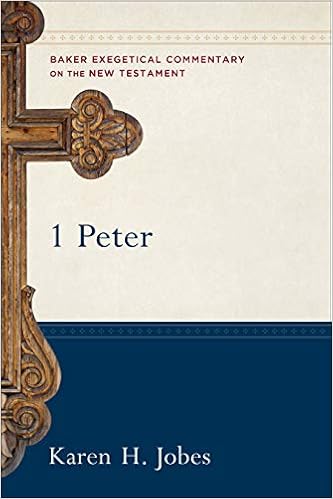
    1. Karen H. Jobes, 1 Peter (BECNT; Baker, 2005).

    Level: Semi-Technical

    This one is a bit on the technical side, but still manages to be accessible to lay readers. 

    Jobes argues extensively for the traditional view of Petrine authorship among recent commentaries, and argues that the apostle wrote to Jewish followers of Jesus who moved into Asia Minor as a result of Roman colonization efforts in the 50s C.E.

    Jobes covers all the important exegetical details while at the same time offering great insights for preaching and teaching. Pastors and serious students of 1 Peter can’t afford to pass this one up.


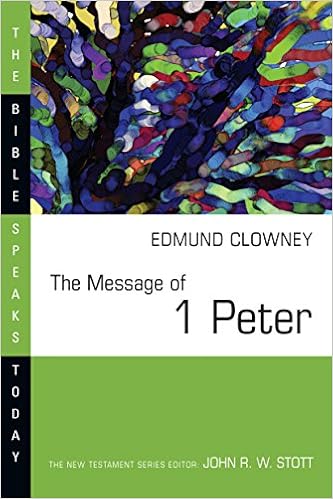
    2. Edmund P. Clowney, The Message of 1 Peter (BST; IVP Academic 1989).

    Level: Pastoral, Devotional

    Clowney’s book reads less like a traditional commentary and more like a series of sermons on 1 Peter. I enjoy using it as a supplement to Jobes, since Clowney offers many great quotes and reflections for preaching.

    He writes from a Reformed perspective, holds the traditional view of authorship, and thinks Peter wrote mainly to Gentile Christians. Even where my own perspective differs, I appreciate Clowney’s reflections. He does a great job tying 1 Peter to other Scripture and bringing out the theological significance. Plus he’s just really pleasant to read!


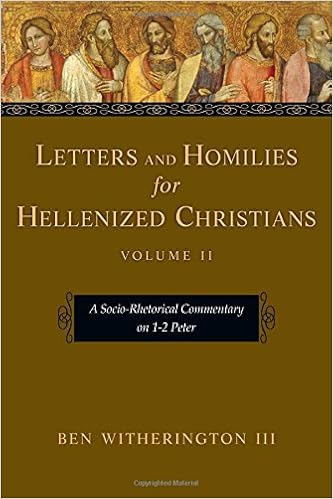
    3. Ben Witherington III, Letters and Homilies for Hellenized Christians: A Socio-Rhetorical Commentary on 1-2 Peter (IVP Academic, 2016).

    Level: Semi-Technical

    Witherington’s commentaries are unique in that they focus especially on the literary and rhetorical character of the New Testament books, while also drawing out their theology. He sheds light on the rhetorical techniques Peter used to encourage his audience in the midst of their trials and persuade them toward holy living so they could be witnesses to the Gentiles.

    Witherington upholds Petrine authorship and makes an extensive case for a primarily Jewish audience. This commentary is geared more towards scholars and academic students, but interested lay readers and pastors will find much benefit as well (not to mention it also covers 2 Peter!).


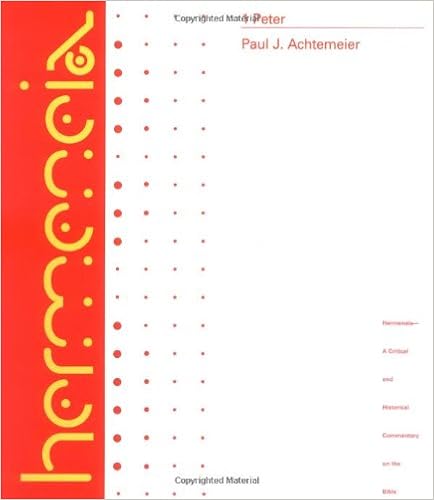
    4. Paul J. Achtemeier, 1 Peter (Hermeneia; Fortress Press, 1996).

    Level: Technical

    Achtemeier’s commentary in the Hermeneia series differs from the others on this list in that he believes 1 Peter is pseudonymous (written by someone other than the apostle Peter) between 80 and 100 C.E. While this may be jarring to more conservative readers, his commentary is still very much worth consulting.

    I’ve found it to be one of the best when it comes to Greco-Roman historical background on 1 Peter, and his discussion of the type of persecution the epistle addresses is excellent. I’ve also found it helpful when it comes to questions of translation in the Greek. It is very much on the technical/scholarly side, but if you already have some exposure to academic New Testament studies you should definitely consult Achtemeier.


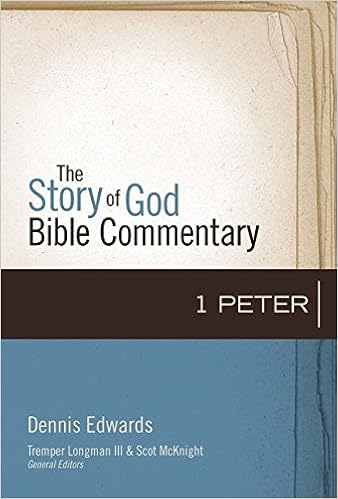
    5. Dennis R. Edwards, 1 Peter (SoGBC; Zondervan, 2017).

    Level: Semi-Technical, Pastoral

    Edwards’ commentary doesn’t add much that is new or original to discussion of 1 Peter, but where he shines is in applying 1 Peter to contemporary life. The Story of God Bible Commentary series features in-depth, practical reflections after the comments on every passage (called “Live the Story”), and Edwards draws parallels between Peter’s words to his exiled audience and civil-rights issues that churches in America face today.

    His commentary is useful for that reason alone, but his exegesis of 1 Peter also strikes a nice balance between being scholarly and pastoral. He sees Peter as the author and views the audience as mostly Gentile Christians. This one is a good value-buy for busy lay readers, pastors, and Sunday school teachers, but it isn’t quite as stellar as Jobes for matters of interpretation.


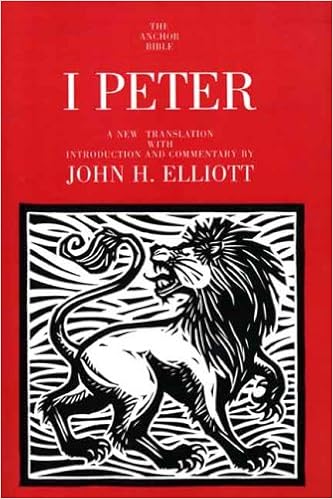
    Honorable Mention: John H. Elliott, 1 Peter (AYB; Yale University Press, 2000).

    Many scholars credit John Elliott as being responsible for the recent resurgence of academic interest in 1 Peter (his academic articles on 1 Peter in the 1970s drew attention to the need for more research on this epistle), so I have to give him a shout-out. At over 900 pages, Elliott’s massive commentary is not for the faint of heart — to call it “encyclopedic” would not be an overstatement! It’s an amazing resource for serious scholars, even if others have since carried the conversation forward.

    Elliott champions the view that Peter’s audience was composed of literal resident-aliens (not just spiritual/metaphorical exiles). He argues for pseudonymous authorship and sees the audience as mostly Gentile. (In my opinion, Jobes has done the best job of taking Elliott’s suggestion of literal exiles in a more plausible direction — Jewish colonists addressed by the apostle Peter himself.) 


    And those are my top picks on 1 Peter. Are there others not mentioned here that you’ve found helpful? If so, let me know in the comments!

    See you down the path.

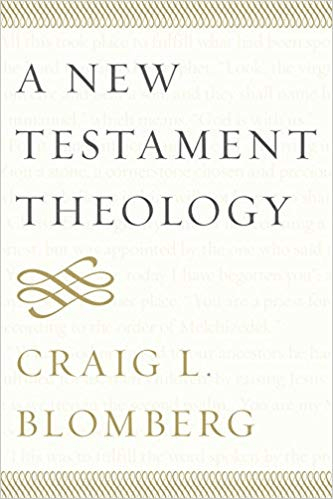
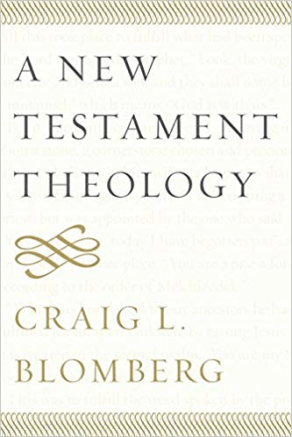
  • Book Review: A New Testament Theology by Craig L. Blomberg

    Book Review: A New Testament Theology by Craig L. Blomberg

    Craig Blomberg is a scholar whose work I’ve really appreciated, particularly his works on the Gospels and his biblical theology of money and possessions. Now he’s added a complete New Testament theology to his already substantial body of work.

    While there is no shortage of New Testament theologies out there, Blomberg’s work seeks to contribute to the conversation by focusing on the theme of fulfillment as the central focus of the New Testament. What was promised by God in the Old Testament has found fulfillment in the life, death, resurrection, and reign of Jesus Christ, and the entire New Testament bears witness to this truth in a variety of ways. I think this is a really helpful lens through which to unpack the theologies of the NT authors.

    Blomberg gives a very broadly evangelical, mildly conservative perspective. I found him to be quite fair and balanced on the range of topics that inevitably come up in a NT theology. Obviously not everyone will agree with all of his positions, but there are a lot of valuable insights to be gleaned. I especially found his chapters on James and Paul’s writings to be standouts.

    I also liked that while most NT theologies treat 2 Peter and Jude together (due to their obvious similarities), Blomberg examined 1 and 2 Peter side-by-side. (He grouped Jude in with the chapter on James, which came across as a bit of a stretch at first but was an interesting experiment).

    A nice bonus to the book is that he spends a lot of time documenting the historical reliability of the NT writings before he goes into analyzing their theology, making this just as valuable a resource for apologetics as it is for biblical theology. I also love the massive bibliography represented in the footnotes — Blomberg did a very impressive amount of research for this, and there were a lot of sources cited that were new and useful to me.

    As far as the book’s weaknesses, obviously there are always going to be some topics that get shorter treatment (otherwise the book would span volumes). Blomberg doesn’t devote much space to subjects like angels, demons, and Satan, arguing that those are not main themes the NT authors dwell on but instead are incidental to the discussion. Still, there are a lot of important background assumptions about spiritual beings that shape the NT authors’ theologies, so I thought they deserved a bit more attention.

    All in all, this was a solid NT theology. Nothing game-changing, but it was balanced, readable, and would make an excellent resource even if only for the bibliography/footnotes alone! I would put it toward the top of the more recent NT theologies, above the popular ones by Beale, Schreiner, etc.

    Recommended.

    (Available from: Amazon / Publisher)